


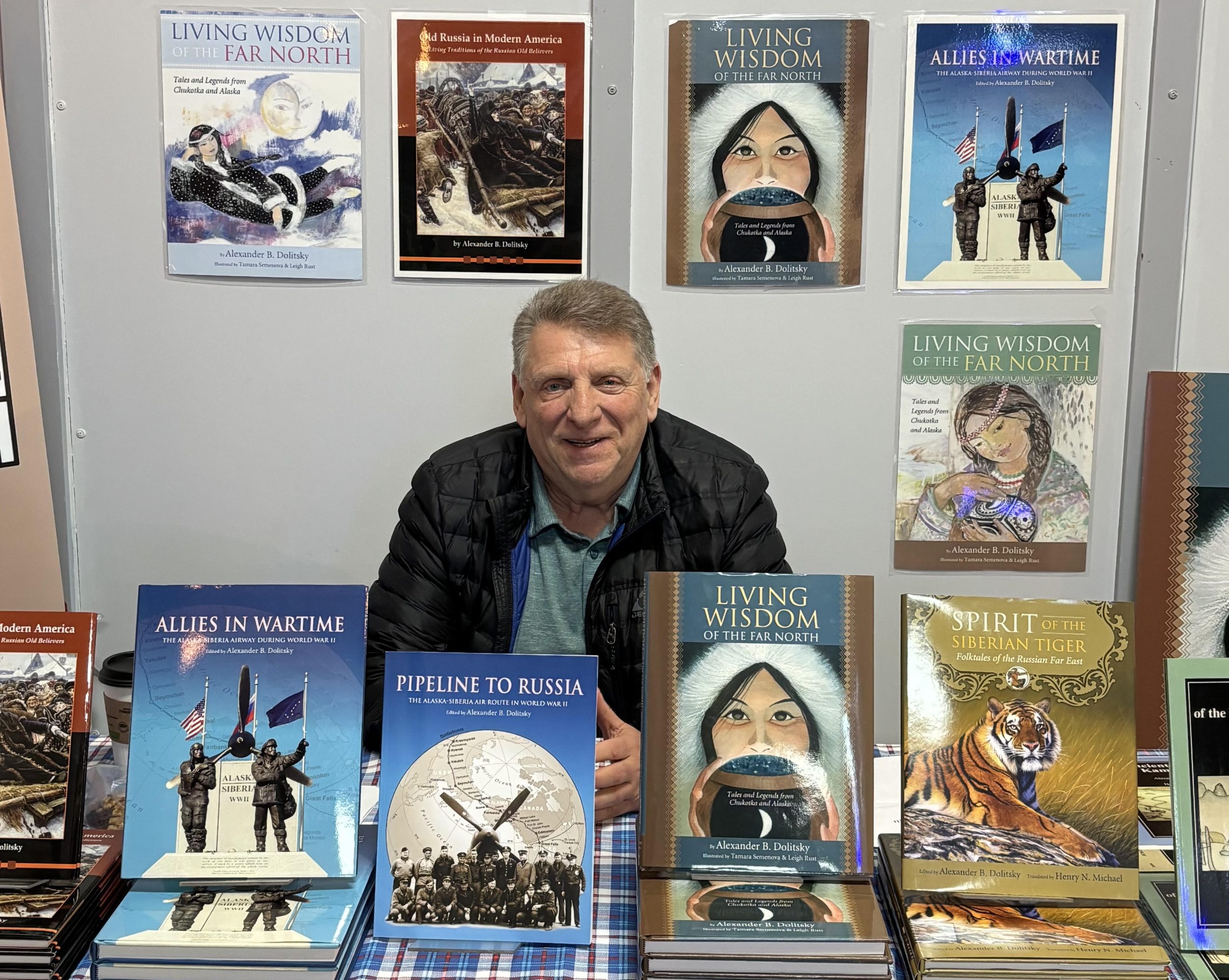
By ALEXANDER DOLITSKY
Aug. 2, 2026 – A “Black Swan event” is a shorthand way of describing a massive surprise that changes everything—though we usually look back later and pretend we saw it coming. The phrase comes from an old Latin saying from a time when people assumed all swans were white. That assumption was shattered in 1697 when Dutch explorers spotted actual black swans in Australia. Ever since, the term has been used to describe any major, completely unpredictable event.
For example, World War II (1939–1945)—including the brutal Eastern Front and the surprise attack on Pearl Harbor—completely upended normal life for regular families. This sudden shock brought intense rationing, massive labor shifts, and the deep emotional toll of loved ones going off to battles. Indeed, these unexpected disasters shape the course of history rather than follow it, as no past event or theory could prepare people for such total societal disruption.
What would the world have been like if Russia and the U.S. had not entered World War I (1914–1918)?
The principal causes of World War I were militarism, secret alliances, imperialism, the rise of nationalism, and the immediate spark of Archduke Franz Ferdinand’s assassination in Serbia.
Militarism: European powers built massive, modern armies and navies, competed for military dominance and colonial possessions in Africa and Asia, and prepared strict plans to mobilize troops quickly.
Alliances: A web of mutual defense treaties—primarily the Triple Alliance of Germany, Austria-Hungary, and Italy (1882–1915) and the Triple Entente between France, the Russian Empire, and Great Britain (1894–1907)—meant a conflict involving one nation would drag all others into war.
Imperialism: Fierce global competition to control colonies, land, and resources created deep economic and political rivalries among Western European nations. In fact, Russia and the United States were not major oversea colonial powers prior to World War I.
Nationalism: Intense national pride and self-interest made countries aggressive, while ethnic groups inside major empires longed for independence.
The Assassination: On June 28, 1914, Serbian nationalist Gavrilo Princip shot Archduke Franz Ferdinand of Austria-Hungary in Sarajevo. This murder triggered the July Crisis—a month of high diplomatic and military tension—causing allies to declare war on one another within weeks.
Before World War I, both Russia and the United States functioned as large continental empires rather than traditional overseas colonial powers, though both engaged in significant territorial expansion.
Russia expanded across a continuous landmass into Siberia, Central Asia, and the Caucasus rather than building an overseas empire. It ruled over diverse non-Russian populations within its borders, including modern-day Finland, Poland, Ukraine, the Baltic regions, and indigenous groups in Siberia and the Far East.
The United States focused on subduing and settling North American western territories rather than acquiring overseas holdings for most of the 19th century. It became a partial exception after the 1898 Spanish-American War, acquiring overseas territories like the Philippines, Puerto Rico, and Guam.
Thus, it is reasonable to assume that without Russia and the U.S. entering World War I, the conflict would likely have ended in a stalemate or a victory for the Triple Alliance (Germany, Italy and Austria-Hungary). This outcome would likely have prevented the 1917 Russian Revolution, halted the rise of the Soviet Union, and positioned the German Empire as the dominant superpower in Europe, Asia, and Africa, leading to following geopolitical shifts:
Survival of Empires: The Russian, Austro-Hungarian, and Ottoman empires would likely have survived the early 20th century, preventing the creation of new European states like Poland, Czechoslovakia, and Yugoslavia.
No Soviet Union: Without the immense strain and military collapse caused by WWI, the Bolshevik Socialist Revolution of 1917 would not have occurred, fundamentally altering the ideological landscape of the 20th century and preventing the Cold War (1946–1992).
German Hegemony: A victorious Germany would have created a massive continental economic sphere (Mitteleuropa) and kept its overseas colonies. This could have prevented the political desperation that led to Adolf Hitler and Nazism in the 1930s, and ultimately stopped World War II from starting in September 1939.
Limited U.S. Influence: The United States would likely have remained an isolationist, regional power instead of becoming a global superpower through its involvement in the world wars.
Conclusion: An alternate WWI victory for the Triple Alliance would have transformed the globe by preserving old empires, stopping the rise of the Soviet Union and spread of the socialist movement in Europe, and making Germany the top European power.
How would a WWI victory for the Triple Alliance have impacted the Middle East, Asia, and the balance of European colonial powers?
Middle East
Ottoman survival: The Ottoman Empire would have retained control of its Middle Eastern territories instead of ceding them to Britain and France. Preserving these lands would have necessitated extensive military modernization, economic reforms, and pragmatic diplomacy.
Alternative borders: Without the secret 1916 Sykes–Picot Agreement
between Britain and France (which had Russia’s assent), the contemporary national boundaries of Iraq, Syria, and Lebanon would not have been drawn in their historical configuration. Negotiated by Mark Sykes and François Georges-Picot, the pact planned the division of the Ottoman Empire’s Arab provinces and established spheres of control that shaped the modern borders of the Middle East.
German influence: Berlin would have secured control over the Berlin–Baghdad Railway. This ambitious early 20th-century project, financed by Germany and the Ottoman Empire, aimed to link Berlin to the Persian Gulf, bypass British sea lanes such as the Suez Canal, and secure direct access to Middle Eastern natural resources.
Asian and European Powers
European colonies: Without the devastating financial and military drains of the World Wars, powers like Britain, France, and Germany might have maintained their Asian colonial empires. Even so, rising local nationalism and shifting global dynamics would still have challenged direct imperial rule.
Japan’s limits: Japan would have gained less land in China and the Pacific because a strong German Empire would block its expansion. For example, the 1895 Triple Intervention showed how European pressure could force Japan to surrender the Liaodong Peninsula.
French decline: France would have lost its great power status, facing severe economic ruin and a depleted military.
British retreat: The British Empire might have survived longer, but it would have shared global influence with a German-dominated Mitteleuropa economic zone.
The Mitteleuropa concept: First popularized by German politician Friedrich Naumann in his 1915 book Mitteleuropa, it envisioned a Central European customs union and trade bloc centered around Germany and Austria-Hungary. According to German Mitteleuropa economic zone in Europe, Germany would rule Europe’s economy and keep its African colonies, leading a bloc of old monarchies.
What is the future projection of a Black Swan event for the Russia-Ukraine War?
The Black Swan theory focuses on events that are completely unpredictable and carry massive impacts, meaning there is no single consensus projection for the future of the Russia-Ukraine war.
However, strategic forecasters and risk analysts in the West identify several high-impact, low-probability wildcards that could radically shift the conflict’s trajectory: (1) Sudden political implosion or leadership removal in Moscow; (2) A direct military clash between Russia and NATO; and (3) An abrupt, complete cessation of U.S. and Western support for Ukraine due to cross-theater compression from a major crisis in Asia.
Most analytical frameworks—such as strategic foresight models looking toward late 2027—view a prolonged, frozen, or grinding stalemate as the most statistically probable path rather than a sudden, dramatic Black Swan resolution.
What is the future projection of the Black Swan event for the USA/Iran conflict?
Key Black Swan future projections regarding the U.S.-Iran conflict center on a catastrophic energy and economic shock, the risk of regime collapse in Iran, leading to geopolitical realignment, and asymmetric targeting of Western tech infrastructure as summarized in Iran’s Black Swan Moment. Strategic Assessment.
Economic and Energy Shocks
Strait of Hormuz Disruption: Chokes off 20 million barrels of daily oil transit, forcing heavy reliance on limited bypass pipelines.
LNG and Desalination Vulnerability: Retaliatory strikes hit Persian Gulf energy hubs and regional water systems. Drone and missile attacks on Qatar’s Ras Laffan Industrial City damaged liquefaction capacity, knocking out roughly 17% of its output and halting global shipments. Power and water plants in Kuwait and Bahrain face direct strikes, threatening 90% of local potable water supplies.
Decade of Chaos: Analysts warn that short-term pricing models underestimate the multiplier effects on global inflation. Nassim Nicholas Taleb views this chaos through his concepts of The Black Swan and Antifragile, arguing that markets are unpredictable systems damaged by hidden debt and false mathematical models.
Geopolitical and Regime Shifts
An abrupt collapse of Iran’s governance structure could trigger massive global energy shocks, sudden regime collapse, and asymmetric cyber-attacks on Western technology. Pragmatic analysts also project the Russia-Ukraine war to remain a grinding stalemate.
The author was born and raised in the former Soviet Union before settling in the U.S. in 1978. He moved to Juneau in 1986 where he taught Russian studies and Archaeology at the University of Alaska Southeast, and Social Studies Teacher at the Alyeska Central School of the Alaska Department of Education. From 1990 to 2022, he served as a director and president of the Alaska-Siberia Research Center, publishing in the fields of anthropology, history, archaeology and ethnography. Find him on Amazon.com.
Alexander Dolitsky: Echoes across the decades
Alexander Dolitsky: Ukraine is used to goad and weaken Russia in a proxy trap
Alexander Dolitsky: The geopolitical suicide of Europe over proxy conflict with Russia
Alexander Dolitsky: Toxic generosity, and the high price of free lunches



2 thoughts on “Alexander Dolitsky: History through the lens of the black swan, shadows of the unexpected”
Excellent article. Especially if US and USSR would not have entered WW 1. Currently the US and USSR are draining their resources and creating massive debt with the Ukraine War and Iran War. China sits back and becomes stronger.
Correction: Russia, not USSR. Thanks.