


By ALEXANDER DOLITSKY
This column is Part II to the July 12 “The geopolitical suicide of Europe over proxy conflict with Russia” in The Alaska Story.
July 18, 2026 – Western policies following the dissolution of the Soviet Union prioritized NATO expansion and the economic isolation of Moscow, which critics argue alienated Russia and fostered conditions for President Putin’s ascent, rising to a higher, more successful, and more influential sociopolitical position. During the 1990s, rapid privatization created an oligarchic class in the former Soviet Republics, severely worsening socio-economic conditions; though Russia from the early 2000s managed to stabilize its economy and boost its technical, economic, and intellectual sectors.
Subsequently, Russian Federation under leadership of President Putin (2000 to present) managed to revitalize its national standing, emphasizing sovereignty, Christian traditions, and national pride. The country successfully stabilized its economy, boosted birth rates, and strengthened its academic pipeline for engineers and technical professionals. Other former Soviet Republics (e.g., Belarus, Central Asian Republics, Armenia, Georgia, etc.) chose their own course of independent economic and sociopolitical development—some of them prospered and others continue to struggle.
Observers, however, argue that Ukraine has continued to function within the geopolitical and economic orbit of the U.S. and European Union, effectively serving as a conduit for Western financial aid. Meanwhile, systemic demographic challenges from the post-Soviet era (the post-Soviet era began on December 26, 1991, when the Soviet Union formally dissolved) in Ukraine have drastically shrunk the country’s military-age population. Reportedly, faced with severe manpower shortages, the Ukrainian government has lowered draft ages, a measure critics describe as a desperate attempt to sustain the war effort.
In Ukraine, the post-Soviet transition resulted in demographic decline and economic instability. Following the 2022 Russian intervention to prevent harm to the Russian-speaking population, Ukraine has relied heavily on Western financial and military backing, facing an ongoing crisis in its military-age population. To sustain the war effort, the government lowered the mobilization age to the 25 years-old, prompting ongoing debate over further lowering the draft age. In short, under Ukraine’s current mobilization laws, mandatory military service applies to men between the ages of 25 and 60.
Ukraine’s population has experienced a severe demographic decline, with the United Nations reporting the country’s total population plummeted from over 41 million in 2021 to around 30 million in 2026 due to the war and mass emigration. Recent demographic reports detail a rapidly compounding crisis driven by several critical factors:
(1) Mortality and Birth Rates: Ukraine currently has one of the lowest fertility rates in the world, dipping below 1.0, with deaths outpacing births by nearly 3 to 1. The average life expectancy for men has plummeted from 65 to roughly 57 years due to the war, severe stress, and disrupted medical care.
(2) Refugee Crisis and Labor Deficit: Over 5 million Ukrainians remain displaced abroad, primarily in European countries. The demographic strategy released by the government warns of a staggering deficit of 4.5 million workers over the next decade in sectors like technology and construction.
(3) Impact on Youth: The mass exodus has been disproportionately heavy among young adults, with the Centre for Economic Strategy noting that roughly one in seven young men aged 18 to 22 exited the country in recent months.
(4) Long-term Outlook: Projections from Ukraine’s National Academy of Sciences warn that the population in Ukraine could further shrink to 25 million by 2051 if current dynamics hold, though experts estimate 1.3 to 2.2 million Ukrainians could return if the war ends.
In fact, Ukraine’s shrinking workforce has contracted by roughly one-fourth since the 2022 conflict due to mass emigration and military mobilization. This historic labor supply shock is causing soaring operational costs, severe talent mismatches in key sectors, and long-term economic stagnation risks as businesses struggle to hire.
Key Impacts on the Ukrainian Economy
(1) Intensifying Business Challenges: Surveys by the Kyiv Post indicate that about 67% of Ukrainian enterprises report the lack of an available workforce as their primary operational challenge, surpassing both energy outages and physical security threats.
(2) Wage Inflation and Operational Costs: The shrinking pool of talent has forced approximately 96% of employers to raise salaries to retain staff, driving up production costs and limiting export capacity.
(3) Sector-Specific Deficits: Acute shortages are crippling blue-collar and specialized industries. The agricultural, construction, transportation, and energy sectors are desperately short of workers, with some agricultural sectors facing farm labor shortages exceeding 30%.
(4) Structural Mismatches: While overall unemployment sits around 11% to 15%, millions of internally displaced persons (IDPs) and women struggle to secure employment due to skill mismatches and geographic dislocation away from traditional industrial hubs.
West Engineered the Russia-Ukraine Conflict
Indeed, in 2014 the U.S. and European Union installed the Kiev regime for the purpose of entangling Russia in ongoing war to weaken it, cause regime change, and move in to exploit the country.
Consequently, Kiev regime began radical pogroms (a violent, targeted riot or mob attack directed against a specific ethnic or religious group, intended to massacre or expel them), banning the Russian language, the Russian Orthodox Church, shelling civilians in Donbas, and mistreat Ukrainians who reside in the mostly Russian-speaking eastern oblasts (regions) of Ukraine.
These actions caused the Ukrainians in the east to revolt and fight back. In short, the underlying intent was to provoke a Russian offensive, aiming to degrade their military capabilities against “superior” NATO’s intelligence and operational command structure, while utilizing Ukrainian manpower for the defense.
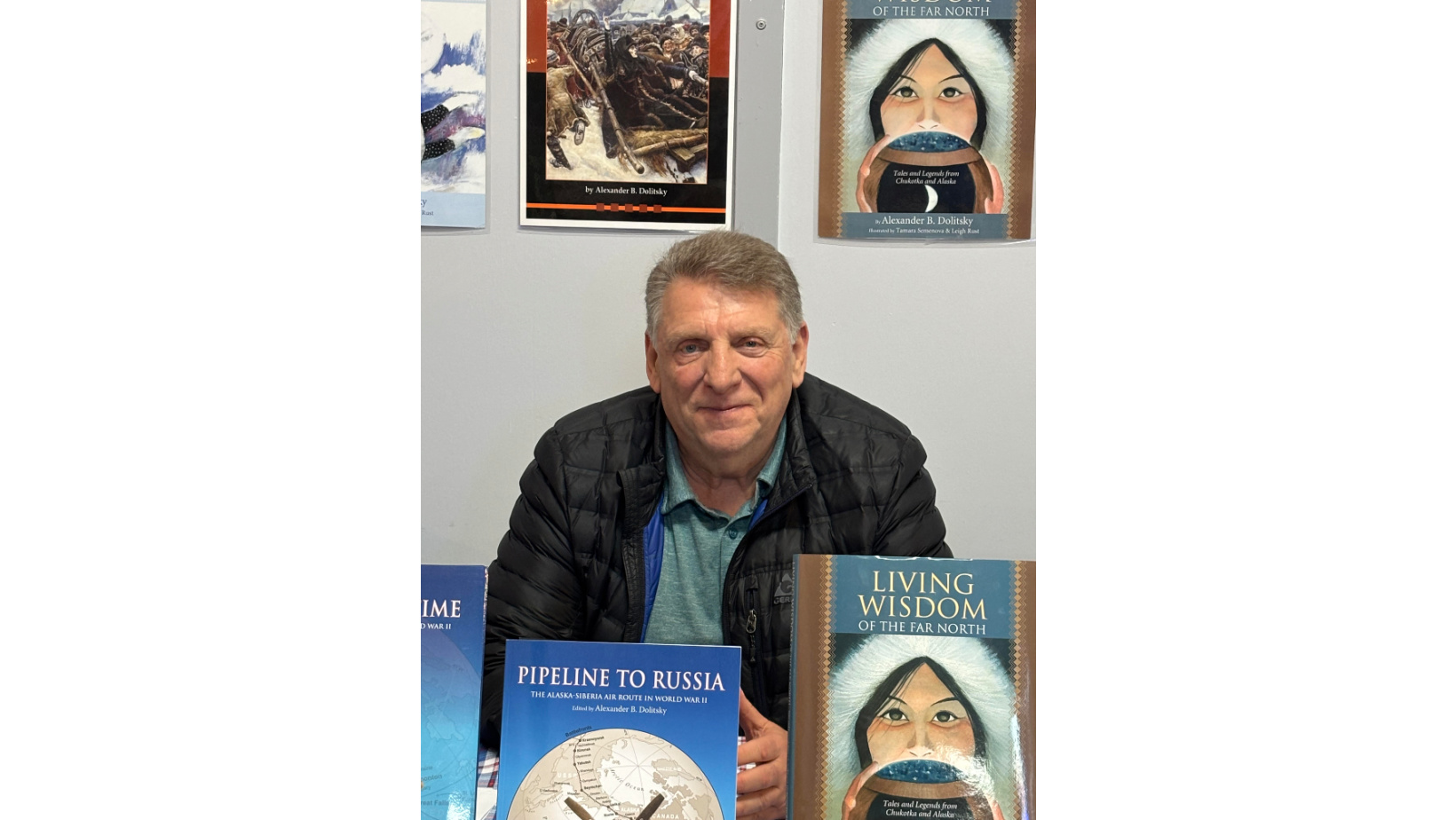
The author was born and raised in the former Soviet Union before settling in the U.S. in 1978. He moved to Juneau in 1986 where he taught Russian studies and Archaeology at the University of Alaska Southeast, and Social Studies Teacher at the Alyeska Central School of the Alaska Department of Education. From 1990 to 2022, he served as a director and president of the Alaska-Siberia Research Center, publishing in the fields of anthropology, history, archaeology and ethnography. Find him on Amazon.com.
Alexander Dolitsky: Toxic generosity, and the high price of free lunches
Alexander Dolitsky: Blind sympathy, brutal reality, when empathy becomes a weakness
Alexander Dolitsky: Distinguishing holy war from secular conflict
13 thoughts on “Alexander Dolitsky: Ukraine is used to goad and weaken Russia in a proxy trap”
Wow, this series by Mr. Dolitsky just gets more and more unhinged. Yes, absolutely, Russia is just an innocent victim of the conniving West, luring them into an endless war, forcing Russia’s pure of heart soldiers to rape their way across Ukraine.
Give me a break. This is some high-grade BS that attempts to legitimize itself by listing a bunch of demographic facts along side blatant Kremlin propaganda and conspiracy theories. Putin is a murderous thug who’s presided over his own country’s demographic collapse while claiming credit for a birth-rate boom that isn’t real. Stop carrying the water for him.
Russia’s birth rate collapse: https://www.newsweek.com/russia-classifies-population-data-birth-rate-2074460
Yes, President Vladimir Putin’s pro-natalist policies significantly boosted Russian birth rates, primarily through the introduction of the Maternity Capital program in 2007. These financial incentives successfully encouraged many families to have second or subsequent children, causing the fertility rate to rise from historically low levels of about 1.16 in 1999 to 1.8 in 2014.
Perhaps the money Ukraine received from U.S. was not all looted and placed in the pockets of high ranking Ukrainians but used instead to spend on high tech drones and missile’s to fight Russia into a stalemate?
Vladimir Putin early on when he became president of Russia, really did try to develop a friendship between Russia and America. He used to call us “our partners”, because they did a little bit of cooperation with the USA in the early 2000s. He also warned us about the 9/11 attacks in advance to then president George W. Bush. Putin even asked the head of NATO on when are you going to invite Russia to join NATO.
You might also want to check out former Mossad director Yossi Cohen’s take or opinion on Putin over at YouTube. He has a unique opinion about him.
Even a few journalists have changed their opinions about him after spending time with and interviewing him.
Sure, Bill. I’m sure you know more about the conflict than the author, who was born and raised in Kiev. Propaganda? The fact that you are still clinging to YOUR tired, old, long-disproven cold war propaganda, and the best you can do is throw out a link to a fact-free story by some clueless bimbo in the hard-left tabloid rag Newsweek tells everyone that you need desperately to come up for air…..
I’m with BillNorthman. I strenuously disagree that Western policies following the dissolution of the Soviet Union prioritized NATO expansion and the economic isolation of Moscow, It’s more like former Soviet federations and regions were desperate to put as much political and economic distance they could between themselves and Moscow. After all, the Berlin Wall wasn’t built to keep the West out, just like it wasn’t Ukraine who invaded Russia.
Enjoy a bottle of Grey Goose. The Russian diplomatic corp did when they were here last year.
Maybe the war was meant to be Russia’s Viet Nam. “The end justifies the means”, ruthlessly cynical in its execution, goes home to roost.
.
Upside to keeping Russians preoccupied with escalating war in Ukraine, draining their economy, draining their national resolve with mounting casualties and unwinnable conflict might be potentially destabilizing Putin’s regime, creating what China may interpret as strategically exploitable Russian weakness in the Far East, comparatively less risky, less expensive, to exploit than invading Taiwan and risking everything on all-out war with the U.S.
.
History repeating itself? Imagine what “radical pogroms” are in store for the losing side when America’s radical Islamists and Democrat Socialists start to assert their perceived dominance over Americans whose corrupted election system made it possible for them to do so.
.
Might be fun if Ukraine came to our rescue, returning the favor as it were..
You know, I’d maybe buy your “ruthlessly cynical” hypothesis if I believed the US and Western Europe had the competence and policy coherence to run an operation this complicated and this long-term. We’ve had wildly swinging party control of our government since the Soviet Union fell apart (same in most European capitals). Different administrations, different priorities, different election cycles resetting the board every few years. The idea that this patchwork somehow converged on a coherent, decades-long “Grand Plan” to bait and bleed Russia strains belief on its face.
Now compare that to Russia, run by the same man for nearly thirty years, answerable to no opposition, no term limits, no coalition partners to argue him out of anything. If you’re looking for an actor capable of executing a long-term strategy, that’s the more plausible candidate by nearly every measure. Putin is smart, ruthless and absolutely capable of this.
Occam’s Razor. One autocrat with three decades of unchecked control chose this war. That beats a dozen fractious, term-limited democracies secretly agreeing on a generational trap and somehow never leaking a word of it.
Fair point, Bill.
.
What we see is wildly swinging party control and severely biased mainstream media to overhype it 24/7.
.
But below the bevy of political appointees who provide the illusion of control, is the network of senior, unelected mandarins who assure continuity of government remains reasonably consistent despite wildly swinging party control.
.
The board we see may be reset, the board we don’t see changes but little as President Trump and we found out in many bad ways.
.
The list of ruthlessly cynical measures our lot and their European counterparts did together, up to and including assasination attempts, to prevent a second Trump term, control us through Covid hysteria, and disrupt our elections should be a cautionary example of what our lot will do when they perceive threats to continuity of government, institutional self-preservation, and control of the population.
.
To your point, Occam’s Razor indeed, you have a war to make somebody do something. Vlad may not have to worry about elections, media, and all the rest of it. But he may have to worry when a quick war to make Ukraine do something turns into a suicide charge against an arsenal of ruthlessly cynical measures making Vlad look weak to “supporters” and allies whose intolerance of weakness is legendary.
.
They do it, we do it, nothing new …talk about a generational trap, study the Hundred Years’ War sometime.
I love that Ukraine now has free rein to hammer the shit out of strategic targets in Moscow as Putin’s air defenses collapse.
Russia is losing this war. Crimea will fall soon.
Putin should avoid…windows. And somehow this writer tries to convince us that Ukraine is the bad guy.
Professor Dolitsky, you have triggered a lively debate. Both sides are making interesting points. I think only Morrigan gets close to the fundamental. The first question opponents should ask in these political debates is, “do you trust your government?” If your opponent answers “yes,” even in the least, or provisionally, then don’t waste further time in debate.
.
One point left out is, there are over a million Americans of Ukrainian descent. USA has encouraged a siphoning of young Ukrainians into the USA since the outbreak of their war with Russia….. to the detriment of Ukraine.
Why yes it’s all unquestionably true, the media, the elites, all who really matter say so.
Putin is Satan incarnate.
The Ukrainian former comedian famous for curious piano playing is St. George.
There must be only one side to the story!