


By SUZANNE DOWNING
March 10, 2026 – The long-planned Alaska LNG project enters a critical stretch this spring, with several milestones expected soon that could mark the transition from planning to on-the-ground construction.
Among the next developments Alaskans can watch for: Contracts for large worker housing camps, federal permit decisions for early construction work, and a possible conditional award memorandum that would clear the way for major early infrastructure such as roads, bridges, and gravel extraction.
The project is led by Glenfarne Group through its subsidiary Glenfarne Alaska LNG, which holds a 75% stake in the project through 8 Star Alaska LLC. The remaining 25% is owned by the Alaska Gasline Development Corporation, the state’s gasline development agency. The Federal Energy Regulatory Commission permitted the project as a whole in 2020.
One of the first visible signs of construction activity could be contracts for temporary worker housing along the pipeline route.
The project is expected to require large modular housing complexes, commonly called “man camps,” to house construction crews. Plans call for a mobile, hotel-style housing system capable of accommodating up to 7,000 workers during peak construction.
The camps would consist of single-room accommodations, shared dining facilities, sleeping quarters, and one- or two-person bathroom units built to North Slope industrial housing standards. Contractors would be responsible not only for installing the modular facilities but also operating and maintaining them during the construction period.
Before work begins, however, the project needs approval from the Federal Energy Regulatory Commission for early construction activity associated with the camps and related infrastructure. Those permits have already been requested in early February, and regulators typically have about 60 days to respond, putting a decision potentially in the very near future.
Another milestone expected this spring is a conditional award memorandum, or CAM, tied to what’s known as “early works,” or project infrastructure.
That step would move the project closer to a final investment decision for the entire project. Early works includes building temporary access roads, bridges, gravel pads, and other logistical infrastructure needed before the main pipeline installation can begin.
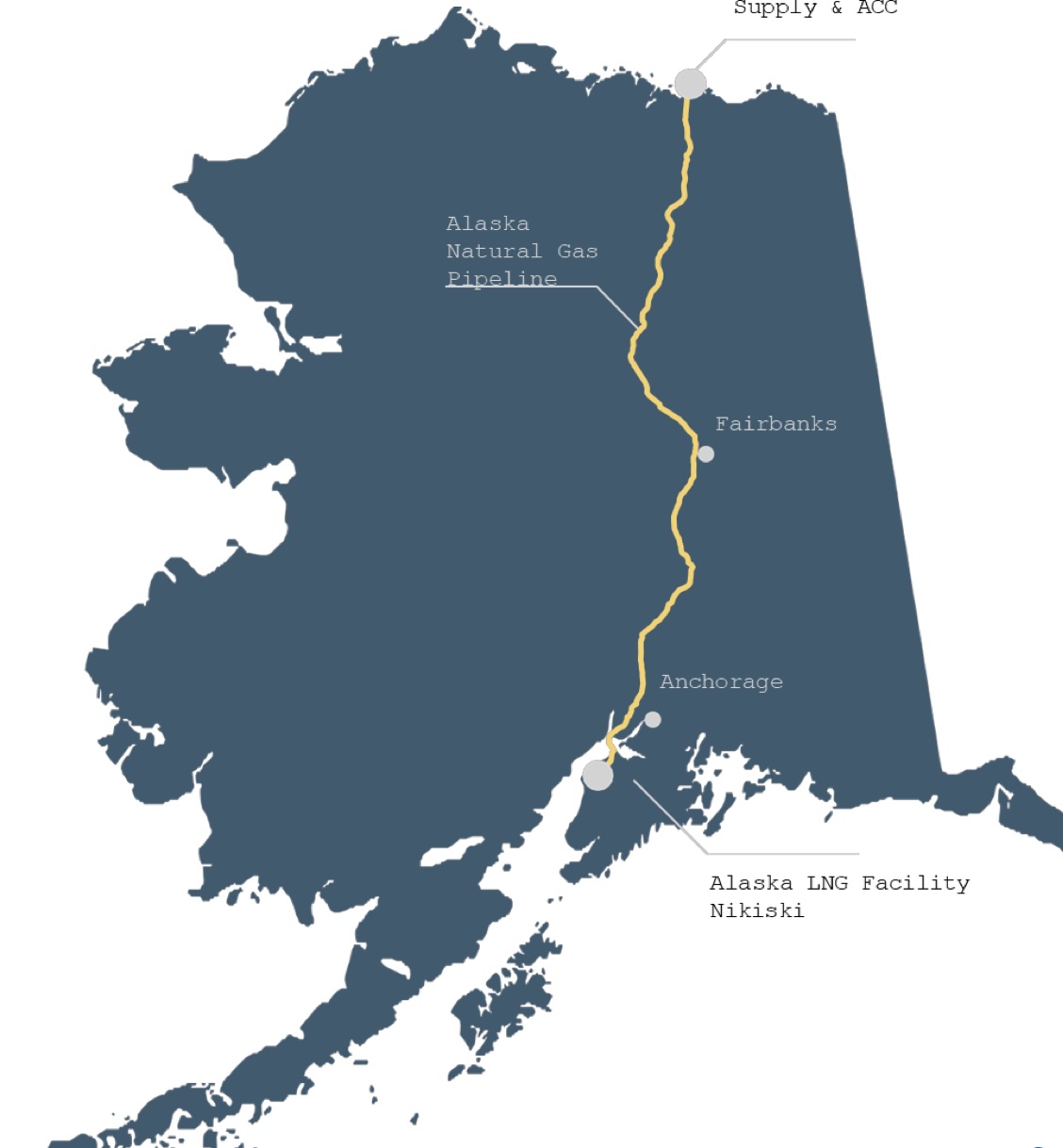
The Alaska LNG pipeline would run roughly 739 miles from the North Slope to Southcentral Alaska in Phase One, delivering natural gas to in-state customers. Glenfarne is targeting mechanical completion of the pipeline in 2028 with first gas deliveries expected in 2029.
Even as the project advances commercially, developers and the State of Alaska must grapple with another major issue: property taxes.
Alaska currently allows boroughs along the pipeline route to levy property taxes of up to 20 mills on oil and gas infrastructure. While that rate is not unusual, LNG megaprojects like this one typically receive tax incentives or abatements from states and counties (in this case boroughs) during their early construction phases because they must make massive upfront investments years before any revenue is generated.
Without adjustments, developers find the tax burden weighs heavily on the project’s economics during the early years when construction costs are high but no gas is yet flowing.
Potential solutions being discussed include property-tax abatements, tax holidays, sliding-scale rates, or other reforms that would better align tax timing with the project’s financial structure.
The state currently receives no revenue from North Slope gas that remains stranded. If built, the pipeline and export system could eventually generate hundreds of millions of dollars annually in state and local taxes, royalties, and economic activity, along with thousands of jobs and new business development.
In the meantime, the project has been steadily lining up commercial partners and contractors.
Glenfarne says it has now secured preliminary commitments for about 13 of the roughly 18 major contracts required to move the project forward.
In January, the company announced conditional awards for pipeline construction across multiple segments of the route, selecting major North American and international contractors including Precision Pipeline, Price Gregory International, Michels Pipeline, ASRC Energy Services, Doyon Energy Services, Cruz Construction, Barnard Pipeline, SICIM, Spiecapag, and U.S. Pipeline.
The project also secured preliminary agreements for roughly two-thirds of the steel pipe required for construction from major international manufacturers including Corinth Pipeworks and Europipe, along with steel supplier POSCO International.
On the supply side, Glenfarne has signed gas sales precedent agreements with North Slope producers including ExxonMobil, Hilcorp Alaska, and Great Bear Pantheon to feed the pipeline.
The company has also signed preliminary agreements with in-state customers. A letter of intent with ENSTAR Natural Gas Co. would supply gas to Southcentral Alaska utilities, while a separate agreement would deliver up to 50 million cubic feet per day of gas to the Donlin Gold mine project in Western Alaska.
Momentum has also been building on the export side of the project’s second phase.
In February, French energy giant TotalEnergies signed a letter of intent to purchase two million tonnes per year of LNG from the Alaska project. That agreement added to earlier preliminary commitments from Asian buyers including JERA, Tokyo Gas, CPC, PTT, and POSCO.
Altogether, Glenfarne says it has lined up preliminary long-term agreements for about 13 million tonnes per year of LNG; that’s more than half of the project’s planned 20-million-tonne annual export capacity.
The company says it intends to secure commitments for about 80% of total export capacity before financing the full project.
The Alaska LNG project has been discussed in various forms for more than four decades. But the current structure, separating the project into a domestic pipeline phase followed by an export phase, is designed to accelerate progress.
With federal permits pending, early construction awards expected, and commercial agreements continuing to accumulate, the coming months could reveal whether the long-awaited project is finally heading toward construction this spring. The next few weeks are critical, and come just as some members of the Legislature appear to be trying to kill the project outright. Related stories on that aspect are linked here:



5 thoughts on “Alaska LNG project making steady progress as key decisions take shape”
A question about terminology here: Why do people keep referring to this as a “LNG (liquified natural gas) Project”, when the liquification of the natural gas would only happen, and be present, at the very end of the line? To put it differently, wouldn’t the pipeline itself be a NATURAL GAS pipeline, not a LIQUIFIED natural gas pipeline? I believe that it would have to be gaseous, not liquified, natural gas moving through the pipeline.
LNG cannot be shipped long distances by pipeline because as it warms us, the material will vaporize. It is always liquified at the point of shipment, being stored in insulated storage tanks while accumulating prior to loading, and then loaded into insulated ships for transport.
Expect Senator Cathy Giessel to behave more irrationally in the days and months ahead. She will throw an absolute hissy-fit to stop this project in order to serve her union masters. I would not be surprised to learn that she is serving environmentalists and even Soros interests. The pressure on her – most of it self-induced – will be enormous. Who are you working for, Senator? What do you have to gain personally?
There are two documented and paid for surveys for the gas line to Valdez and the cost is one third of the cost the jokers of the plan to Kenai. The third survey was to the Yukon border brought on when Palin was governor. Parnell killed that one. The necessary issues are security for shipping which is solved at Valdez and port of entry no problem without having to change the navigational tools for ships using our maritime law and congress had approved that years ago. The pipe is smaller than the oil pipe and the manageable areas is already secure and established with safety plans along the oil pipe corridor. One third the cost in comparison of what the destruction of the park access along with years of law suits with any entry of pipe or problems in the Cook Inlet won’t happen with the gas pipe going to Valdez. The companies and the bad money problems are nothing short of a serious disaster. The whole corridor along the gas line survey is prepped and more ready and easy access for the shorter time frame for construction. The materials to add to Valdez can be built and ready by the time the gas line is finished and ready for gas shipping. Valdez is a well protected port and ready with the security plans in place and a much, much better place to ship to the world with National Security issues taken care of today. To the gas line to Kenai I say NO and NO to entry into the popular fishing waters that should remain protected against such commercial activity. The legislators need to take a look at the serious issues being reviewed and the issues of another line in a much, much better protected place than proposed by bad companies with bad reputations of too many financial problems. Time to rethink and plan today and for the future in the short term so we can get our resource to market with all important elements of a plan coming to a better outcome for Alaska and the customers. To the Congressional persons, STOP promoting dead beat companies and lying about signed commitments. To the legislative body, look to do a better job of using and working for this important project.
Just imagine the indirect benefits for Alaska and Alaskans:
… Higher property values, ideal for sellers.
… Construction and Operational jobs that will provide vast opportunities.
… Economic opportunity’s for local businesses.
… Another source of revenue stream for the SOA.
… If this becomes reality, why do we need income tax?
… Maybe(?), reduction of the mill rate, providing relief for property taxpayers?
… Better talent at the various gentlemen clubs!!!