


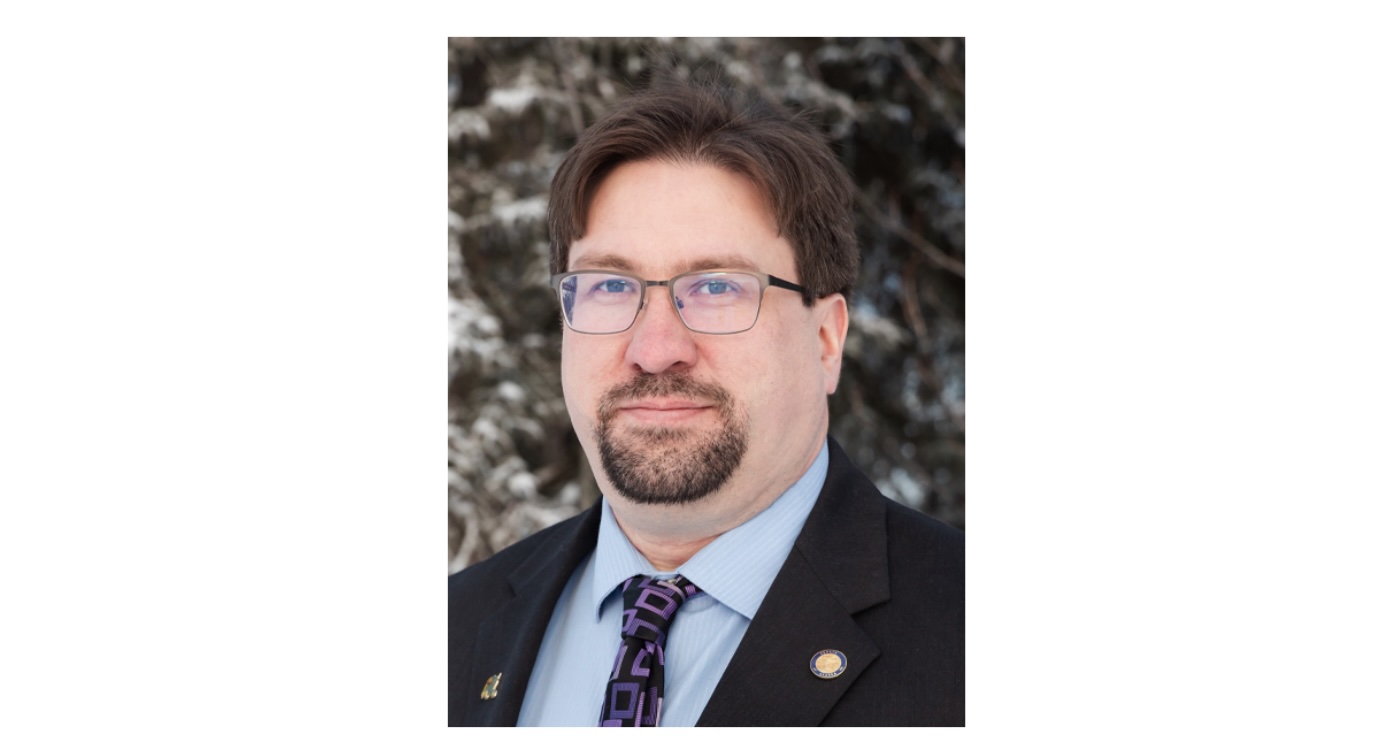
By SEN. ROBERT MYERS
June 7, 2026 – As we’ve been discussing the gas line and the related property tax bills in the legislature this year, comparisons to the Trans-Alaska Pipeline inevitably come up, both in the legislature and in the public. Let me talk a little bit about why those are misleading. The economics and the history of the two lines are vastly different. That means we can’t treat them the same way for tax or other purposes.
To start, who is building them and why are completely different. In 1968, Arco discovered oil on the North Slope. The following year, other major oil producers bought leases and started drilling to cash in. Those producers came together to create Alyeska Pipeline Company to build and operate the line.
The key piece here is that they did not build a pipeline because they thought that a pipeline would be profitable. They built a pipeline because they wanted to sell the oil. That led to a certain attitude about the construction. Cost overruns were not a primary concern. The most efficient engineering on the pipe was not the main concern. Getting the oil to market was the concern. That’s where the profit lay.
The situation with the gas line is different. Glenfarne is not an oil and gas company; they are an energy infrastructure company. That has some positives and negatives for us. Oil and gas drilling is a risky business. Companies expect a high rate of return (20-30%) on projects in order to offset that risk (drilling dry holes, etc). Infrastructure developers are willing to accept lower rates of return (more like 10%) because the business has fewer risks.
The downside is that the major risk that a developer has in raising the money to build such an expensive project in the first place. Oil majors have to be able to finance the projects as well, but they have much deeper pockets to begin with. They have assets that can be used as collateral (leases or ownership stakes). Developers don’t have assets until the pipeline or facility in question is built. They don’t have the large balance sheets that an oil major does. Most oil companies have the finances to wait a while to make back their money. Developers need to turn a profit more quickly to stay in business and can’t survive as many up-front costs.
We’re often comparing the current project not only to TAPS but also to the producer-led effort to build the gas line back during the Sean Parnell or Frank Murkowski administrations. Those comparisons don’t add up because we’re using a different company with a different business model.
The value of the commodity is different as well. Oil is a high-value commodity. Gas is generally a low-value commodity. As one price comparison, even after fifty years of drilling on the Slope and producing a quarter of what we did at the height of production in 1988, the state is expecting to make over $1.8 billion in taxes and royalties on oil next year. In contrast, even without altering the property taxes, the state is expected to make about $1 billion a year from the gas royalties and taxes (property, severance, and corporate).
That leads to different incentives. The oil companies were willing to spend through the nose to build TAPS because they knew that they could make it back on the oil production. That doesn’t work as well on gas. While they’re happy to sell gas into a line if it is built, the oil companies lost interest in the line in large part because the value of the gas to them is too low to justify the huge capital investment of the pipe and export plant. But a developer with a different business model is willing to build the project because they aren’t making their money from the gas. They’re making it from the tolls on the pipe and LNG export facility. It is a different, lower, but steadier stream of revenue.
We also have to remember that energy markets today are not what they were in the 1970s. While the oil was discovered in 1968, TAPS did not start construction until 1974. Texas oil production started declining for the first time in 1970 (and would continue to decline until the mid-2000s). The OPEC oil embargo started in October of 1973. The amendment to the Mineral Leasing Act that fulfilled NEPA and widened the right of way famously passed only with a tiebreaking vote from Vice-President Agnew in July, but the final bills authorizing the line passed in November with a House vote of 361 to 14 and a Senate vote of 80 to 5. America was desperate for the oil.
Today, we’re in a very different situation. Up until the Iran war, the world was in a gas glut. What has been driving gas flows has not been a specific producer or group but larger concerns around sanctions on Russia and other nations that have reordered LNG flows into largely two groups of nations: the Western world and various allies and Russia, China, and their allies. The flows of gas have reordered heavily since the Ukraine War started, and that reordering has opened up the window that has allowed us to proceed this far. The Iran war has raised prices by interrupting flows but has not reordered flows nearly as much.
In short, the demand for gas in East Asia does not equate to the demand for oil from the rest of the country during the 1970s. We have a window of opportunity as demand continues to rise, but it is not nearly the same urgency or shortage that we saw in the 1970s. We have a lot more competition around the world for gas, most notably from the LNG Canada project that was recently completed in British Columbia and is considering an expansion.
While demand is not as much on our side, permitting is. The Alaska Gasline Development Corporation took over the project completely in 2016 and continued to do the permitting work. Those permits were completed in 2020, and we’ve been ready to start construction once we get financing. Contrast that with TAPS, which took two acts of Congress to finalize the permits and authorization. While permitting was the holdup on TAPS, financing has been the primary barrier for the gas line and LNG export project. We have to take that into account as we’re thinking about tax policy.
There is also a big difference in who needs the product. In the early 1970s, Alaska already had oil for in-state use from the Cook Inlet. We weren’t looking at oil from the North Slope to satisfy local demand. While we did end up expanding our in-state use after TAPS was built, such as building two refineries in North Pole and one in Valdez, we weren’t facing the same energy shortage that we’re seeing today.
Today, we need the gas in Southcentral first and foremost. We’re facing huge price increases and either power brownouts or gas imports in the very near future. Those imports would expose us to highly volatile world markets as we figure out our future gas price. We want to send our gas overseas because we want both the revenue from the sales and the lower in-state costs that come from higher volumes coming down the pipeline.
The local energy crisis is not the only change in Alaska. In 1970, we had a population of just over 300,000. TAPS brought in about 70,000 people, with 20,000 workers on the project at its peak. Today, our population is about 730,000. The gas line project is estimated to employ 10-12,000 people. We’ll hire as many Alaskans as possible, but most of the workers that we have to bring in from Outside will likely work a rotation and leave their families down in the Lower 48. We will still have local impacts during the construction phase, but they will likely be smaller and more muted than they were during TAPS construction.
All of the differences have a lot of interactions, but the most obvious example is cost overruns, one of the biggest concerns that we’ve seen with the project. Famously, TAPS construction was originally quoted at $900 million, but the final costs were $8 billion. We have a price range for the project, but we know that we can’t predict everything. The structure of TAPS (built by the producers, didn’t need to be profitable on its own, market hungry for the product, etc) means that the oil companies were largely immune to cost overruns. Their goal was a completed project to sell oil, not a piece of profitable infrastructure. They toughed out the years of legal delays and one of the worst inflationary periods in our country’s history to get it done.
We are in the opposite situation for the gas line under a developer. They have a huge incentive to clamp down hard on any cost overruns because they know that they don’t have much margin for error. With the modeling provided by the state’s Department of Revenue, we already know that more than about a 30% cost increase will make the project unprofitable.
Glenfarne has already created a contract with Enstar that prevents cost increases from being passed on to Alaskan customers. They can’t pass costs on to overseas customers because those customers will just find another buyer. Glenfarne will look at the risk of cost increases much harder than the TAPS builders did fifty years ago.
We can think of a tax like a cost overrun in the way it burdens the project in the early years. The oil companies had the balance sheets to accept more up-front taxes in the same way they could accept cost increases because it was a highly profitable oil play to borrow against. The pipeline developer has no such backstop and needs to stay lean and turn a profit quickly to start paying off the debt. The ability to tax and keep a viable project is that much narrower.
There is an old saying that generals tend to prepare for the last war instead of the coming one. Here in Alaska, we’re asking a lot of questions based on our experience with TAPS. But we have to remember that, while a lot of those questions are still good ones, the environment surrounding this project has changed significantly.
We’ll ask better questions (around cost increases, appropriate taxes, the necessity of the project, local impacts, etc) if we look at that environment first instead of going off our historical knowledge only. Let’s ask our questions and craft our policies around this project, not the last one.
Senator Robert Myers was born in Fairbanks and spent much of his young childhood at the Salchaket Roadhouse, owned by his parents. He attended the University of Alaska Fairbanks, where he studied philosophy, political science, and history. While in college, he drove for a tour company, sharing Alaska with countless visitors. He currently drives truck and travels the Dalton Highway (Haul Road) frequently. He ran for office because he wants an Alaska his children will choose to make their home down the road. When not working for his Senate District B, North Pole, he enjoys reading, history, board games, and spending time with his wife Dawna and his five kids.



8 thoughts on “Sen. Robert Myers: The Alaska gasline is not TAPS”
Thanks Robb for the update and information regarding the comparisons with TAPS and the proposed gas line. Hopefully, more legislators will do their homework and think rationally about this new project. I would also like to see a comparison with an LNG plant on the Slope to the proposed gas line.
Robb Myers stole Senate District Q voters’ right to select their next state senator when he gifted the seat to Frank Tomaszewski. Myers disrespected the voting public when he refused to announce his intention not to seek re-election in time for others in the district to contemplate running for this seat, formulate a plan, file, and then launch a competitive run. Myers and Tomaszewski actively coordinated and formulated a plan that took the voters’ decision-making rights away from them. And in response, Tomaszewski thanked Myers for the generous gift of this public office. Obviously, Tomaszewski can’t thank the voters for their votes as they will have had nothing to do with this when he is sworn in next year. Both Myers and Tomaszewski should be deeply ashamed of themselves.
During his time on the borough assembly and in the state house, Tomaszewski demonstrated: 1) extremely poor judgement in nearly all facets of these positions, 2) disrespect for military members of both genders, 3) a disregard for service-disabled veterans, 4) consistently selfish and self-centered decision-making, 5) an inability to keep up his side of most conversations, and 6) unbelievably poor leadership. Myers knows all of this!
FRANKLY, Tomaszewski is better suited to making syrup and should return to this line of work. He has no business in state government or the state senate.
“Robb Myers stole Senate District Q voters’ right to select their next state senator when he gifted the seat to Frank Tomaszewski. Myers disrespected the voting public when he refused to announce his intention not to seek re-election in time for others in the district to contemplate running for this seat, formulate a plan, file, and then launch a competitive run.”
Barbara, if I remember correctly ANYONE can file to run at any time. The question then becomes why nobody bothered to file against Senator Meyers? You bemoan the lack of opportunity for action on the part of your compatriots. While I agree that the timing is questionable and I did not appreciate this tactic when used by democratic leaning office holders, maybe the lesson here is not to be mad at Senator Myers, but those who decided to sit this one out instead of as you said “contemplate running, formulating a plan and file” earlier so the voters had the opportunity to select the candidate of their choice.
Barbara, clearly a wacky, extremely partisan Democrat, is absolutely fine with cheating, election rigging and political skullduggery, as long as it’s being played out by Democrats. The Petersburg Dan Sullivan caper is perfectly fair from her viewpoint. The 2020 stolen election by Joe Biden and Democrats was a masterful piece of work in her opinion. Barbara is delusion and insanely blinded by her version of the truth. Get psychiatric help, Barbara. Your writing shows that you need therapy.
.
Rob Meyers has done his district a huge favor as he exits the political world. The next senator from his district will be as clear thinking as Rob Meyers. Unfortunately, Barbara will still be wacked-out by her Marxist’s view and hatred for conservatives who exhibit common sense. Barbara has none.
Excellent report, Naomi. Rob Meyers left behind him…..no opportunity whatsoever by the leftists to cheat and rig another election for a state Senate seat. This is the exact blueprint that Republicans should use in the future to guarantee fairplay and safeguard another seat from the cheaters that Democrats are. Job well done, Senator Meyers. You leave behind a fantastic legacy. Now, let’s get Harmony elected to the House seat and finish the job. Marxists like Barbara can go back to their marijuana and sex change parties.
LOL ….Barbara is probably a man posting with a woman’s name and wearing a skirt. Trannies gone mad! They hate Christians. They hate morality. Pure hatred.
Very good analysis Myers. This is a great project that Legislators really should // need to support. Hopefully, they see the tremendous opportunity and act quickly to make it happen.
Git-R-Done!!!
The whole problem with getting the gasline to the investment-decision-go-point (besides being barely profitable) is the left-leaning people have a slight majority in the Alaska legislature. It’s not that all the left-leaning legislators are against the gasline, but the slim majority allows the few hard-core leftist legislators to get into key positions on committees. where they can kill the gasline.
.
In my opinion, the reason why it is important to them to kill the gasline project, is because they don’t want Trump or Alaska”s conservative congressional delegation to get any credit for getting constrution of an Alaska gasline started up. This will make it easier to flip the U.S. Congress in the upcoming midterm elections.