


By ROBERT SEITZ
May 18, 2026 – It’s great news that the Pikka Project’s first oil is flowing. The Willow Project is still working towards its first oil and other North Slope oil projects are in the works.
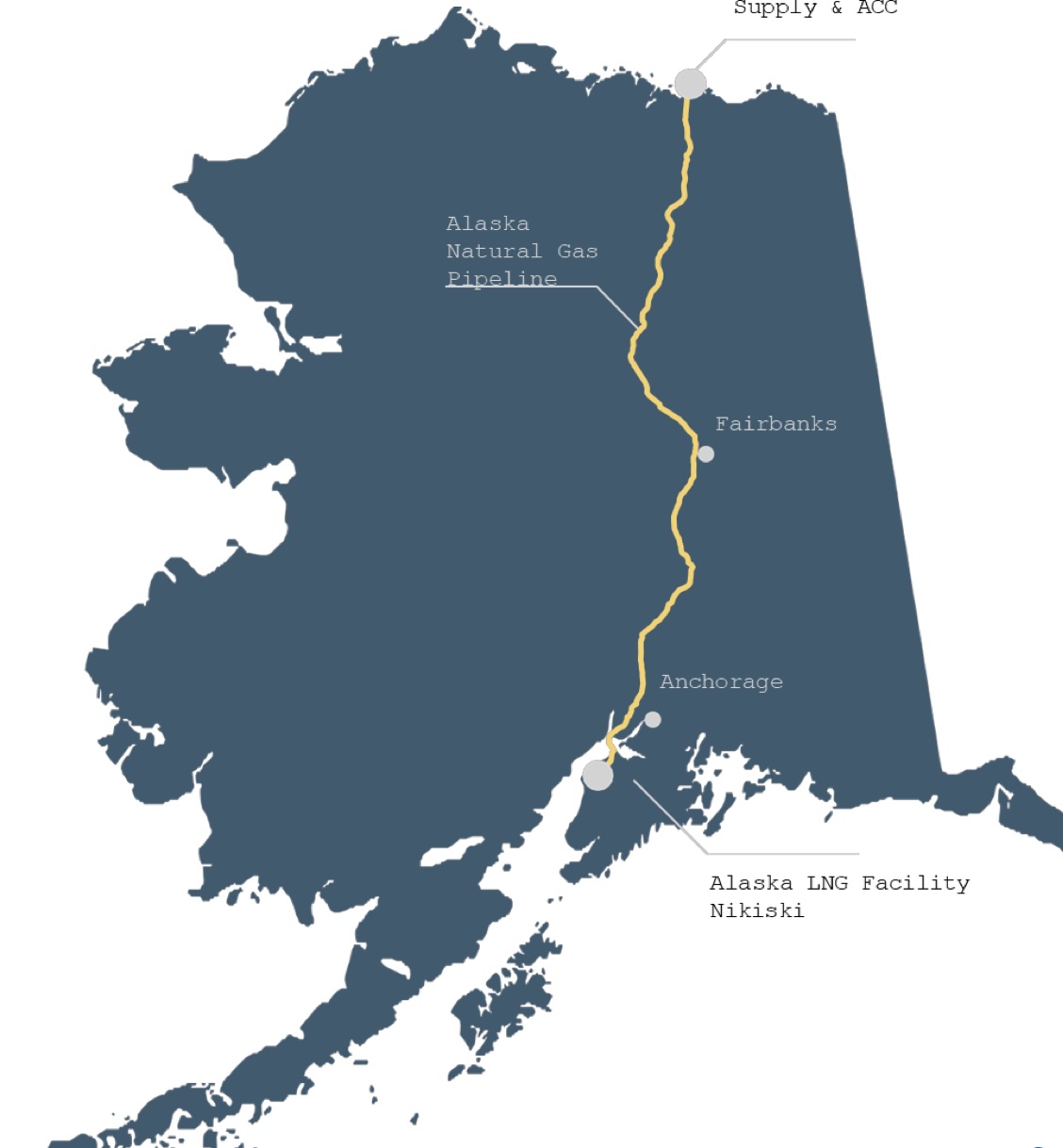
The Alaska Legislature still can’t give any urgency to North Slope natural gas to be shipped south so we can sell it to the world markets.
If we are to have a budget we can depend on we need to get our resources to market, and we need to have that flow to market to be sustained for a long period of time, so we can save ourselves the angst of making something out of nothing. I worked on the Fluor/Northwestnatural gas pipeline project in 1978, and 48 years later there still is no steady flow of gas through Fairbanks and out to market.
If the Legislature can’t decide to let the Alaska LNG project happen, it is time to reconsider the Susitna-Watana Dam. Somebody submitted an opinion piece recently that brought up that consideration, “That is it is time to reconsider the Watana Dam.” This has been a cold winter in Alaska and it has been a cold spring.
Energy is the key to life in Alaska, so we need to make sure we have secured our energy supplies far into the future. Our energy sources are critical strategic infrastructure for the entire state of Alaska.
I have been trying, in my commentaries, for a few years to get readers to recognize that Cook Inlet gas is, right now, and has been for some time a critical strategic infrastructure for Alaska. There is still no action, activity or sense of urgency directed to finding ways to encourage increased production of Cook Inlet natural gas.
In my last piece in TheAlaskaStory I suggested that the effort should begin with someone to work out just how many holes need to be drilled to get a gas flow rate that can make us feel secure through all the cold winters and equipment malfunctions so that our energies are not always directed away from Cook Inlet to future energy projects. If we want people to feel secure while living here, don’t leave them fretting about freezing to death and frozen water pipes. It is a simple matter of adequate financing and funding of the drilling operation and to flow an adequate amount of natural gas to pay for the drilling.
Cook Inlet gas is a major critical strategic infrastructure for Alaska. Once we have sufficient Cook Inlet gas reserves, we don’t have to worry about the cost of importing LNG.
As I read articles about those who were displaced by Typhoon Halong in the Bering Sea last year I wonder how Kipnuk and Kwigillingok were selected as village sites. In my ocean engineering days I learned how to calculate storm surges wind and pressure patterns, and if asked I would have advised against selecting those and a few other sites for village locations.
In my opinion the salmon of Bristol Bay are at less risk of damage from the Pebble Mine than those communities are from the weather. In my thinking remote and coastal communities need to have stable economic bases, such as a seafood processing plant or a nearby mineral mine. Jobs and cash can go a long way to easing a total subsistence lifestyle, but the ground upon which we build our homes must be resilient, and secure. The power system at the remote communities should be based on the best available renewable energy source, be it wind, solar, tidal, or river run. Displacing the cost of diesel and heating fuel with homegrown energy is a good thing. I have found that a lot of the seafood processing plants that used to exist are no longer in operation in many communities. That can’t be good for the stability of the communities. Where have all the canneries gone?
And for my last topic, I just read some ones letter about their move from Healy to Wasilla to get away from a coal fired power plant. If we really are considering any new coal fired power plants we need to verify that clean coal power plants can really exist. The last I heard was that the plume from Healy power plant was so faint it could not be seen from McKinley Park.
I know the ash fallout from the Fairbanks coal fueled power plant was very bad in the neighborhood surrounding the plant. Is there ash fallout in Healy and is the smoke from the plant intolerable? Whoever wants to build new clean coal power plants better make sure they are clean, and I am not referring to CO2.
Robert Seitz is a professional electrical engineer and lifelong Alaskan.


One thought on “Robert Seitz: Still looking at Alaska’s future with the long term view”
Trying to debate and argue, using: “Logic, Reason, Common Sense, Critical Thought, Facts & Data” is simply not sufficient approach and strategy with the Legislative decision makers that exude an unhinged mental deficiency – capacity. Clearly, we will have to crash and hit rock bottem before reasonable actions are taken. Basically, when adults step up to take control and pursue a vision – action in the best interest of Alaska and Alaskans. Until that occurs, expect no corrective course change!