


By SUZANNE DOWNING
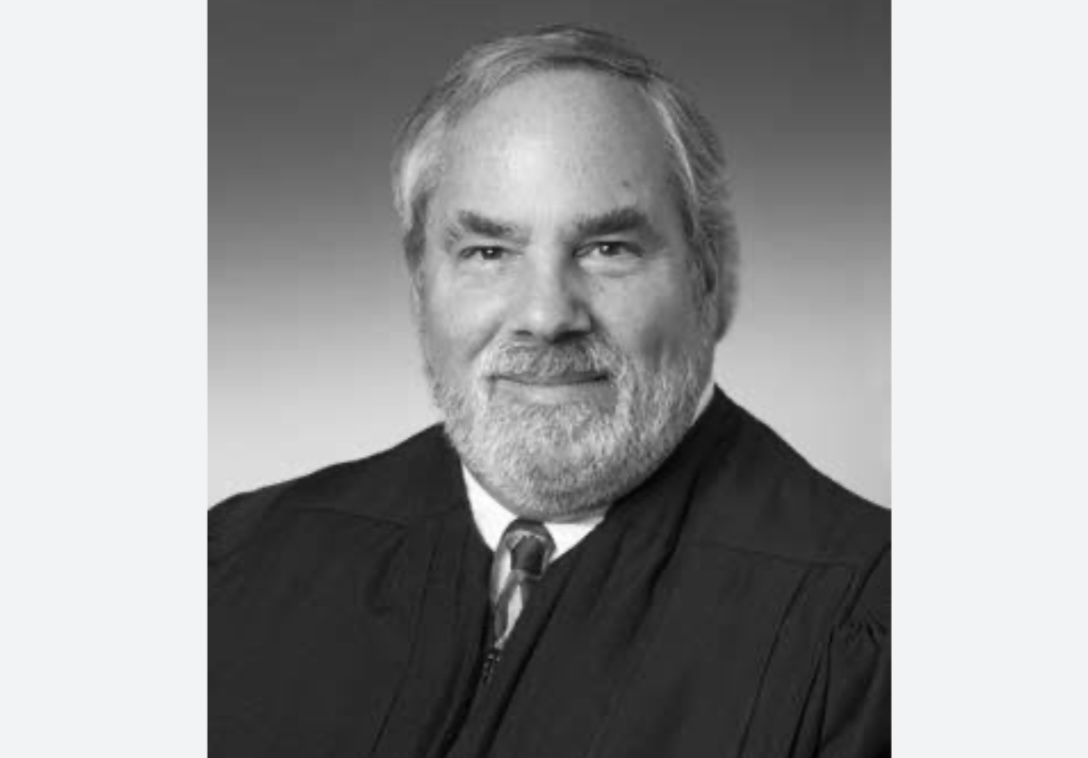
June 25, 2026 – The judge who will decide whether “Decoy Dan” Sullivan returns to Alaska’s US Senate ballot is no stranger to political controversy. Oral arguments in the case begin at 10 am Thursday.
Anchorage Superior Court Judge Thomas A. “Tom” Matthews, who was assigned to hear Petersburg Democratic operative Daniel J. Sullivan’s appeal of the Division of Elections decision removing him from the Aug. 18 primary ballot, has presided over some of Alaska’s most politically consequential cases in recent years, including the bitterly contested 2021-2022 redistricting litigation.
Matthews was appointed to the Superior Court in July 2018 by then-Gov. Bill Walker, an independent governor who frequently aligned with Democrats during his administration. He replaced Judge John Suddock and now serves as presiding judge for Alaska’s Third Judicial District.
Division of Elections files response to fake Republican Decoy Dan’s challenge to ballot decision
Before joining the bench, Matthews spent more than three decades as a civil trial attorney, practicing primarily plaintiff-side personal injury law. He co-founded the Anchorage law firm Matthews & Zahare, where he specialized in wrongful death, automobile accident, and other civil litigation. Earlier in his career he practiced with Bliss & Riordan.
A graduate of the University of California, Berkeley, Matthews earned his bachelor’s degree there in 1981 before receiving his law degree from Northwestern School of Law at Lewis & Clark College in Portland in 1985, the same place that Gov. Walker got his undergraduate degree. He has practiced law in Alaska since that year.
Matthews became a central figure in one of Alaska’s most contentious political disputes after the 2020 Census, when he presided over multiple lawsuits challenging the Alaska Redistricting Board’s maps.
In February 2022, Matthews ruled that the board’s Republican-appointed majority had improperly paired portions of Eagle River with East Anchorage Senate districts, finding what he described as a “tacit understanding” among three Republican-appointed board members to produce a partisan advantage. He concluded that the pairing violated the Alaska Constitution’s equal protection guarantees and ordered revisions.
After the board submitted revised maps, Matthews again found in May 2022 that the Republican majority had acted with what he called “discriminatory intent” by creating Senate districts that he said favored Republican electoral outcomes. He ordered the board to adopt an alternative interim map for the 2022 elections.
The Alaska Supreme Court ultimately affirmed most of Matthews’ decisions, and the revised maps became the basis for Alaska’s current legislative districts.
His rulings drew sharp criticism from Republicans, who argued he had substituted his judgment for that of the constitutionally created Redistricting Board and had ventured into political territory by inferring partisan motives from board deliberations. Democrats praised the decisions.
Matthews has also presided over other politically sensitive cases, including challenges involving statewide ballot measures and election-related disputes.
Now, he will oversee another closely watched political case.
The appeal centers on Daniel J. Sullivan of Petersburg, dubbed “Decoy Dan” by critics, who is seeking to overturn the Division of Elections’ determination that he should not appear on the Republican primary ballot for US Senate. Elections Director Carol Beecher concluded that Sullivan’s candidacy amounted to an attempt to deceive voters because he shares the same name as incumbent Republican Sen. Dan Sullivan and even attempted to get on the ballot with the middle initial “S.”
The case is expected to move quickly because Alaska’s primary ballots must soon be finalized for printing.
Whatever Matthews decides, the case appears likely to be appealed to the Alaska Supreme Court, meaning the judge’s ruling may become only the first chapter in another high-profile Alaska election dispute.
New records raise questions about Decoy Dan’s rationale for sudden Republican registration
Decoy Dan files appeal to regain place on ballot as his Democrat strategist flees the country
Dahlstrom pushes back on House subpoena, Democrats retreat and reschedule hearing in ‘Decoy Dan’ dispute
House subpoenas Alaska Elections director in ‘Decoy Dan’ controversy, demands volumes of records
Democrats in Legislature challenge Election Division’s decision on Decoy Dan


7 thoughts on “Oral arguments set for Thursday in Decoy Dan ballot case”
But once again we come to the fundamentally flawed understanding of the constitution that most people and politicians and lawyers labor under. Whatever this liberal judge decides, IT IS NOT BINDING. It is advisory. The executive enforces, or may choose not to. And we all know who that is. If that sounds unfair and partisan, well, first of all, Dunleavy does NOT understand the proper constitutional hierarchy, so he won’t do anything. But suppose he did, and acted as a conservative? The squealing of “Partisanship!” would be heard from the Left. Ummm. And the JUDGE does not act with partisanship? And, while we are at it, we got into this mess because of RCV, which was illegally approved thanks to the judicial decision of 2020, which totally ignored the statute that limits citizen initiatives to ONE SUBJECT.
Another partisan Democrat judge. The Democrats count their blessing with these rabid left-wing judges to gain the upper hand in political contests. Judicial lawfare in Alaska is out of control. Much of it begins with the people who sit on the Alaska Judicial Council, the body which appoints liberals and Democrats to the bench.
(Suzanne; mmBill Walker and his wife attended the University of Puget Sound School of Law).
A truly just and constitutional executive would have (AND STILL COULD) simply ignore RCV and refuse to enforce all the miasma that has emanated from the 2020 Prop 2 initiative. Or any other judicial decree, such as abortion and its funding. Sparing us the Scott Kendall RCV lawfare, and the squirrel-cage labor needed to paste together a repeal.
I have said this on the air: HYPOTHETICALLY, the Dems could have sifted through the entire country and found all the Dan Sullivans they could find, and put 30 or 40 of them on the ballot. You do NOT have to actually reside in any state to run for federal office, only take up a residence once elected.
What judge in their right mind would allow 30 or 40 Dan Sullivan’s on the ballot? They would be a laughingstock. So, the DOE said that TWO is too many, making it a matter of numbers. The DOE did me dirty with the destruction of the AIP, but in this case, they have acted justly.
What happened to Democratic operative that vamoosed the State once the ball dropped that the Demorats were going to court? Must be there is to much behind the scenes evidence, better to keep it hidden.
Classic underhand dirty Liberal Politics. Straight out of Chicago. Is anyone surprised?
As for you Decoy Boy, you have brought shame to the Good People of Petersburg, who know you as a Flaming Uber Liberal.
Spot on ChrissyB. The AK judicial council has absolute control of our court system judiciary appointments. It is a seven member group with three lawyers, three non-lawyers, and the Supreme Court chief Justice (a lawyer) Valley Valley as leader. This gives the AK bar association total control of judge selection. It’s a democrat invitation only club.
Lower 48 states elect judges. It does not guarantee integrity but allows citizens a choice. Remember several years ago when they rejected Dunleavy’s judge nominations?
Yes, VD, and the AK Bar Association recently “appointed” a left-wing woman named Savannah Fletcher of Fairbanks to the AJC. Fletcher, a radical, was even censured by the Fairbanks North Star Borough Assembly for her dishonest acts as a public servant. Apparently, the Bar Association and Democrats at the control level of the Bar have no moral guidance with respect to dishonest Democrat Bar members. Power and control at its evil high mark.
The big tell here on intent to defraud is the request to change Decoy Dan’s middle initial to S. No honest reason to do that. Its a blinking red light.