

By THE ALASKA STORY
June 9, 2026 – A major new report from the Financial Times is putting Alaska back at the center of the global energy map, describing the state’s Arctic oil prospects as potentially the “world’s hottest play” as major companies race back into the North Slope after years of pulling away.
The article, titled “Oil majors return to Alaska as US state becomes ‘world’s hottest play’,” details how companies including ExxonMobil and Shell are re-entering Alaska’s Arctic oil scene after nearly a decade of reduced activity, joining established players such as ConocoPhillips, Repsol, Santos, and Alaska-based independent Armstrong Oil & Gas.
The renewed interest centers heavily on Alaska’s North Slope and the vast National Petroleum Reserve-Alaska, commonly called NPR-A, an enormous federally managed petroleum reserve believed to hold billions of barrels of recoverable oil.
According to public summaries and secondary reporting on the Financial Times article, oil companies bid a record $163 million in lease sales earlier this year for acreage in the NPR-A, signaling an aggressive return to Arctic exploration after years of environmental restrictions, investor caution, and global uncertainty.
The report highlights Alaska’s unusually high exploration success rates compared to other frontier oil regions and suggests the state could eventually rival major global discoveries like Guyana.
Doug Armstrong, founder of Armstrong Oil & Gas and one of Alaska’s most successful independent explorers, was quoted in the article saying: “This is the hottest play in the world right now because it’s going to catch and surpass Guyana on reserves.”
The article comes as several massive Alaska oil developments are moving toward production.
The $4.5 billion Pikka Project, operated by Santos with partner Repsol, recently achieved first oil and is expected to ramp up toward roughly 80,000 barrels per day once fully online later this year.
Meanwhile, Willow Project, the massive $9 billion development led by ConocoPhillips inside the NPR-A, remains one of the largest oil projects underway in the United States, with production expected later this decade.
The Financial Times report attributes Alaska’s resurgence partly to policies under the Trump administration favoring expanded domestic fossil fuel production, streamlined permitting, and broader Arctic lease access. The article also notes that energy companies increasingly want stable North American reserves as geopolitical instability and security concerns continue to affect traditional oil-producing regions overseas.
The renewed investment marks a dramatic reversal from the previous decade, when several companies scaled back Arctic operations amid low oil prices, activist pressure, and uncertainty over federal regulations.
Now, Alaska is once again being discussed as one of the world’s premier undeveloped petroleum basins.
For Alaska leaders who have long argued that the state’s economy and future revenue base depend on continued resource development, the report serves as validation that global industry players still see enormous long-term potential on the North Slope.
The Financial Times article itself is behind a paywall, but details have circulated through industry summaries, energy analysts, and secondary reporting.



4 thoughts on “Oil giants return to Alaska as Arctic becomes ‘world’s hottest play’ for new energy reserves”
I noticed, while on a recent road trip, that Yukon Territory and Canada are working fast and furious getting gas (or oil?) infrastructure set up in their countries. There seems to be a rush on securing oil and gas.
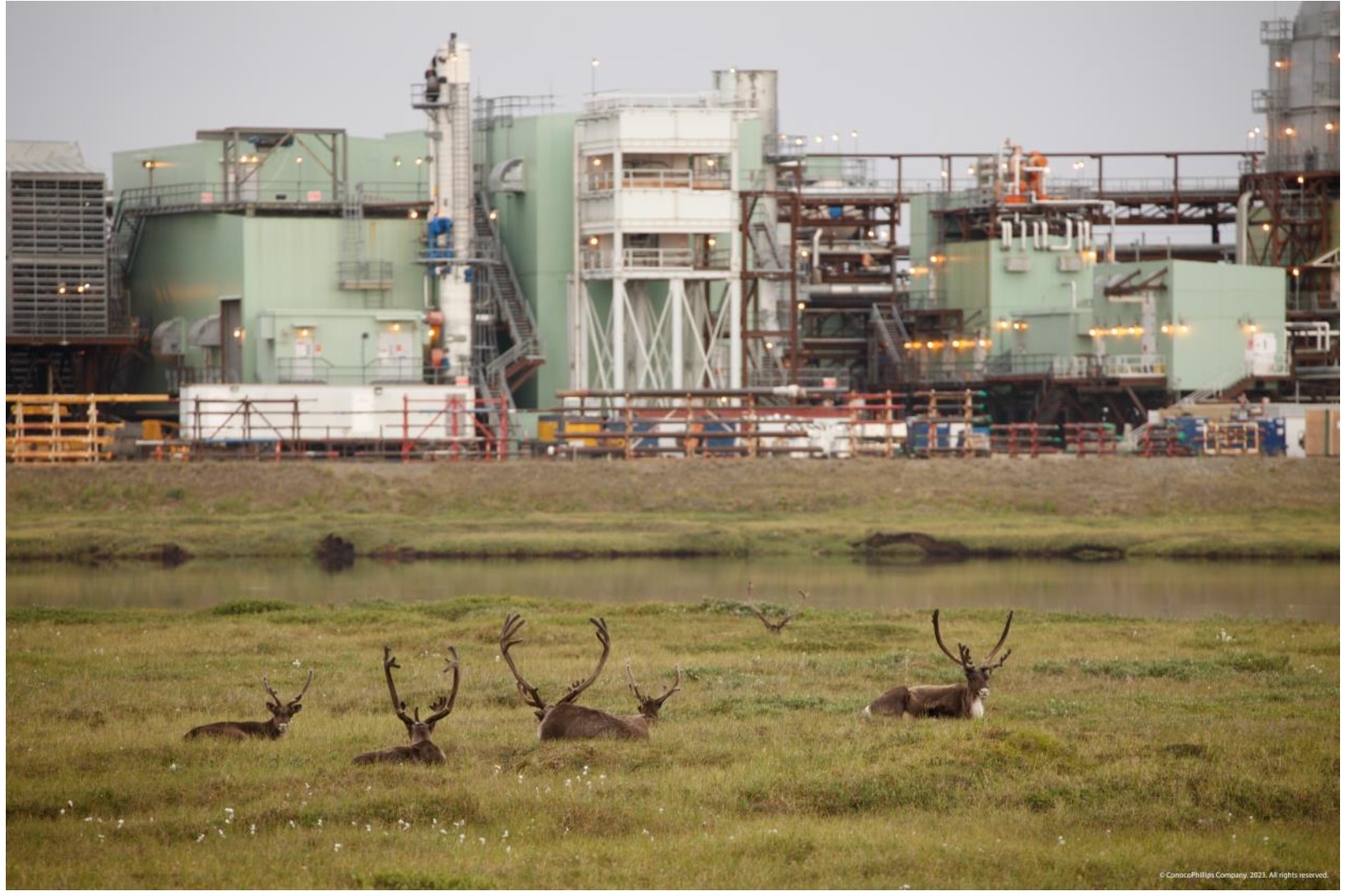
The picture with this article is worth a thousand words. Anytime someone objects to oil development because of the negative impact on caribou, just show them this picture.
This photo is FIFTY YEARS OLD! Congratulations for NOTICING what the oil companies have been saying and taking pictures of since oil started flowing in the pipe to Valdez!!
The oil giants never left Alaska. They were waiting for the right time to start bidding and expanding their work. They and their buddy company persons have been here just being quiet letting the blabber faces like Glenfarne do the work. Then they will swoop in and start their own bidding and design of things. Wake up Alaska! The plan was set before you even had your morning coffee!