


By SUZANNE DOWNING
July 25, 2026 – Today is Ted Stevens Day in Alaska, an annual invitation to head outdoors and remember the man whose fingerprints can be found on nearly every corner of the state.
Observed on the fourth Saturday of July, Ted Stevens Day honors the late US senator known affectionately across Alaska as “Uncle Ted.” This year’s observance falls on Saturday, July 25.
The Alaska Legislature established the day in 2011 through House Bill 101, which became Chapter 2 of the Session Laws of Alaska that year. Stevens’ family asked that the observance take place during the summer, when Alaskans could celebrate his life in the outdoors he loved.
The Ted Stevens Foundation carries on that tradition with Stevens’ familiar mantra: “Get Out and Play.”
That might mean fishing, hiking, camping, biking, boating, flying, playing ball or simply spending a summer day outside with family. The activity matters less than the spirit behind it: enjoying the Alaska Stevens spent much of his life building and defending.
Stevens represented Alaska in the U.S. Senate from December 1968 until January 2009. At the time he left office, he was the longest-serving Republican senator in United States history. His four decades in the Senate coincided with Alaska’s transformation from a sparsely developed new state into a modern economic and strategic powerhouse.
His influence reached virtually every major Alaska industry and institution.
Stevens played an important role in securing passage of the Alaska Native Claims Settlement Act in 1971. The landmark legislation settled longstanding aboriginal land claims, conveyed roughly 44 million acres to Alaska Native people and created the regional and village corporations that remain central to Alaska’s economy today.
Two years later, Stevens helped win congressional authorization for the Trans-Alaska Pipeline System. The 800-mile pipeline from Prudhoe Bay to Valdez became the backbone of Alaska’s economy, delivering billions of barrels of North Slope oil and providing a major source of domestic energy for the nation.
His name remains permanently attached to the Magnuson-Stevens Fishery Conservation and Management Act. Co-authored with Washington Democrat Warren Magnuson, the law established federal authority over fisheries within 200 miles of the nation’s shores and helped push foreign fleets out of Alaska waters.
The law became the foundation for modern federal fisheries management and helped build Alaska’s commercial fishing industry. Stevens also championed the Community Development Quota program, which directed a share of the Bering Sea harvest to Western Alaska communities, and later secured passage of the American Fisheries Act to strengthen American ownership of vessels operating in U.S. waters.
Then there was what generations of Alaskans simply called “Stevens money.”
Through his seniority and mastery of the congressional appropriations process, Stevens directed federal investment toward airports, roads, docks, harbors, ferries, schools, hospitals, clinics, telecommunications systems, water and sewer projects and other infrastructure across Alaska.
Many communities that had lacked basic services gained safer drinking water, health care, transportation links and communications with the rest of the state. Stevens supported Essential Air Service, bypass mail and the transfer of the Alaska Railroad to state ownership — programs and policies designed around the reality that Alaska cannot be governed or connected like the Lower 48.
Nationally, Stevens was a champion of amateur athletics. The Amateur Sports Act of 1978 reorganized the United States Olympic movement and was later updated and renamed the Ted Stevens Olympic and Amateur Sports Act. He also supported opportunities for women in athletics and worked to expand the role and representation of American athletes in Olympic and Paralympic sports.
Long before he entered the Senate, Stevens was already helping shape Alaska’s future. He came north in the early 1950s, served as US attorney in Fairbanks and later worked in the Interior Department during the Eisenhower administration, where he advocated for Alaska statehood. After returning to Alaska, he was elected to the state House and rose to majority leader.
Gov. Wally Hickel appointed Stevens to the US Senate in 1968 following the death of Sen. Bob Bartlett. Alaska voters subsequently returned him to office six times.
Stevens became known in Washington for his fierce temper, parliamentary skill, bipartisan friendships and uncompromising defense of Alaska. He could fight bitterly over legislation and then work with the same senators on the next issue if it benefited the state.
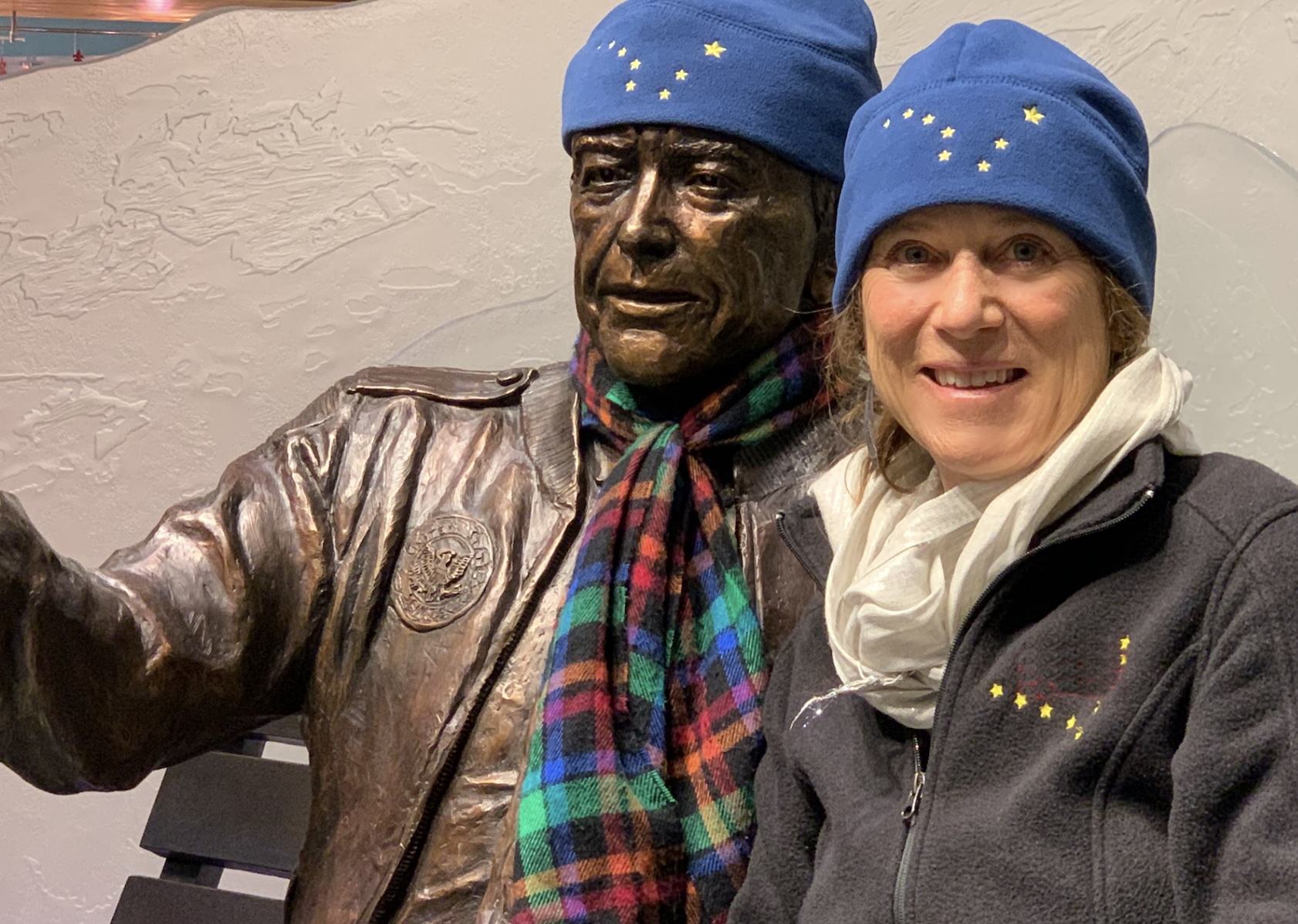
In 2000, the Alaska Legislature named him “Alaskan of the Century.” Anchorage’s largest airport was renamed Ted Stevens Anchorage International Airport, where a bronze sculpture of the senator greets travelers today.
His political career ended after a 2008 federal corruption case. The Justice Department later asked a judge to set aside the verdict and dismiss the indictment after the government failed to provide the defense with information it was legally entitled to receive. The case was dismissed with prejudice in April 2009, and the prosecution became a national cautionary tale about government misconduct.
Stevens died on Aug. 9, 2010, in a plane crash while traveling to a fishing lodge in Southwest Alaska. He was 86.
More than 15 years after his death, Stevens’ legacy remains visible in the airplanes landing at rural airports, fishing boats working Alaska’s waters, oil moving through the pipeline and community facilities standing from Utqiagvik to Ketchikan.
Ted Stevens Day offers Alaskans a chance to remember all of that in a distinctly Stevens way: So get out and play.
Photo: Suzanne Downing poses with the bronze Ted Stevens sculpture at Ted Stevens Anchorage International Airport.
3 thoughts on “Get out and play: Alaskans celebrate Ted Stevens Day”
Ted Stevens — every year we have to go through this. “Apparent” history is different than “actual” history.
1. He was a product of Harvard Law School.
2. He got the appointment as D.A. after just 6 months in Fairbanks.
3. Ted admitted he wrote most of the statehood act illegally while an Interior Dept lawyer.
4. He did NOT fight against ANILCA, which is why he …
5. … shoveled lots of federal $$$ to keep our economy temporarily afloat …
6. … which has crashed because of ANILCA locking us up.
7. Read this link: https://www.akip.org/StatehoodFraud.pdf
8. And watch this one: https://www.youtube.com/watch?v=mFXd8zQyNYg
A good man gone far too early.
I hope Suzanne kept the cap on Uncle Ted and put a copy of a hard bound edition of Alaska Story in his hands.