


By SUZANNE DOWNING
July 2, 2026 – The Alaska Legislature’s special session enter another day of slow-moving negotiations Thursday as lawmakers continue to dither on HB 381, the tax framework considered essential for financing the proposed Alaska LNG project.
The six-member conference committee is scheduled to meet at 10:30 am Thursday in the Capitol, but expectations are low that any major breakthrough will emerge. The committee is the group tasked with coming up with a compromise bill. After Thursday’s meeting, lawmakers are expected to take several days off before returning to negotiations next week.
Wednesday’s floor session in the House was scheduled, but never happened after too many lawmakers showed up and Speaker Bryce Edgmon decided to abruptly cancel the session. It’s rescheduled for 10 am Thursday, and is expected to be a brief gavel-in-gavel-out session.
“Canceling today’s floor session is an insult to every Alaskan wondering how they are going to heat their homes or keep the lights on next winter,” said Republican Minority Leader Rep. DeLena Johnson, R-Palmer. “We did not come to Juneau to sit in empty rooms while the historic Alaska LNG project knocks on our front door. Every day we waste without passing meaningful legislation is a day we edge closer to an economic disaster. Leadership needs to stop hitting the pause button and start treating this as a pressing need.”
House Republicans said they are frustrated that the Legislature is attempting to attach an S corporation tax to the gasline bill instead of considering it as separate legislation. The two distinct policy issues deserve independent debate. Combining them makes it more difficult to fully assess the merits and consequences of each proposal.
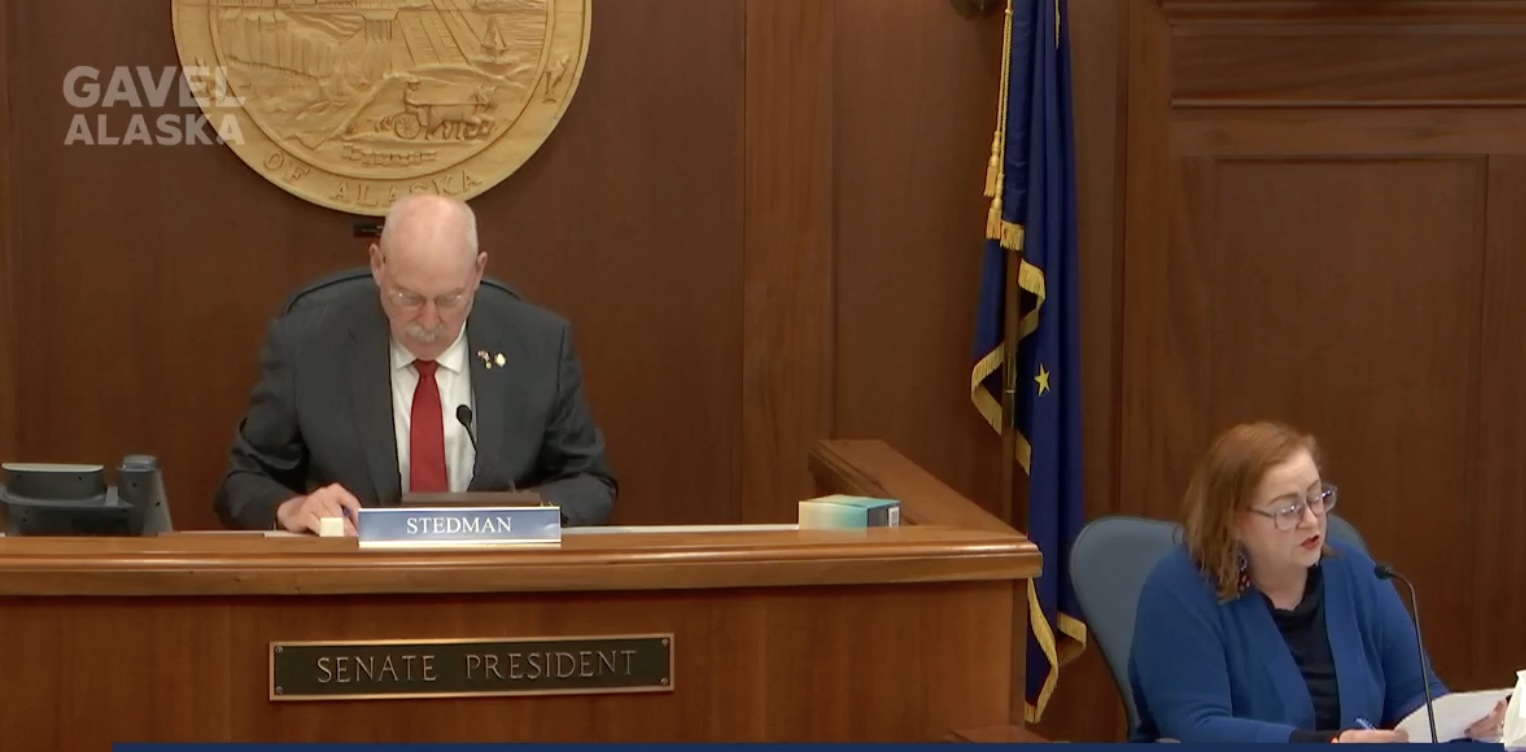
On Wednesday, the Senate briefly convened in what amounted to a technical session, presided over by Senate President Pro Tem Bert Stedman, with almost no senators present before quickly recessing. The slow pace has become the defining characteristic of this special session.
The current special session began June 20 after Gov. Mike Dunleavy vetoed the previous version of HB 381, saying it had been loaded with provisions that would make the Alaska LNG project less attractive to investors. On the opening day, both the House and Senate rejected each other’s versions of the legislation and appointed a six-member conference committee to negotiate a compromise.
Representing the House are Speaker Bryce Edgmon, Rep. Calvin Schrage, and Rep. Justin Ruffridge. The Senate appointed its own three conferees to negotiate the final language: Sens. Mike Cronk, Bert Stedman, and Lyman Hoffman.
Since then, the committee has spent days working through differences between the chambers, including disagreements over proposed new S corporate income taxes, S-corporation tax provisions, labor language, municipal revenue protections, and other policy additions that critics argue have little to do with making the gasline financeable.
Gov. Dunleavy has repeatedly warned lawmakers that he will veto any final bill containing targeted tax increases on oil and gas producers or other provisions that undermine the project’s economic viability. His administration has argued that investors need certainty and a competitive tax structure before making a final investment decision on what could become one of the largest energy infrastructure projects in North American history.
Lawmakers had privately hoped to finish negotiations by the beginning of July, but that timeline has slipped. Legislative leaders are now informally discussing mid-July as a possible target for final votes, although no formal schedule has been announced.
The drawn-out process reflects continued foot dragging from Senate and House Democrats, joined by the small number of Republican and nonpartisan allies who have repeatedly sought to load up the bill with unrelated tax provisions and policy changes that would make the project less attractive to private investors.
The Legislature’s task is relatively straightforward: provide a predictable tax structure during the construction period so lenders and investors can finance the estimated $44 billion-plus project. Alaska has debated a North Slope gasline for decades, and continued delays only strengthen competing LNG projects around the world.
Thursday’s conference committee meeting is expected to continue negotiations, but no final agreement appears imminent. The House floor session is likewise expected to produce little substantive action as lawmakers wait for the conference committee to finish its work.


3 thoughts on “No progress in Juneau: Democrat-led majority drags special session into dog days of summer”
Its obvious. The current legislators of this 2026 legislature have vastly different opinion what is best for Alaska than Governor Dunleavy.
Gas pipeline will remain unbuilt and waiting for another generation that’s not Boomers and GenXers to build it.
Keep them in session till Christmas.
They cannot campaign while in session.
The Governor must keep his foot on the gas and do not let up.
The games these jerks are playing is all about power. Just look at the names in the Senate committee, SE’s Stedman and Western AK Hoffman, life long political types who have never done anything in their lives but politics. So They do not know or care about the gas line. Why nobody in their districts will benefit from the gas line. They do not have gas in SE or Western Alaska and never will. So this is why they want more revenue from the gas line. The railbelt benefits from the access to the gas. Railbelt is 75% of the people in Alaska. Railbelt legislators need to wake up.
Clickety click goes,the per diem spending meter