


By ALEX GIMARC
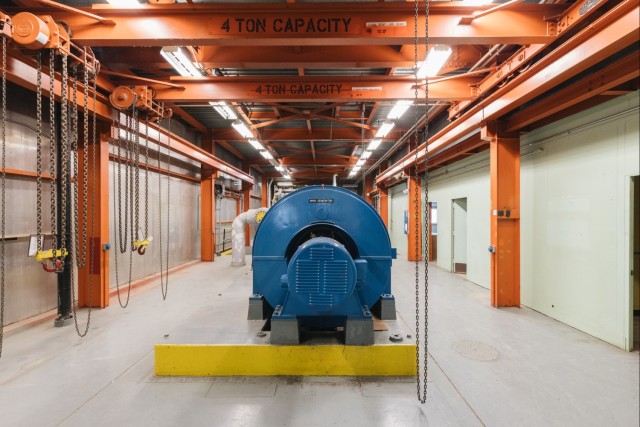
Nov. 10, 2026 — It looks like reactors are coming back to Alaska. The first one to be installed since 1962 will be at Eielson. Construction is scheduled to start as early as next year, with initial operation in 2028–2030. The proposed plant should generate 5 megawatts electric (MWe), with a total energy output of 60 megawatts thermal (MWt).
Alaska’s history with things nuclear has not been a pretty one, starting with an Edward Teller proposal to use weapons to blast an artificial deepwater harbor near Point Hope (Project Plowshare, 1958). That proposal was abandoned in the face of public opposition. It was closely followed by a series of three underground nuclear bomb tests at Amchitka in 1965–1973. The last of these was the largest underground test ever conducted in the US.
The first reactor in Alaska was a 20 MWt pressurized water reactor at Fort Greely. This was one of three in the US built around 1962. The other two were at a military base in VA and on a barge. All three test reactors operated for around 10 years. They ended up being expensive to operate and were decommissioned. As these were the first of their kind, operation and maintenance procedures were all being created on the fly. The Fort Greely operation pumped radioactive wastewater into the local aquifer.
One note on radiation: It is the dose, the exposure to ionizing radiation over time, that is important. Today, we can measure the decay of individual atoms. Being exposed to a few of these events is not a problem. Being exposed to billions upon billions upon billions of decay events at the same time is dangerous. Note that water from hot springs in Interior Alaska is heated by the nuclear decay of heavy elements in the rocks rather than volcanic heat.
Over the years, there has been renewed interest in microreactors for dispersed energy needs in Alaska, particularly with the newer designs solving most of the drawbacks of the 70-year-old light-water designs that need active cooling and react poorly when that cooling is disrupted. The first of these came from former Galena City Manager Marvin Yoder suggesting one to power his village in 2003. Reactors were mentioned as part of “all of the above” Railbelt energy discussions in the 2007–2010 timeframe. That discussion triggered a successful anti-nuke series of ads during the 2010 Chugach Board campaign that bounced me off the Board after one term.
Fast forward another 15 years, and the first new-design reactor is coming back to Alaska, this time at Eielson. These are referred to as Generation IV (GenIV) reactors. The significance of GenIV is that they are passively cooled, self-contained, burn waste fuel from older reactors, and are designed to make it much harder to divert fuel for non-peaceful purposes.
Most importantly, they are designed to be produced in batches rather than individually, significantly controlling construction, operation and licensing costs. They are also built far faster, which we have been doing with ship and submarine reactors for over half a century.
AIDEA last month signed an equity agreement with NuCube Energy to support development of microreactors intended to be deployed in remote communities and industrial sites (mines). Suzanne wrote a piece about this a couple of weeks ago.
The Trump administration is busily clearing the regulatory thicket and encouraging GenIV microreactors for military installations and data center energy solutions. This is not a particularly new approach, as reactors have been powering submarines since 1954 and larger ships since 1960.
This leads directly to the next question: If microreactors come to Alaska, how do we use them? A response would be to consider how one would use a heat engine in the cold country, which will be a topic for the next piece.
Alex Gimarc has lived in Anchorage since retiring from the military in 1997. His interests include science and technology, environment, energy, economics, military affairs, fishing and disabilities policies. His weekly column, “Interesting Items,” is a summary of news stories with substantive Alaska-themed topics. He was a small business owner and Information Technology professional.
AIDEA invests $25 million in nuclear microreactor developer, targeting Alaska’s energy needs
NuAlaska initiative aims to bring long-life nuclear microreactors to remote Alaska
Russia building up nuclear weapons along Arctic route: Report

4 thoughts on “Alex Gimarc: Nuclear renaissance in Alaska – a history”
Anything to knock GVEA out of their BS monopoly on providing power.
Gimarc: what is “passive cooling” in this context?
Google “The Hormesis Theory” by J. Koch to begin understanding that low dose radiation up to an individuals personal threshold is beneficial to health. The anti-energy LNT- linear no threshold lie has been used by caveman lifestyle promoting zealots to prevent affordable nuclear power development in the US while other countries like France have not been duped. Ask how many nuclear power plants China has/is building.
LNT was a fraud to begin with. The guy who created it ignored the contrary data , which he kept On His Desk ase,he was receiving awards for the theory. . its well known in the medical physics x
Community that he was a charlatan.