

By SUZANNE DOWNING
Nov. 10, 2026 — When Americans raised their flag over Sitka in 1867, Marines were there. Nearly 159 years later, the Corps is preparing for a larger role in Alaska’s defense.
On its 251st birthday Tuesday, the US Marine Corps has an Alaska story that reaches from the transfer of Russian America to the cold-weather training grounds of today. Along the way, Marines guarded remote naval posts, helped defend the Aleutians, and built a reserve tradition that continues.
Two Marines stand out in that history as the most well-known: Juneau-born Medal of Honor recipient Col. Archie Van Winkle and US Sen. Dan Sullivan, who retired as a Marine Reserve colonel after 30 years of service.
The Corps traces its birthday to Nov. 10, 1775, when the Continental Congress authorized two battalions of Marines for service during the American Revolution. The observance comes one day before Veterans Day.
Marines at the transfer
At the Oct. 18, 1867, transfer ceremony on Castle Hill, a small contingent of sailors and Marines from American ships in Sitka Harbor joined Army troops as the Russian flag came down and the American flag went up.
The Army initially administered the new possession. After its withdrawal from Sitka in 1877, federal authority became thin. In 1879, amid settlers’ fears of unrest, USS Alaska arrived, and the Navy and Revenue Cutter Service assumed responsibilities that included governing the territory.
Marines provided an armed presence ashore. Even after Congress established a civil government in 1884, the Navy retained a role in Sitka until 1912.
Their accommodations were rough. An 1889 report from USS Pinta described a Marine guard of up to 30 men and one officer crowded into a single room in a building also used by courts, a jail, and federal officials. The commanding officer urged construction of separate quarters.
As the United States strengthened its North Pacific defenses before World War II, Marine detachments again supported Alaska’s naval installations.
At Dutch Harbor, Marines were among the defenders when Japanese carrier aircraft attacked on June 3–4, 1942. The raids killed 43 Americans, including one Marine, and wounded 50.
Marines served afloat and ashore during the Aleutian campaign, although Army forces carried the principal American ground-combat burden in retaking Attu and returning to Kiska.
The Corps’ Alaska role remained comparatively small, centered on naval security and support rather than a large permanent combat formation.
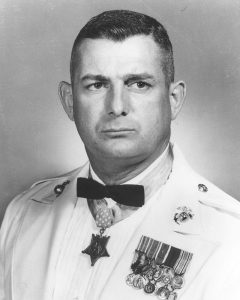
Archie Van Winkle: Alaska-born valor
Born in Juneau on March 17, 1925, Archie Van Winkle remains the only Alaska-born recipient of the Medal of Honor.
His service spanned World War II, Korea, and Vietnam. The action that earned the nation’s highest military decoration came near Sudong, Korea, on Nov. 2, 1950, during the advance toward the Chosin Reservoir.
A staff sergeant with Company B, 1st Battalion, 7th Marines, Van Winkle rallied his platoon after a larger enemy force broke into its position at night. He led a counterattack that allowed his men to reorganize.
With an elbow wound disabling one arm, he crossed approximately 40 yards under fire to reconnect an isolated squad. A grenade then struck him in the chest. Still, he refused evacuation and continued directing and encouraging his Marines until he lost consciousness and was carried away.
President Harry Truman presented him the Medal of Honor on Feb. 6, 1952.
Van Winkle eventually retired as a colonel and returned to Alaska, living aboard a boat near Ketchikan. He died in 1986. A Juneau monument and a memorial marker at Sitka National Cemetery honor his service.
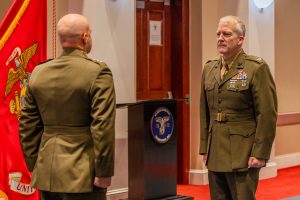
Dan Sullivan: Marine and senator
Sullivan represents another chapter in Alaska’s Marine history: military service carried alongside a storied career in public office.
His Marine career began in 1993 and included infantry, reconnaissance, and intelligence duties. He served on active duty before moving into the Reserve, with subsequent recalls that included a 2013 deployment to Afghanistan.
His assignments included executive officer of Echo Company, 4th Reconnaissance Battalion, and command of the 6th Air Naval Gunfire Liaison Company.
An Alaska attorney general and natural resources commissioner before entering the Senate in 2015, Sullivan continued his Reserve service while serving in Congress. He retired on Feb. 1, 2024, as a colonel.
The Marine Corps Heritage Foundation featured Sullivan in its Alaska profiles for the Corps’ 250th anniversary last year. In the Senate, he has advocated for stronger Arctic defenses and an expanded Marine presence in Alaska.
A new Arctic chapter
The modern reserve connection dates to July 1, 1985, when Company E, 4th Reconnaissance Battalion, was activated.
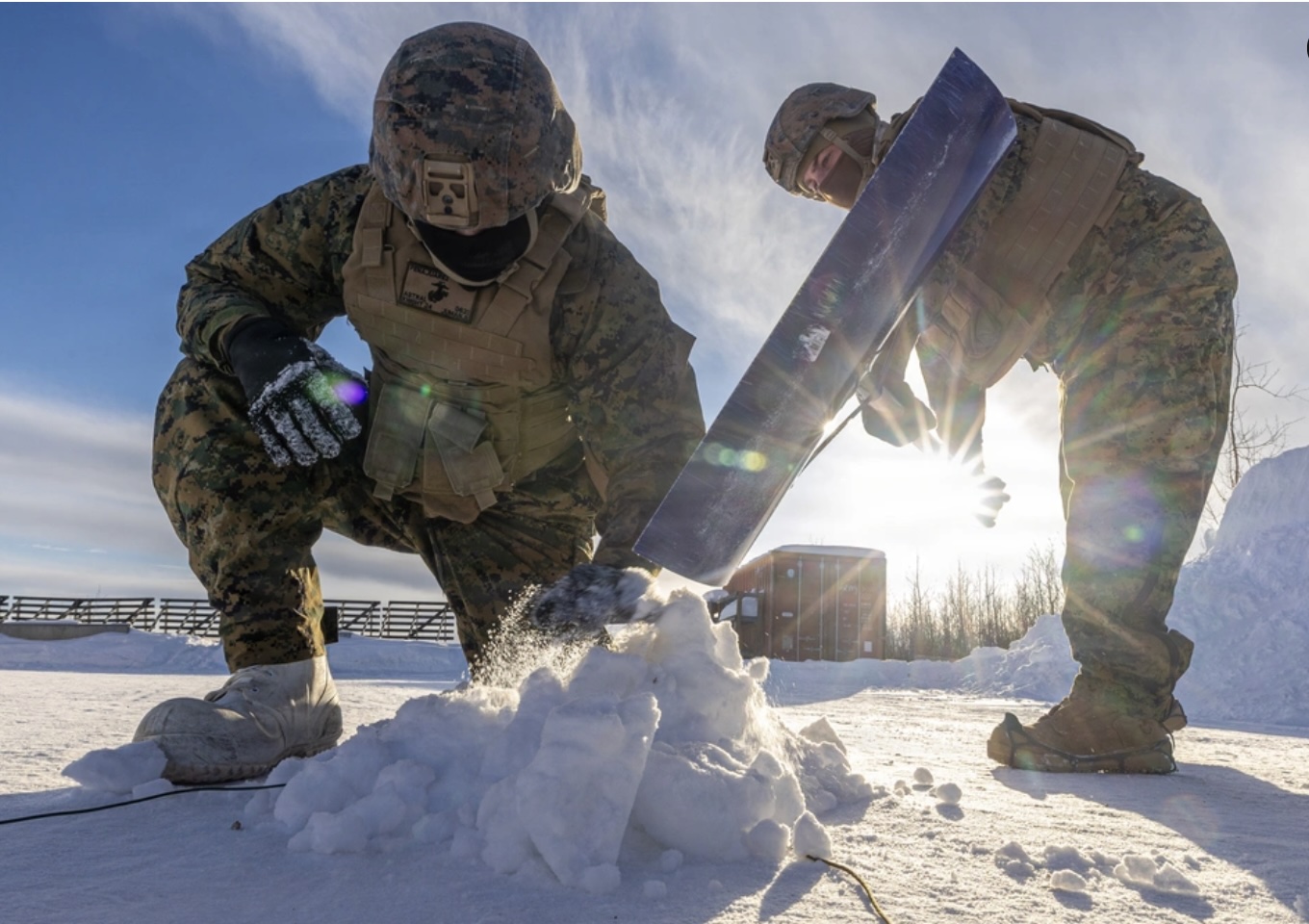
This year, the Corps announced “Campaign–Alaska,” pairing Marine Rotational Force-Alaska with a permanent Supporting Arms Liaison Team at Joint Base Elmendorf-Richardson.
The rotational force will conduct recurring Arctic training and experimentation, including participation in joint exercises. The liaison team, a detachment of the 6th Air Naval Gunfire Liaison Company, is intended to provide a persistent presence by fiscal year 2027 and help coordinate supporting fires with joint and allied forces.
It is the latest development in a relationship that began with Marines standing at Sitka’s transfer ceremony: a small force with a long connection to Alaska, now preparing for a greater role in the High North.
Semper Fidelis.