



By SUZANNE DOWNING
April 8, 2026 – Democrats in Juneau are advancing yet another proposal that would expand state spending on public education, this time by creating a new fund to pay for school meals for additional students who do not currently qualify for fully subsidized lunches.
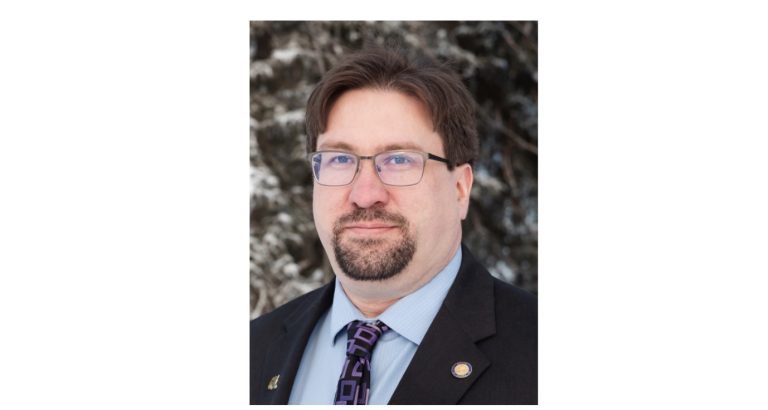
House Bill 12, introduced by Fairbanks Rep. Maxine Dibert, directs the Department of Education and Early Development to provide funding to school districts so students who qualify for reduced-price meals would instead receive those meals for free. The legislation also creates a new “public school reduced price meals fund” within the state’s general fund and makes the program eligible for Pick.Click.Give. donations to help offset costs.
Under current federal rules, students from the lowest-income households qualify for free meals, while families earning somewhat more can receive reduced-price meals that still require a payment. Dibert’s bill targets that second category — students whose families earn too much to qualify for free meals but still meet reduced-price thresholds.
According to Dibert, assuming a family of four, households earning more than $52,247 do not qualify for free meals, while those earning less than $74,352 qualify for reduced-price meals. The bill identifies 3,326 Alaska students who fall into that category. The proposal would use state funding to eliminate the reduced-price requirement and make meals free for those students.
Dibert believes that providing state-funded meals improves academic performance and student well-being. She cites improved test scores, higher attendance rates, and fewer disciplinary incidents as benefits associated with school meal availability. It also frames the proposal as targeted relief for families facing higher grocery costs.
Yet the measure represents another expansion of state spending at a time when lawmakers are already debating increases to the Base Student Allocation, pension changes, a lower Permanent Fund dividend, and other education funding proposals. By shifting meal costs to the state, school districts would effectively gain flexibility to redirect their own existing funds toward other spending priorities.
The structure of the bill also creates a new designated fund inside the general fund, a mechanism often used to establish ongoing spending commitments. While the fund would be eligible for voluntary Pick.Click.Give contributions, those donations typically represent a small fraction of program costs, meaning the bulk of funding would likely come from state revenues.
As of the 2025–2026 school year, nine states — California, Colorado, Maine, Massachusetts, Michigan, Minnesota, New Mexico, New York, and Vermont — have adopted “universal free school meals” policies funded with taxpayer dollars. Those programs go beyond the federal National School Lunch Program, which already subsidizes meals for low-income students.
While Dibert’s bill is narrower than full universal meals, it moves Alaska in the same direction of Democrat-run states by expanding state responsibility for meal costs that were previously paid by families.


5 thoughts on “No such thing as a free lunch, but this bill purports to provide them to more students”
Rep. Dibert obviously never had a current school lunch!
The schizophrenic legislature strikes again. On the one hand we can not “afford” a full PFD (which would ironically help families feed their kids) or any other improvements like better snow plowing and building more roads and we need to talk about more taxes. On the other hand at the same time there is the push for defined benefits and this nonsense. It is another switch-a-rue to shove more money at the NEA and school administrations without accountability and any improvement.
You are right and again the state pays put too much for “free Lunches” and more problems. The states that have gone totally free are the states with the most illegals and heavier crime issues and the states that ICE and Customs and borders are trying to clean up because of that very thinking that encourages the illegal and criminal problems of fraud, waste and abuse, with drugs, gangs and cartels in abundance. Let’s spend more money on helping ICE get the illegals out of Alaska. Make the churches put the illegals out that are hiding them and participating in the human trafficking and obstructing the law enforcement from doing their jobs. Alaska is not better off with legislative obstruction of reality.
If these families qualify for food stamps and WIC, then why are they not feeding their kids? Seems to me that schools would do better NOT proving welfare but rather teaching kids properly so they could pull themselves out of poverty. I suspect that I grew up in a family with considerably less cash than most, but I never once went without lunch. Poor definition of priorities by families should not automatically lead to government spending.
I doubt this bill has anything to do with increasing eligibility for more families but more to do with getting more money into the school districts accounts
I tell you again parents. There is a time to stand and fight being unmovable. There is a time to fight by removing yourself (or removing your child) from a school district all together. These people for Alaska School districts are abusive (maybe even suffering under Narcissism) and there is only one way to make an abuser face himself (if he does) and its to walk away without a fight. Just leave him. Well. That’s who we got in Alaska Schools. Thr more kids who are exited out the sooner Alaska will be left with no choice but to face the mess they created.
More than one occasion a close relative relayed the multiple times. The anchorage cafeteria lead here at a local school would direct individuals to quickly empty the freezer or fridge. Truck in route from main warehouse to restock their facility. No room. Throw everything in the dumpster. And don’t even think about commandeering anything for personal use. I promise this is factual .