


By ZACK GOTTSHALL
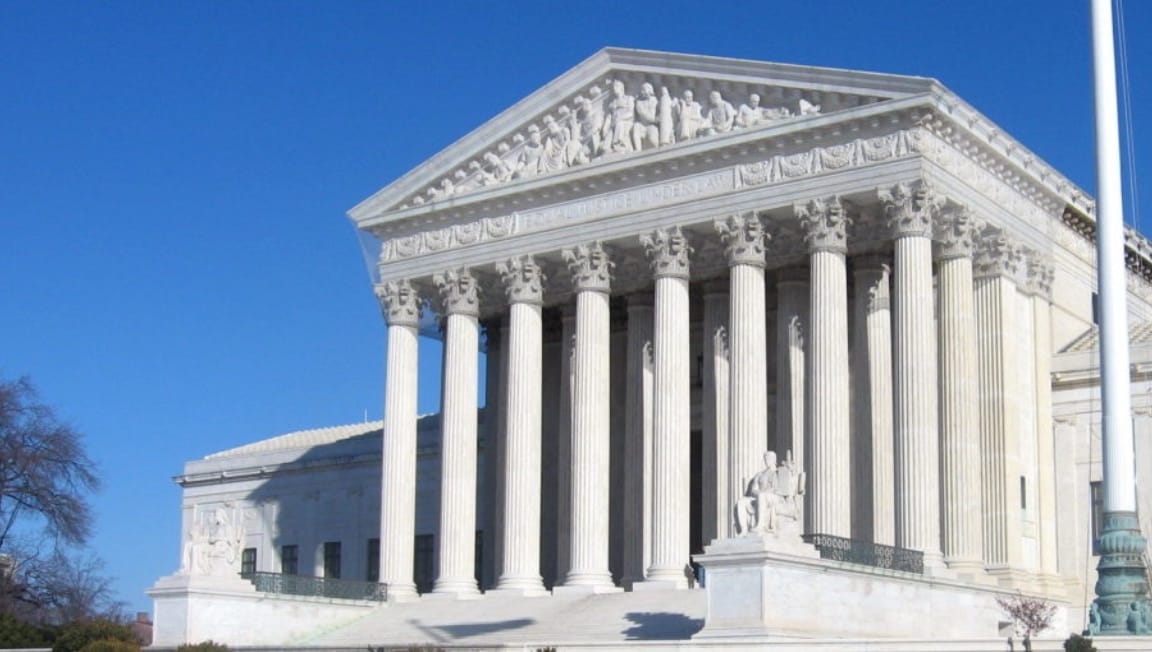
The Supreme Court’s recent ruling on regulatory standing may go down as one of the most consequential decisions in decades for states like Alaska — states whose economies live or die based on federal decisions made thousands of miles away.
While the case itself centered on fuel producers challenging the Environmental Protection Agency’s approval of certain California regulations, the broader principle affirmed by the Court has far-reaching implications. And Alaska is likely to feel its impact more than almost anywhere else in the nation.
Writing for the majority, Justice Brett Kavanaugh delivered a line that every Alaskan should pay attention to:
“The government generally may not target a business or industry through stringent and allegedly unlawful regulation, and then evade the resulting lawsuits by claiming that the targets of its regulation should be locked out of court as unaffected bystanders.”
This language appears in the Supreme Court’s official opinion in Diamond Alternative Energy, LLC v. EPA, No. 24-7 (June 20, 2025), available at.
This statement from one of the nation’s highest judicial authorities opens a new legal pathway for Alaska’s most critical industries to fight back when Washington oversteps its bounds. And for a state where nearly every economic sector is shaped by federal decisions, this ruling has the potential to reshape our regulatory battles for years to come.
Fisheries and By-Catch: Standing for Those Who Bear the Burden
Alaska’s fishing communities are no strangers to federal rules that pick winners and losers. When large offshore factory trawlers operate under federal quota systems that result in excessive salmon or halibut by-catch, it is the local, small-boat fishermen who pay the price. Coastal processors, fish-dependent economies, and entire communities suffer when federal allocations favor one fleet at the expense of another.
Historically, those harmed downstream lacked a clear path into court because they were not the parties directly regulated. That barrier may have just crumbled. Under this ruling, fishermen, processors, and coastal communities may now argue that they face predictable economic harm from federal decisions—and therefore deserve standing to challenge them.
This could mark a turning point in the long fight to address by-catch, trawler impacts, and the balance of power in fisheries management.
LNG Development, Energy Export Limits, and the War on Permitting
Alaska’s natural gas has been stranded for decades—trapped behind layers of federal permitting, NEPA reviews that stretch endlessly, and shifting political winds in Washington. Every delay, every objection, every procedural trap laid in the name of “environmental review” directly affects the state’s ability to develop LNG, build pipelines, or bring affordable energy to rural areas.
The Supreme Court’s ruling strengthens Alaska’s hand significantly. If federal decisions aimed at regulating other markets cause predictable economic harm to Alaska’s producers, utilities, pipeline developers, or project partners, the Court has now made clear: those harmed are no longer “unaffected bystanders.” They can challenge the federal government in court.
That alone should send a chill through agencies that have treated Alaska’s energy development as expendable or politically negotiable.
Mining, Critical Minerals, and the Federal Gatekeeping Problem
Mining is another arena where Alaska has repeatedly watched federal authorities block access, veto permits, or delay approvals. Projects such as Ambler, Donlin, Pebble, and Graphite One have all faced federal barriers, whether through the EPA, the Department of the Interior, or the Army Corps of Engineers.
These decisions reverberate well beyond the mine sites. They affect contractors, supply chains, Native corporations with mineral rights, transportation networks, and local governments hoping for economic development. Under Justice Kavanaugh’s standing analysis, these downstream entities may now have a stronger claim to challenge federal decisions that predictably harm them.
This matters enormously when Alaska’s mineral resources, including several critical to national defense, remain locked behind federal political decisions.
Transportation, Access, and Infrastructure: The Lifelines of the North
Few places in America suffer more economic damage from federal access restrictions than Alaska. Whether it is the Ambler Road, the King Cove Road, maritime rules affecting ferries and barges, or federal decisions slowing port development, Alaska is uniquely vulnerable to distant bureaucrats who do not live with the consequences of their choices.
When Washington blocks a road, restricts a shipping route, or holds up infrastructure permits, it isn’t simply issuing a bureaucratic order—it is cutting off an economic lifeline. Tourism operators, shipping companies, fishing fleets, construction firms, and local governments all suffer.
Under the Supreme Court’s reasoning, these parties may now have stronger standing to sue when federal decisions create predictable harm.
A Turning Point for Alaska’s Sovereignty
For decades, Alaska has lived under a regulatory regime in which federal agencies held immense power while those harmed by federal decisions often had no practical means of fighting back. The Supreme Court’s decision is a major course correction.
This shift also comes at a moment when national leadership is once again acknowledging Alaska’s strategic and economic importance. President Trump and his administration have demonstrated strong support for Alaska’s resource development and energy future, working to open doors that federal agencies had long kept shut.
Congressman Nick Begich has likewise worked tirelessly to keep Alaska’s priorities front and center in Washington, advocating for policies that recognize our state’s unique challenges and enormous potential.
The Court’s ruling affirms a simple but powerful principle: predictable harm creates standing. That principle reinforces the growing recognition — both in the judiciary and in national leadership — that Alaska must not be sidelined by distant decision-makers.
For Alaska, this means our fisheries, our energy producers, our miners, our transport networks, and our local economies may now have a clearer path to challenge federal overreach. It is an overdue acknowledgment that states like ours — rich in resources but too often constrained by remote regulators — deserve their day in court.
This ruling does not solve every challenge. But it arrives at a time when momentum is finally shifting, and together these changes offer Alaska something we have long needed: a genuine fighting chance.
Zack Gottshall is a retired US Army Intelligence Officer, a former Vice Chair of the Alaska Republican Party, a small business owner, and an advocate for responsible Alaskan resource development. He and his family live in Anchorage, where he remains actively engaged in community service and public policy issues affecting Alaska’s future.

One thought on “Zack Gottshall: Landmark Supreme Court ruling and what it means for Alaska”
Thank you for the insightful article. Finally, good news for my resource rich home.
🥇🥈🥉🪓⛏️⚒️🌲🌳🪚🐻🫎🐏🐇🦆🪿🐟🦦🦟🦟🦟💎🎿🏒⛓️💥🌃❄️❄️❄️