


By SUZANNE DOWNING
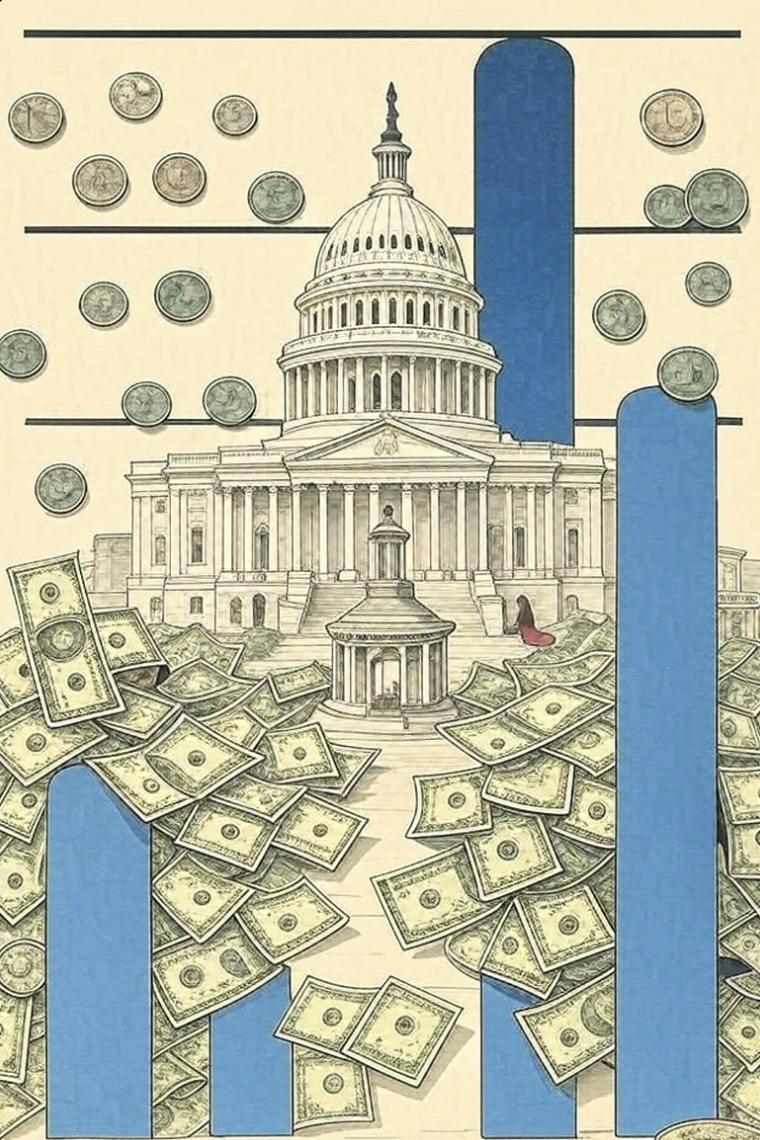
Aug. 19, 2026 – The national debt has surpassed $40 trillion for the first time in the nation’s history.
The federal government’s Total Public Debt Outstanding reached approximately $40.05 trillion on Tuesday, Aug. 18, according to the US Treasury Department’s daily Debt to the Penny accounting.
That works out to roughly $117,000 for every man, woman, and child in the country.
The milestone represents the cumulative amount the federal government has borrowed over generations after spending more than it collected in taxes and other revenue. The debt stood at approximately $20 trillion in early 2017. It has doubled in less than a decade under the Trump and Biden administrations.
For perspective, it took the federal government more than two centuries to accumulate its first $20 trillion in debt. It needed less than 10 years to add the next $20 trillion.
- The combined Social Security trust funds hold roughly $2.5 trillion in special-issue Treasury securities (mostly OASI around $2.25 trillion and DI a smaller amount).
- This represents a substantial share of total intragovernmental holdings (which total around $7.7–7.8 trillion). Social Security is typically the single largest or one of the largest holders.
The country passed the $39 trillion mark only about five months ago. Since then, Washington has added another $1 trillion to the national balance sheet, an average of more than $6 billion in debt per day.
Of the current $40 trillion total, approximately $32.27 trillion is debt held by the public. That includes Treasury securities held by American individuals, banks, corporations, pension plans, mutual funds, state and local governments, the Federal Reserve and foreign investors.
The remaining $7.78 trillion consists of intragovernmental holdings, which is money the federal government owes to its own accounts, including the Social Security and Medicare trust funds.
Debt held by the public is generally considered the more economically significant figure because it represents borrowing from financial markets. The Congressional Budget Office estimates that publicly held debt will equal approximately 101% of the nation’s gross domestic product by the end of fiscal year 2026.
The previous record for publicly held debt as a percentage of the economy was 106% in 1946, immediately following World War II. The Congressional Budget Office projects the country will break that record by 2030 and reach 120% of GDP by 2036 if current policies remain in place.
The red ink continues to pile up despite relatively low unemployment and the absence of a recession. These were economic conditions during which the federal government historically has run much smaller deficits.
The Treasury Department reported a $432 billion deficit in July alone, the largest July shortfall on record and the highest monthly deficit since March 2021. Washington collected approximately $334 billion during the month while spending about $766 billion.
The federal government’s deficit reached $1.799 trillion during the first 10 months of fiscal year 2026, already exceeding the entire fiscal year 2025 deficit with two months remaining. Budget analysts now expect the annual shortfall to approach or exceed $2 trillion.
Persistent deficits have accumulated under Republican and Democratic administrations alike. The causes include the financial crisis and recession of 2008, tax and spending decisions, wars, trillions of dollars in emergency spending during the Covid pandemic, the expanding cost of Social Security and Medicare, and rapidly rising interest payments.
Interest on the debt has become one of Washington’s largest expenses.
CBO projects net interest spending will exceed $1 trillion during fiscal year 2026, up from approximately $970 billion last year. That is more than the federal government spends on national defense and more than it spends on nearly every individual federal program other than Social Security and Medicare.
The average interest rate on publicly held federal debt is estimated at approximately 3.4% this year. As older debt matures and is refinanced, CBO expects the average rate to rise to approximately 3.9% later in the next decade.
Even small increases in borrowing costs become enormously expensive when applied to tens of trillions of dollars. Interest payments are projected to climb to $2.1 trillion annually by 2036, consuming nearly one-fifth of all federal spending.
Most publicly held US debt is owned domestically. CBO estimated that American entities held roughly 70% of the publicly held debt as of late 2025, with foreign investors accounting for about 30%. The Federal Reserve, mutual funds and financial institutions are among the largest domestic holders.
Japan remains the largest foreign holder, followed by the United Kingdom. China’s holdings have fallen considerably from their previous peak and now account for only a small percentage of total US debt.
The dollar’s role as the world’s principal reserve currency helps maintain demand for Treasury securities and allows the United States to borrow at rates many other countries could not obtain. But the government must continually attract buyers willing to finance new spending and refinance trillions of dollars of maturing obligations.
The $40 trillion milestone comes as the nation approaches another fight over its statutory debt ceiling, currently set at $41.1 trillion. Faster-than-anticipated borrowing could push the government against that limit sometime in 2027 unless Congress raises or suspends it again.



16 thoughts on “US national debt blows past $40 trillion for first time”
Americans are Too government dependent. I look forward to that day when the government just doesn’t have the money to keep giving it away.
SD – What no accusations as to who might be the culprit here? Can you graph the last 10 presidential administrations on debt/deficit comparisons? Pretty easy with chatGPT….
Very few Americans call themselves Socialists and we mostly claim to detest Socialism. Yet most of us already partake of it in some way, not the least being those (from both parties) who receive Social Security and disability checks every month, and partake of Medicare and Medicaid services.
Reduce Defense and Social Security expenditures in equal measure and you will be able to pay down this monster.
You do realize of course that we were coerced into participating in those social programs? So it’s not like we choose to partake. Give me my principal with interest back and I’ll walk away a happy. Oh wait. That’s right. It’s a giant Ponzi scheme and the politicians already spent it all. And more!! 40 trillion and counting. Oh well, a 25% cut to what I’m owed is no big deal I guess. Merica! Land of fealty to authority and home of the submissive. 🇺🇸
OK so we have a Government hater here. It helps you in so many ways, to which most you are probably oblivious.
Stronger together!
What is not to be repelled by? It is tyrannical and almost all of it is extra constitutional.
Soon we will be having very different conversations as the currency becomes worthless or we go bankrupt.
Government just lobbed $410 million to Southeast ferries.
And Trump spent how many billions more by letting Netanyahu drag us into a war with Iran? Not making America’s balance sheet great again, that’s for darn sure.
Trump (2016): “I call myself the king of debt. I’m great with debt. Nobody knows debt better than me. I like debt for me. I don’t like debt for the country. We have $19T in debt. We are sitting on a time bomb and Hillary Clinton doesn’t have a clue. President Obama has doubled the debt.” The debt is now at $40T. Trump is responsible for nearly $12T which is about 30%.
And the Felon King said, “I love the inflation!”. You stupid Trump supporters believed this con man, buried good government prospects like Kamala Harris in used wet wipes and now you and the rest of Americans are suffering for it. You are complicit in making America the butt of international jokes, vulnerable to attack and a cage match of division.
“In the near future, I want to do what has not been done in 24 years, balance the Federal budget. We are going to balance it.” – President Trump, March 4, 2025 (address to congress)
US National Debt, March 4, 2025: $36 trillion
US National Debt, Today: $40 trillion
We are all to blame. We accept what our ancestors never would.
The Founders never wanted a large Federal Government. It has become tyranny.
A large centralized government always means a large standing military. And as Madeleine Albright infamously remarked (as all warmongers have) “What’s the point of having this superb military that you’re always talking about if we can’t use it?”
No large federal government means no large military- means no empire means no endless wars.
We have been off course for more then 100 years.
$40 trillion is a made-up threshold with no more significance than than $39 trillion or $41 trillion or any other number. It’s big no matter how you put it.
President Autopen wore out the printing press with his massive BBB “build back better” plan that created an enormous cost just to export all the criminals he imported through open border plan. It’s not only the money it costs but just look at the lives lost from the victimization inflicted on innocent Americans targeted from the imported criminals as well as ignorant activist participants interrupting the deportation of those criminals. Stupid is as stupid does.
Since Trump returned to the White House for a second term in January last year, the debt has gone up by about $3.8 trillion. That means that the national debt has climbed by a total of $11.6 trillion across the two Trump Administrations—so far—a figure that comprises more than a quarter of the total amount.
” Stupid is as stupid does.” You said it bro.