



By SUZANNE DOWNING
April 3, 2026 – For anyone who has driven the Alaska Highway through the Interior, the Johnson River and Gerstle River bridges are historically dicey choke points on one of Alaska’s most important lifelines.
Now, the bridges, which were built in the 1940s, are slated for replacement.
US Transportation Secretary Sean Duffy announced $108.7 million in federal funding to rebuild the currently load-restricted bridges in the Southeast Fairbanks Census Area, eliminating those load restrictions and modernizing a stretch of highway that serves truckers, military convoys, tourists, and rural residents alike.
The funding comes through the Federal Highway Administration’s Bridge Investment Program and will be administered by the Alaska Department of Transportation and Public Facilities.
The Johnson River Bridge is at about Milepost 1380 on the Alaska Highway (about 42 miles south of Delta Junction). It is roughly 965–974 feet long and was originally a steel truss/overhead-truss structure. Its condition is rated poor overall (condition rating of 4 out of 9). It is a non-redundant steel tension member bridge that does not meet modern standards and has required ongoing maintenance, including a quick repair in August 2025 when a steel plate covering an expansion joint was re-attached (traffic was halted for part of a day). It is load-restricted, limiting heavier vehicles and impacting supply chains, commerce, tourism, and military operations along this critical overland route from Canada to Alaska. Failure could force long detours of 150 miles or about three hours.
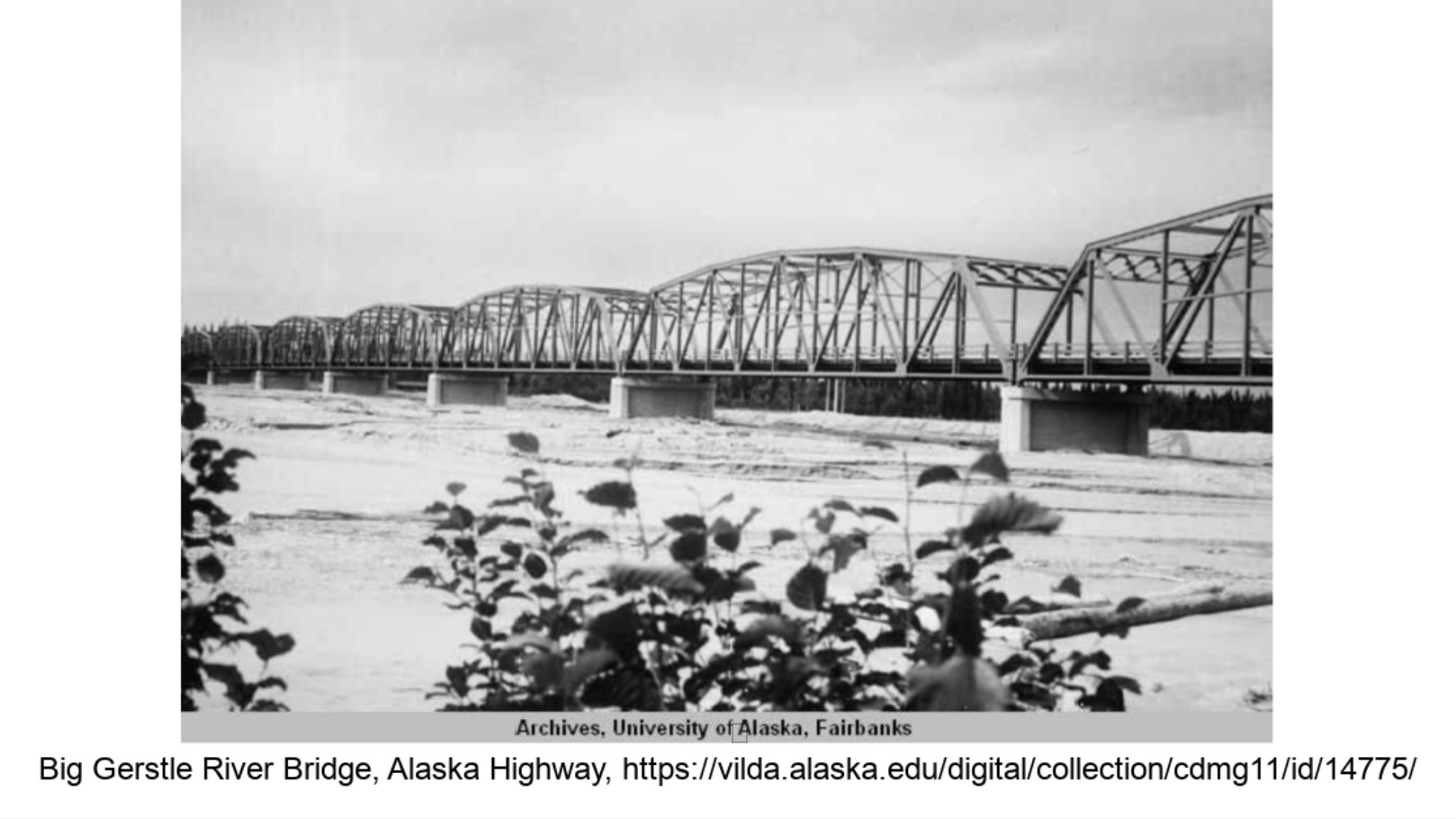
The Gerstle River Bridge is at about Milepost 1392.7 on the Alaska Highway. At about 1,885 feet long, it is a subdivided truss/steel truss bridge that is also rated poor overall (4 out of 9). It is non-redundant, and scored critical in past assessments, with unstable foundations noted in earlier inspections.
The Gerstle River Bridge has undergone prior rehabilitation (e.g., in 2000 and seismic upgrades in 2003) but remains outdated. It is load-restricted like the Johnson River Bridge, with similar impacts on the highway’s role as a lifeline for remote areas. In early 2026, the Alaska DOT offered seven spans of the existing bridge for free relocation and preservation by any interested group.
For Interior residents, the project is less about policy and more about everyday reality. These bridges sit on the primary overland route connecting Alaska to the Lower 48 through Canada. When they’re restricted, or worse, closed, it affects everything from grocery deliveries to medical travel.
Gov. Mike Dunleavy called the project a critical investment for safety and economic growth across Interior Alaska, while US Sen. Dan Sullivan pointed out that upgrades will strengthen military readiness and improve reliability along a key supply corridor.
Congressman Nick Begich emphasized the importance of dependable transportation in a state where road options are limited and detours often don’t exist.
Construction timelines have not yet been announced, but the funding clears a major hurdle for the long-anticipated replacements.


One thought on “Two Alaska Highway bridges to be replaced to to keep Interior lifeline open for families, truckers, and troops”
Wouldn’t be so critical if we had that rail link to the,rest of the US