

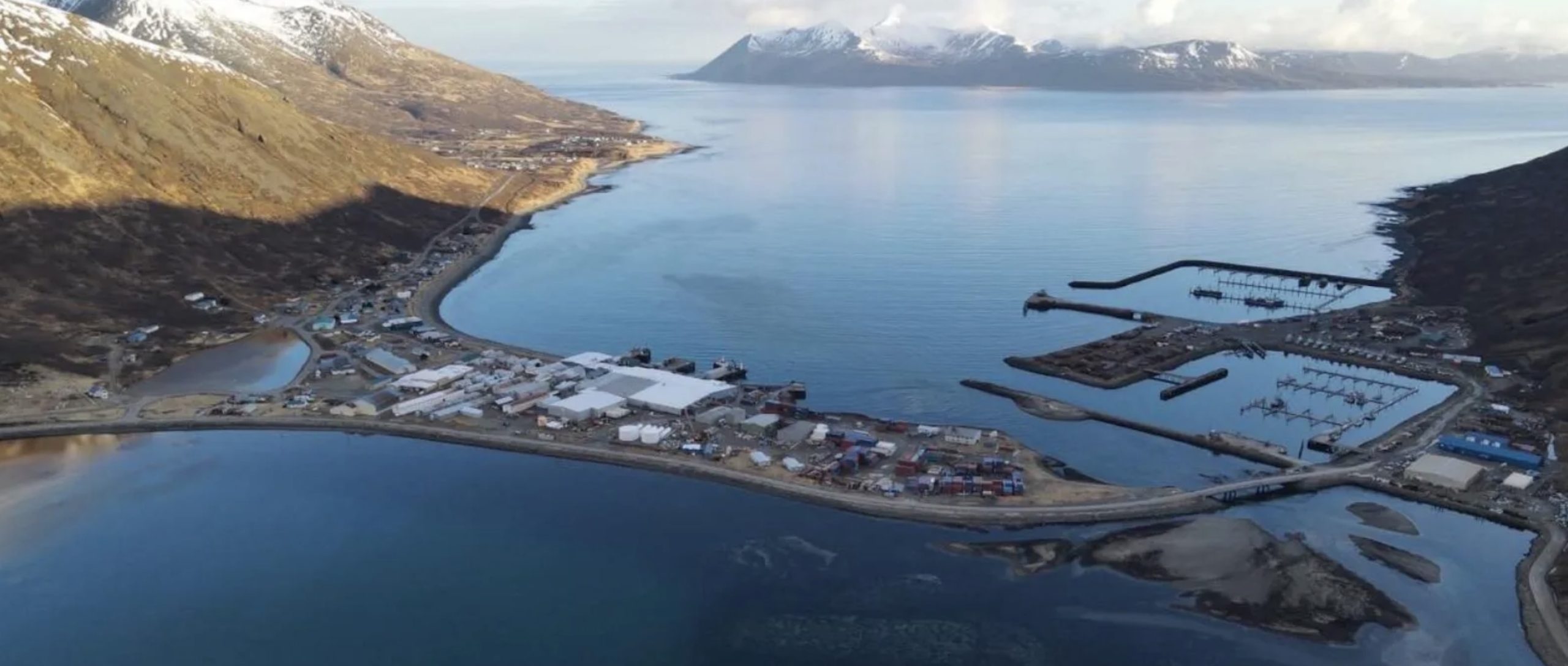
By SUZANNE DOWNING
July 23, 2026 – Three Alaska Native tribes located hundreds of miles from the Izembek National Wildlife Refuge have joined a national environmental organization in yet another lawsuit aimed at stopping construction of the long-sought King Cove access road. Their main argument is climate change.
The Native Village of Hooper Bay, Native Village of Paimiut, Chevak Native Village and the Center for Biological Diversity filed the lawsuit Thursday in US District Court in Anchorage. The complaint challenges a US Army Corps of Engineers permit issued earlier this month to the Alaska Department of Transportation and Public Facilities.
The permit authorizes work needed to build the missing road connection between King Cove and the all-weather airport at Cold Bay. It was the first federal construction permit issued for the project after decades of studies, political battles and litigation.
King Cove residents have sought the road for nearly 50 years, arguing that it is essential for medical evacuations when bad weather closes the community’s small airport or makes travel by boat too dangerous. Cold Bay has one of Alaska’s longest runways and can accommodate large aircraft capable of flying patients directly to Anchorage or other cities with major hospitals.
The planned connection would be a single-lane, unpaved gravel road. Although federal documents have described the overall route as roughly 19 miles, Alaska’s congressional delegation has referred to the missing connection as an 11-mile road. The Corps permit, valid for five years, authorizes dredge-and-fill work affecting just over five acres of wetlands.
Gov. Mike Dunleavy’s administration has said construction could begin as soon as early August.
The plaintiffs allege that the Army Corps and U.S. Fish and Wildlife Service violated the Clean Water Act, Endangered Species Act, Alaska National Interest Lands Conservation Act and National Environmental Policy Act when the permit was approved.
The three tribes are located in the Yukon-Kuskokwim Delta, far north of King Cove and Izembek. Their legal claim rests in part on migratory birds that feed and rest in Izembek before continuing to Western Alaska, where the birds are harvested for subsistence.
Those species include Pacific black brant, emperor geese and the endangered Steller’s eider. Izembek’s extensive eelgrass beds serve as a major staging area for migratory birds traveling along the Pacific Flyway.
“Climate change is already making the geese and other birds more and more scarce. With a road through Izembek, that could get worse,” Hooper Bay Chief Edgar Tall Sr. said in a statement released by the Center for Biological Diversity.
The tribes say they previously passed resolutions opposing the project and traveled to Anchorage in March to ask Army Corps officials to reject the state’s permit application.
The lawsuit asks the court to stop construction, arguing that allowing work to begin would cause irreparable damage before the legal challenges can be decided.
This is not the first lawsuit filed by these plaintiffs over the King Cove road. The same three tribes and the Center for Biological Diversity sued the Trump administration in November over the land exchange that created a corridor for the project. Separate challenges were also brought by Defenders of Wildlife and a coalition represented by Trustees for Alaska.
Those cases remain before U.S. District Judge Sharon Gleason.
The land-exchange agreement was signed in October 2025 by Interior Secretary Doug Burgum and the King Cove Corporation. Under its terms, the federal government agreed to transfer about 490 acres within the refuge to the Alaska Native corporation. In exchange, King Cove Corporation would transfer approximately 1,739 acres to the refuge and relinquish claims to additional acreage inside its boundaries.
The road would ultimately be owned by King Cove Corporation.
The agreement followed an executive order signed by President Donald Trump on his first day back in office in 2025, directing federal agencies to expedite Alaska resource and infrastructure projects.
Earlier land exchanges advanced during Trump’s first term were challenged in court. The Biden administration later withdrew a 2019 agreement and began another environmental review, but did not complete the process before leaving office.
Environmental groups contend the road would permanently damage wilderness and wildlife habitat inside the 315,000-acre refuge. In addition to migratory birds, Izembek supports bears, caribou, salmon, sea otters and walrus.
For King Cove residents and Alaska officials, however, the dispute has never been solely about wildlife or wilderness designations. It is about whether people living in an isolated Alaska community should have dependable access to emergency medical transportation.
King Cove’s airstrip is typically unavailable because of weather more than 100 days each year, according to Alaska’s congressional delegation, while the Cold Bay airport is closed an average of about 10 days annually.
Sens. Lisa Murkowski and Dan Sullivan and Rep. Nick Begich have all supported the project. After the permit was issued, Sullivan called it “vindication for King Cove,” while Murkowski said the “life-saving road is finally almost a reality.”
The latest lawsuit now creates another potential obstacle just as the Dunleavy administration prepares to begin construction. The immediate question will be whether the federal court grants an injunction and once again places the road on hold while the broader legal dispute continues.



10 thoughts on “Three Western Alaska tribes, environmental group sue to block King Cove road permit”
It’s 450-460 straight line miles between King Cove and Hooper Bay.
The odds of a single lane road effecting the flight path is miniscule, to say the least.
I think Hooper Bay is way outta their lane on this lawsuit.
Remind me again who’s paying for this?
What do you think how the lower 48 would react if people in California were during Washington for off-roading in Mt Rainier claiming that birds there were taking away their hunt in Northern California? They use this argument for Anwar too.
Vote democrat. It can only get better said no one ever!
they HAD their chance to voice opposition to the extra Long delayed road project. Its Done!
Poverty will make them think strange thoughts.
Southwest Alaska does not have the liberty to refuse a project that’ll bring real money into the region.
Their Yupik people have been moving to Anchorage in droves because they are tired of peeing/pooping in honey buckets, no home running water, nepotism in the few employments there are, and no jobs.
What Southwest Alaska needs is a lot of Construction and resource development jobs and small businesses.
In case you don’t know. Southwest Alaska is the poorest region of Alaska, where there are the most uneducated people and most government dependent people living in Alaska.
A person can only put up with poverty for so long and why there are more Yupiks leaving Southwest Alaska than returning.
Subsistence does not pay the bills.
Finally, we are close to a common-sense determination and lasting action on this proposed road.
It needs to be there. And this narrow strip of gravel with intermittent travel won’t harm the geese, or anything else. Let’s move on it, finally. Get it done. And 20 years from now, almost nobody will remember this ‘controversy’. Those who do will rightfully view it as silly.
It’s not like that route is pristine or anything.
It was a jeep trail for decades after WWII..
It’s shameful that the Native Villages of Hooper Bay, Paimiut, and Chevak Native Village have allowed the Center for Biological Diversity to exploit them to the point of saying the lives of their fellow native Alaskans aren’t worth the potential, could, might maybe, who knows life of a single bird that they potentially, could, might, maybe, who knows kill and eat. Shameful.
“Useful // Ignorant Idiots” … Hooper Bay, Paimiut, and Chevak. They just don’t see it for what it is and, will continue to allow themselves to be taken advantage of. Good Job(!!!) … Setting a good example for future generations!
I worked a stint at Cold Bay fourty years ago when locals were hoping to get that road built.
The anti-human groups funding opposition are not environmental saviors. Many years ago they drafted plans to not only stop all new road construction , but make most of the western US roadless.
Yes, roads have been built but many have been destroyed through their efforts as have many important dams. They are a cult of suicide and must be exposed as such.