


By THE ALASKA STORY
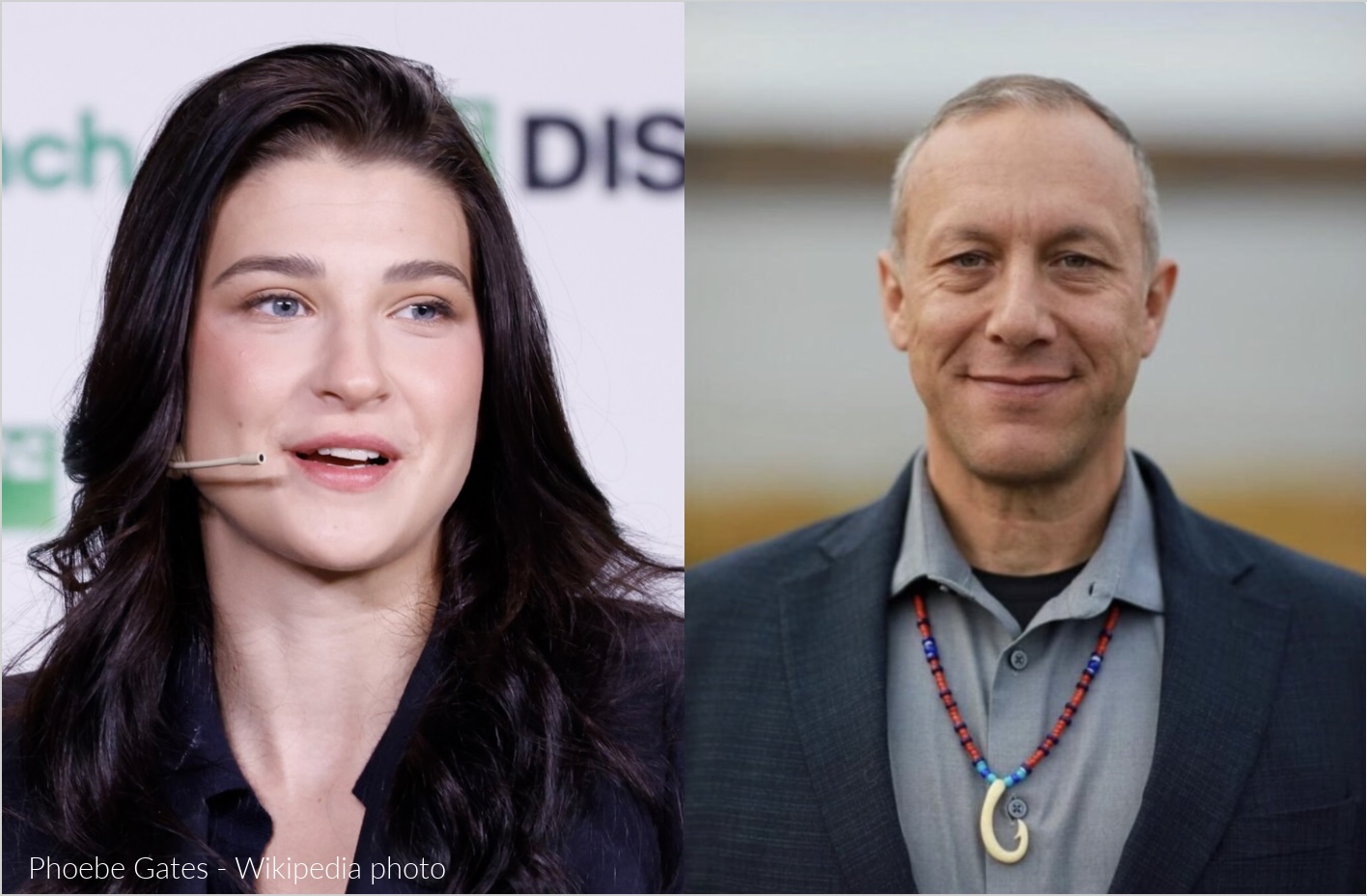
Aug. 13, 2026 One of Bill Hill’s newest maximum-dollar campaign donors is Phoebe Gates, the daughter of Microsoft billionaire Bill Gates and co-founder of an online shopping startup now accused of taking credit for sales it did not generate.
A 48-hour report filed with the Federal Election Commission shows Gates contributed $3,500 to Bill Hill for Alaskans on Aug. 2. She listed her employer as Phia and her occupation as co-founder.
The contribution is the maximum an individual may give to a federal candidate for a single election during the 2025-2026 cycle. Gates lives in New York, according to the filing.
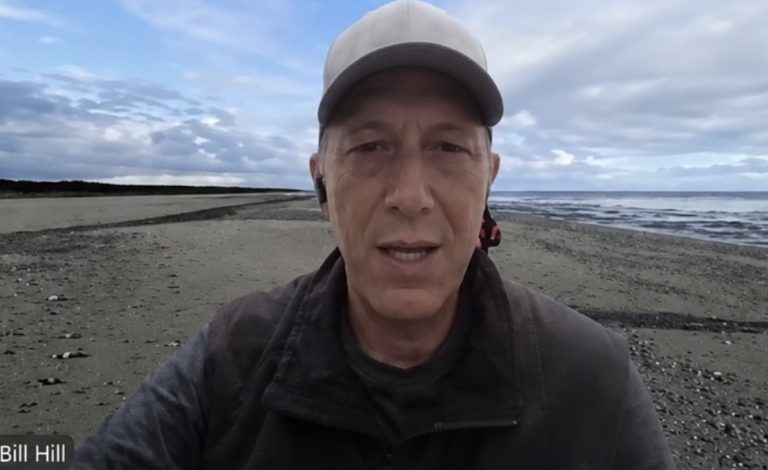
Her donation arrived as Hill, an undeclared candidate for Alaska’s US House seat, continues attracting substantial financial support from outside Alaska. Hill is challenging Republican Congressman Nick Begich while presenting himself as an independent, although he uses ActBlue, has received Democratic-aligned backing and is supported by the Wheel Dog PAC.
Wheel Dog PAC received $400,000 from the Sixteen Thirty Fund, part of the sprawling Arabella Advisors dark-money network connected to George Soros and company.
Now, one of Hill’s maximum donors is at the center of an escalating technology-industry controversy.
Phia, the AI-powered shopping company Gates co-founded with Sophia Kianni, is accused of engaging in “cookie stuffing,” a practice through which an affiliate inserts tracking information into a customer’s browser and claims a commission for a sale it did not actually generate.
When the allegations first surfaced in July, Phia said it had learned of the problem only within the previous 24 hours and described it as a software issue.
But a new Bloomberg investigation reportedly found internal messages indicating Gates, Kianni and other company personnel had known for months that Phia was dropping affiliate cookies even when customers had not actively used the service. The messages reportedly date to at least December.
According to the reporting, Gates asked developers to confirm that an “auto pop for cookie drop” feature was operating across websites carrying coupons so Phia could monetize the sales.
Bloomberg reported that the practice accounted for about 51% of the merchandise value Phia claimed to have generated in June. After the disputed features were disabled in July, the company’s average daily revenue reportedly dropped from roughly $80,000 to between $10,000 and $28,000.
The allegations involve purchases from major retailers including Nike, Gap and Nordstrom. Affiliate network Impact.com reportedly suspended Phia and began reallocating commissions that had been set aside for the company.
Phia denies portions of Bloomberg’s analysis but acknowledges that sales were improperly attributed to the company.
“Any features causing misattributions were immediately removed over a month ago on July 7,” a Phia spokesperson said in a statement carried by TechCrunch.
The company said it is reviewing transactions, reversing improperly attributed commissions and hiring a head of compliance.
The New York Post reported that an attorney specializing in business matters said intentional cookie stuffing can potentially be prosecuted as federal wire fraud, an offense carrying a statutory maximum of 20 years in prison. That does not mean Gates or anyone at Phia faces such a sentence. No criminal charge against Gates was reported, and the 20-year figure is the maximum possible penalty for wire fraud—not a prediction of what would occur in this case.
Phia may nevertheless face civil claims, repayment demands or action from affiliate networks if the allegations are substantiated. Cookie stuffing is generally prohibited under affiliate marketing agreements because it can divert commissions from the person or company that actually referred the customer.
Gates’ contribution was included in a Bill Hill for Alaskans report disclosing $22,000 in itemized contributions. The other contributions listed were $1,000 from Washington, DC, consultant Valerie Chraca; $7,000 each from California lawyer Leonard Gumport and Wendy Munger; and $3,500 from Florida resident David Sokol.
The $7,000 entries may represent contributions allocated between the primary and general elections because federal law permits an individual to give $3,500 per election. Gates’ disclosed $3,500 contribution represents the full amount permitted for one election, according to the Federal Election Commission’s contribution limits.
The Alaska Story investigation: Another Anthropic connection, as Bill Hill taps Big AI money
Alaska Story Investigation: The progressive dark-money pipeline fueling radical candidate Bill Hill
One thought on “The Alaska Story Investigation: Bill Hill’s max donor Phoebe Gates caught up in ‘cookie stuffing’ controversy”
[…] Hill’s reported contributors include New York billionaire investor Dirk Ziff, cryptocurrency investor Michael Novogratz, San Francisco investor Nat Simons, Massachusetts venture partner Joseph Alsop and California investor Gwendolyn Sontheim. Phoebe Gates, daughter of Microsoft co-founder Bill Gates, also gave Hill the maximum individual contribution, as previously reported by The Alaska Story. […]