



By SUZANNE DOWNING
May 14, 2026 – Lately, Alaskans have been hearing the same false narrative repeated over and over again: that Hilcorp “doesn’t pay taxes.” It may make for a catchy political talking point, but it’s simply not true.
In fact, Hilcorp has testified before the Alaska Legislature that over the last five years, the company has paid more than $1 billion annually on average in taxes to state and local governments in Alaska (including royalties, production taxes, property taxes and other government payments). That money helps fund schools, roads, public safety, local governments, and essential services across Alaska.
So before lawmakers and political commentators continue repeating the idea that Hilcorp somehow contributes “nothing,” it’s worth stepping back and looking at the actual facts.
Simply put, Hilcorp is not a c-corporation. It is an independently held company operating under a business structure that Alaska law has recognized for decades, just like thousands of other non-corporate businesses across the state operating in various industries. That isn’t a loophole. That isn’t some backroom trick. It is simply how the Alaska tax code treats non-corporate businesses.
There has also been a false suggestion that Hilcorp somehow changed its corporate structure when it acquired BP’s interest in Prudhoe Bay in 2020 in order to take advantage of a “tax loophole.” That is simply not true. Hilcorp has operated under the same non-corporate, pass-through structure since the company was founded in 1989. It was the same structure in place when Hilcorp entered Alaska in 2012 to invest in Cook Inlet and the same structure in place when Hilcorp later acquired a 27 percent interest and operatorship in Prudhoe Bay in 2020. Hilcorp did not restructure itself to avoid taxes or gain some special advantage. Its structure has remained consistent for decades.
And importantly, the State of Alaska knew exactly how Hilcorp was structured when it approved the company’s acquisitions and welcomed billions of dollars in new investment into Alaska’s aging oil fields.
How does that compare to BP Alaska, which as a C-corporation was subject to Alaska’s corporate income tax? A recent op-ed in the Juneau Empire compared Hilcorp’s tax payments to BP Alaska, citing a 2018 Anchorage Daily News article reporting that BP paid approximately $543 million in taxes and royalties to the State of Alaska in 2017. That was before BP sold its Alaska assets and ultimately exited the state entirely.
Hilcorp, the company now being characterized as a tax “deadbeat,” is contributing nearly twice that amount annually through many of those same categories of payments. And while BP was reducing investment, drilling fewer wells, and preparing to leave Alaska, Hilcorp moved in, invested billions of dollars, increased production, and helped generate significant additional revenue for the State of Alaska.
The deeper problem with the current debate is that it treats Hilcorp’s business structure as a “loophole” rather than what it actually is: a longstanding and widely used business structure recognized under both federal and state law. S-corporations pass income through to their owners, who pay taxes at the individual level. The taxes are paid.
This is how millions of American businesses operate. Alaska’s corporate income tax was written decades ago for publicly traded C-corporations, and Hilcorp simply does not fit that mold.
That structure was fully known and understood when the State approved Hilcorp’s acquisitions and investments in Alaska. Changing the rules now, after billions of dollars have already been invested, sends a message to every energy company watching from the outside that Alaska is not a reliable place to put capital. And Hilcorp is not the only business in Alaska operating under this type of structure. Proposals in the legislature to change how pass-through entities are taxed could have unintended and unknown consequences for many other Alaska businesses as well.
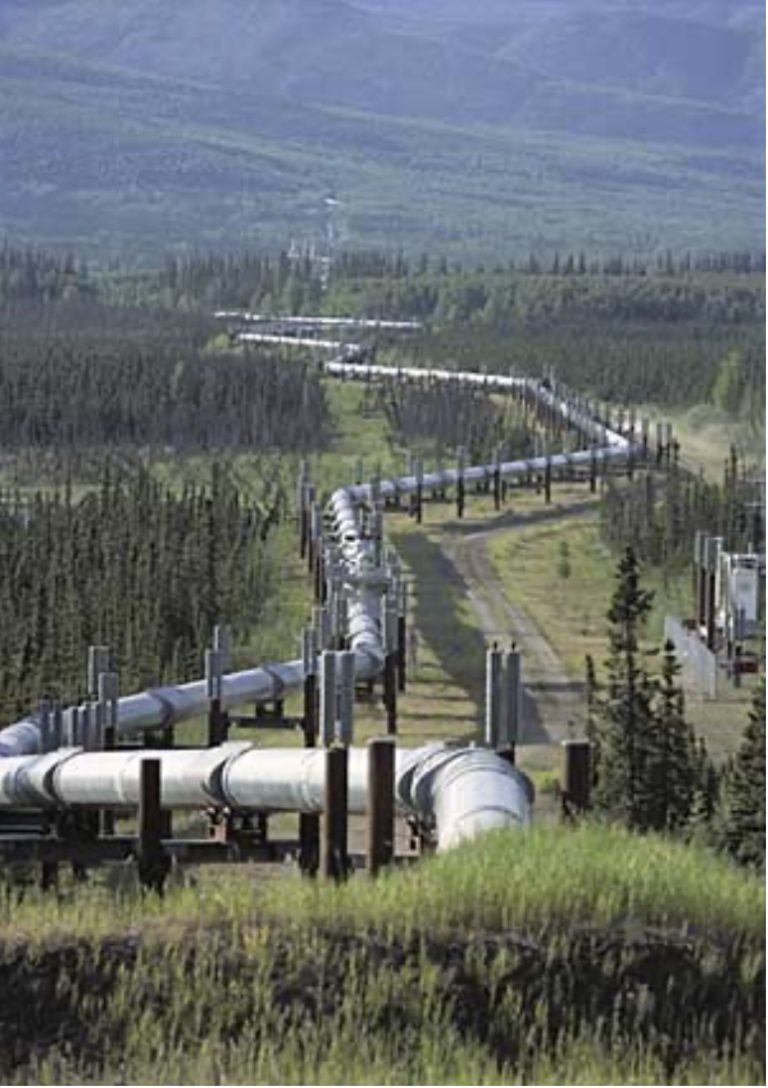
Alaska’s oil production has been in structural decline for decades. The pipeline feeding the state’s economy needs volume to function efficiently. The single most important thing Alaska can do right now is attract the kind of long-term, patient investment that reverses that decline. Hilcorp has been doing exactly that, and the State’s own production forecasts reflect those results.
When Hilcorp acquired Milne Point from BP in 2014, the field was producing approximately 18,400 barrels of oil per day and declining. By 2025, production had climbed to more than 50,000 barrels per day. Hilcorp tripled output there, drilling new wells, deploying new technologies, and investing heavily to unlock oil that BP had stopped trying to reach. BP had moved on. Hilcorp moved in.
The same story played out in Cook Inlet. When Hilcorp acquired Chevron’s assets in 2011, the basin was in rapid decline, and industry interest had all but evaporated. Hilcorp has since invested more than $1.5 billion in the basin, drilled over 190 wells, and has helped keep Southcentral Alaska’s gas supply stable for more than a decade. During a cold snap last February, when a utility-owned storage facility ran into problems, Hilcorp released gas reserves beyond its contractual obligations at no additional cost to customers.
The company now employs more than 1,750 direct employees in Alaska and supports thousands of additional contractor jobs across the state, with more than 70% of its direct workforce residing in Alaska. It spends billions of dollars annually developing Alaska’s energy resources and works with more than 700 Alaska-based vendors and businesses.
Readers may remember that when the only jack-up rig in Cook Inlet was at risk of leaving, Hilcorp bought it to ensure that it stayed where it was needed. Today, that same rig is being operated by Hex/Furie to drill additional wells and help bring more natural gas to Southcentral Alaska. That did not happen without Hilcorp’s investment.
This is not the profile of a company exploiting Alaskans but a company that committed its future to Alaska at a moment when several multinational oil companies were heading for the exits.
Lawmakers who genuinely want to shore up state revenue should be thinking about how to grow the overall size of the oil sector, not how to extract more from the one company that has actually been growing it.
Since Hilcorp became operator of Prudhoe Bay and Milne Point, increased production has translated into hundreds of millions of dollars in additional value for the State of Alaska through higher royalty and production tax revenues than the State’s own production forecasts under BP’s management.
Before the Legislature targets one of Alaska’s largest investors, a company that is actively developing new projects, increasing production, supporting thousands of Alaska jobs, and helping shore up Southcentral Alaska’s energy supply, lawmakers should be honest about the important role private capital plays in Alaska’s economy.
Somehow, this conversation has turned into vilifying a company that stepped in and invested billions of dollars into Alaska at a time when others were reducing investment and heading for the exits. And like countless other privately held businesses across Alaska, in construction, transportation, fishing, resource development, and many other sectors that drive our economy, Hilcorp operates under a long-recognized non-corporate business structure.
But the narrative that Hilcorp “doesn’t pay taxes” or somehow is not pulling its weight in Alaska could not be further from the truth.
Suzanne Downing is founder and editor of The Alaska Story and is a longtime Alaskan resident.


5 thoughts on “Suzanne Downing: It’s a legislative myth that Hilcorp doesn’t pay taxes”
Well geez, Suzanne. Don’t blame me for creating myths into the minds of a weak Democrat Legislature. I’m just a small fry writer doing my best to stay sober through my next partisan essay.
Still snorting and farting from Alaska.
Derm.
Frigging Costello backstabbed us again!!! She’s totally useless, another Giessel.
Harry Reid: ” it worked , didnt it?”
Hilcorp’s continuing investment in South Central Wells provided the online natural gas production in February 2025 when Enstar needed additional supplies as noted above.
Excellent job defending truth and the people providing the jobs and the gas we need in this state. Well done Suzanne.