


By SUZANNE DOWNING
May 14, 2026 – After nearly two months of hearings, amendments, and public testimony, Senate Bill 280 — Gov. Mike Dunleavy’s Alaska LNG tax reform bill — remains stalled in the Senate Resources Committee, where lawmakers are continuing to negotiate the future tax structure for what would be the largest infrastructure project in state history.
Word in the Capitol is that deals are being made for the governor to allow the costly defined benefits legislation, House Bill 78, to go into law (it has been passed by both House and Senate) in exchange for the passage of his gasline legislation, largely intact. The Alaska Story has not been able to confirm this.
The gasline measure, introduced March 20, is designed to dramatically reduce the property tax burden on the proposed Alaska LNG project during its construction phase in hopes of making the $44 billion-plus project financially attractive to investors.
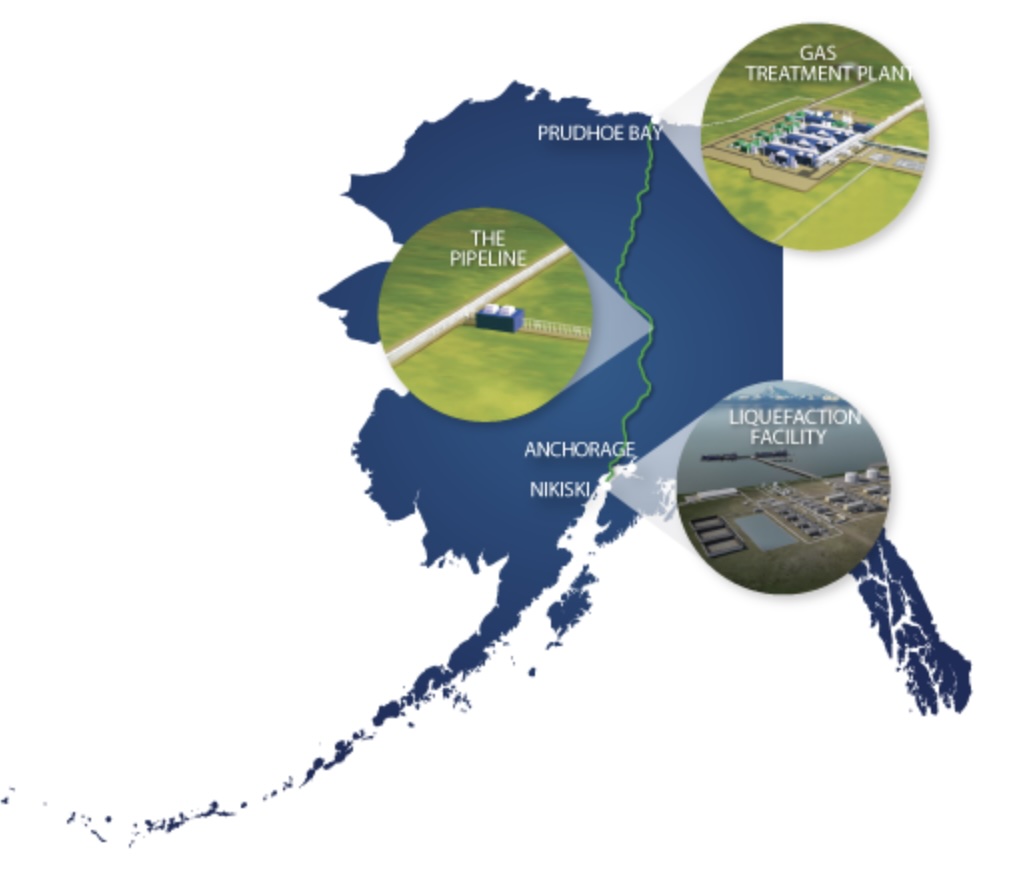
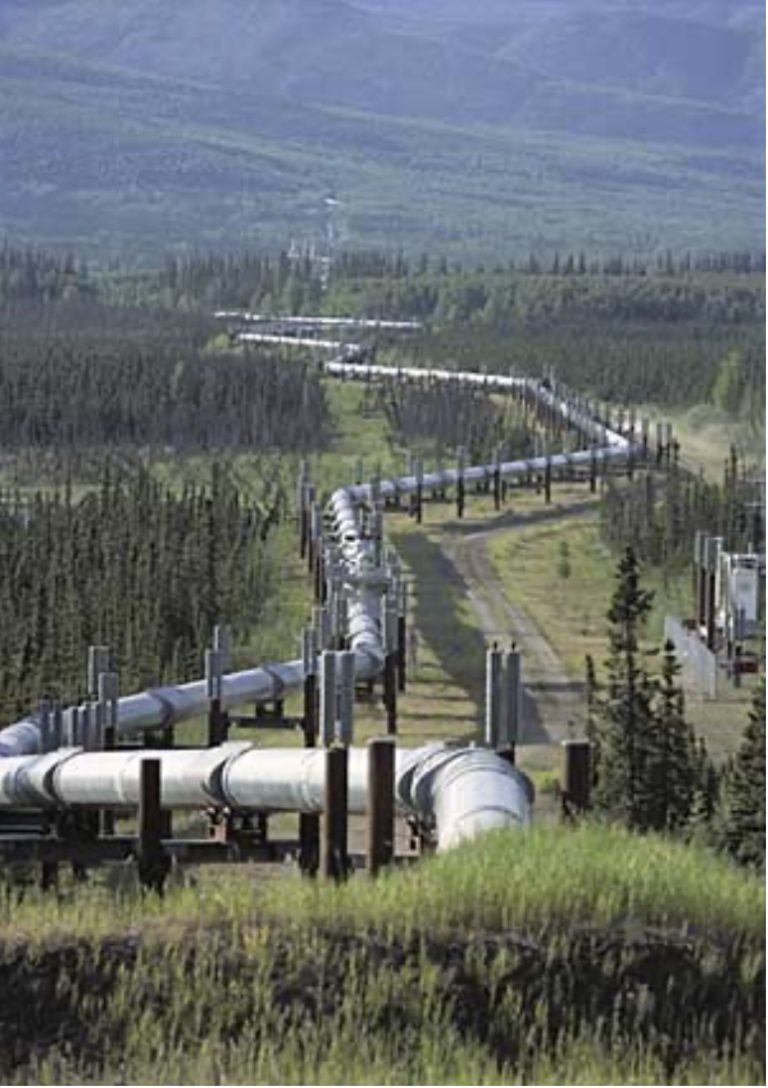
The bill, formally titled “Oil & Gas Property Tax; Muni Tax,” would create a special tax regime for qualified Alaska LNG infrastructure, including the North Slope gas treatment plant, the 800-mile pipeline, LNG export terminal, related facilities, and certain carbon capture infrastructure associated with the project.
Under current Alaska law, major oil and gas infrastructure is generally taxed under the state’s 20-mill property tax structure, which allows both the state and municipalities to collect taxes on assessed value. SB 280 would replace most of that system with what is known as an “alternative volumetric tax,” or AVT, a throughput-based tax calculated on the amount of natural gas moving through the pipeline system.
In the original version of the bill, qualified project property would receive a complete exemption from both state and municipal property taxes during the project’s “ramp-up” period. That exemption would last until either 10 years after commercial operations begin or until the pipeline reaches sustained throughput of 1 billion cubic feet per day, whichever occurs first.
After that period ends, the project would transition to the volumetric tax system, starting at 6 cents per 1,000 cubic feet of gas throughput, with annual increases of 1%.
The volumetric tax would replace not only traditional property taxes, but also several other categories of municipal taxation associated with project construction and operations. Municipalities along the route would receive shares of the revenue based on infrastructure location and original project cost allocations.
The Dunleavy Administration and supporters such as the Alaska Gasline Development Corp., have explained that the proposal is necessary because Alaska’s existing oil and gas tax structure makes the LNG project economically uncompetitive compared to projects in Qatar, the Gulf Coast, Canada, and elsewhere.
Administration officials have repeatedly told lawmakers that investors require predictable, long-term tax certainty before committing billions of dollars to the project.
But there are members of the Legislature who don’t want to give the governor any kind of win. The Democrats and their handful of Republican allies say the proposal amounts to an enormous tax giveaway.
Some analysts have estimated the effective tax reduction could exceed 90% compared to the current property tax framework if the project operates at full scale.
The proposal has become one of the most contentious bills of the legislative session, with Senate Resources Committee Chair Sen. Cathy Giessel having held over 30 hearings, and preventing the measure from moving. There are only six days left until the end of session, and the measure would still have to be heard in Senate Finance, and on the floor of the Senate.
The committee has already substantially rewritten the governor’s original bill through multiple committee substitutes, including the working draft known as Version H.
Among the additions discussed in committee are new corporate income tax provisions targeting certain oil and gas pass-through entities, community impact payments for municipalities affected by construction activity, revised revenue allocation formulas, and changes to oversight mechanisms.
Additional hearings are scheduled for Thursday and Friday, with public testimony continuing by teleconference. Giessel has swapped around the hearing times at the last minute, in an apparent attempt to squelch participation from industry experts.
The prolonged committee process has fueled increasing frustration among some Alaska LNG supporters. The Legislature is moving slowly as competing LNG projects around the world continue advancing.
The Alaska LNG project itself has been debated for more than a decade and has repeatedly struggled to secure sufficient private investment despite changing market conditions and multiple redesigns. This is as far as it has gotten.
SB 280 is currently scheduled for additional hearings in Senate Resources on May 14 and May 15. The bill’s next referral, if it clears Resources, is Senate Finance.

5 thoughts on “Gasline legislation appears stuck in committee, but is there a deal being struck involving state pensions?”
If this is true, and our legislators are holding our economic future hostage for a bankrupting defined benefits retirement plan for state workers, I’d like the names of those involved. Reprehensible!
Start with Giessel and Wielechowski. Both are owned stooges for the Environmentalist Left and unions( but I repeat myself)
Shocking! $7 billion debt remains in unfunded pension liabilities and the legislature is trading another $7 billion for exempted gasline project taxation?
Typical, their math ain’t mathin’.
I was going to write something but Ms. Johnson and Mr. Adams have already written all there is to say, and they have done so very well.
Why not defer property taxes on the project instead of forgiving them? Once the money starts rolling in I’m sure Glenfarne would have no trouble paying past property tax assesments!