


By SUZANNE DOWNING
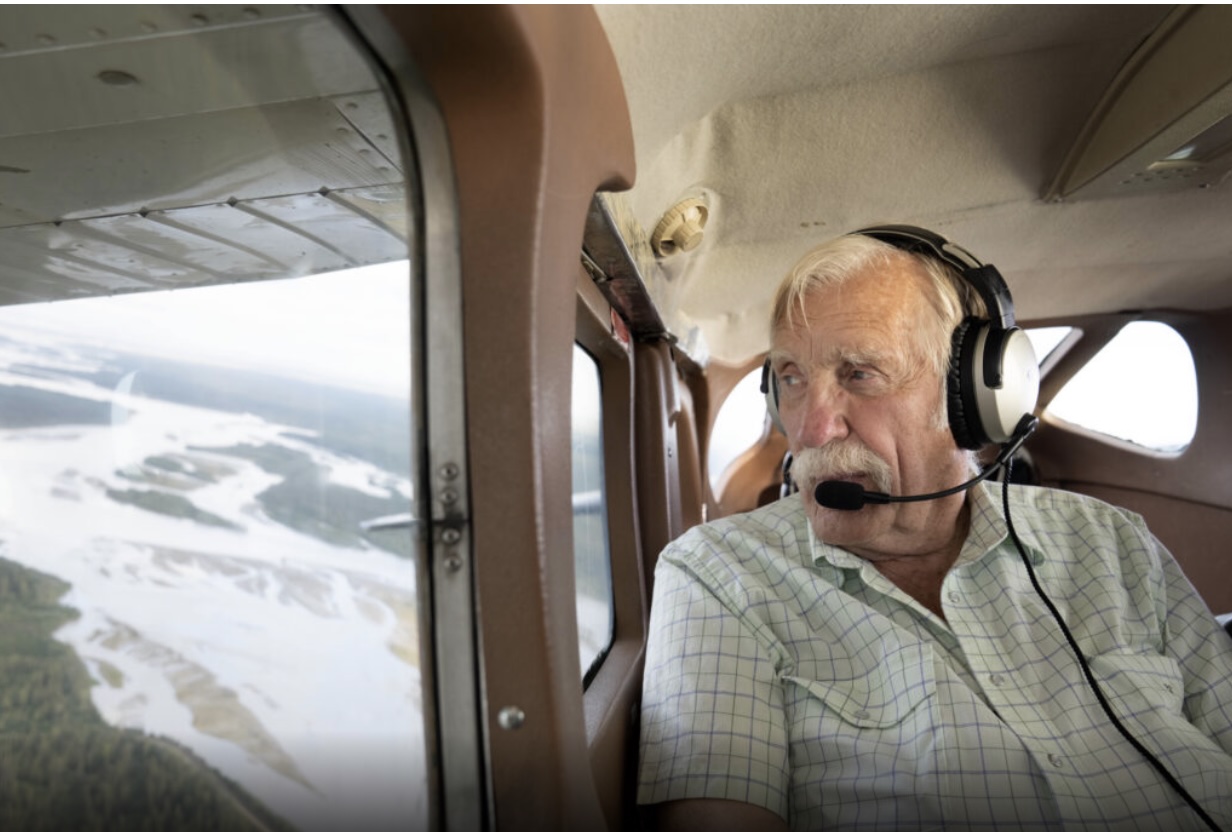
N0v. 28, 2026 – Ken Jouppi’s Cessna never left the ground in Fairbanks on that April day in 2012. Alaska State Troopers found about 72 cans of beer aboard the bush plane before it could take off for Beaver, the roadless Yukon River village that had voted to ban alcohol imports. More than 14 years later, Alaska’s effort to take the $95,000 aircraft is headed to the US Supreme Court.
“Kenneth Jouppi, an 82-year-old Air Force veteran, makes his living flying locals and tourists over the Alaskan wilderness. In 2012, he flew a passenger to a fully ‘dry’ village where state law bans selling, importing, and possessing alcohol,” writes the MacArthur Justice Center, which filed an amicus brief along with the Southern Poverty Law Center. “One of Jouppi’s passengers was flying to celebrate her husband’s birthday and had, among other groceries, beer packed in her luggage. As Jouppi loaded the plane for departure, Alaska State Troopers arrived, searched the scene, and found the beer.”
The justices will hear Jouppi v. Alaska on Tuesday, Dec. 1. The case asks how courts should decide whether a penalty is excessive under the Eighth Amendment. How much weight should judges give to the seriousness of the offense as defined by lawmakers, and how closely must they examine what the defendant actually did.
Jouppi, who ran an air-taxi service, was preparing to fly a passenger and her groceries to Beaver. The beer belonged to the passenger, and Jouppi testified that he did not know it was aboard.
A jury convicted him of a Class A misdemeanor for knowingly transporting alcohol to a community that had banned its importation. He was ordered to serve three days in jail and pay $1,500, the minimum unsuspended penalties.
At a hearing after the conviction, the trial judge found that Jouppi had been willfully blind to one six-pack visible in a grocery bag. The judge made no finding on whether Jouppi knew about the other 66 beers. Alaska law requires forfeiture of an aircraft used in the offense. The trial judge found that taking Jouppi’s 1969 Cessna would be an excessive fine.
The Alaska Supreme Court ultimately upheld forfeiture in April 2025. It pointed to the harms lawmakers sought to prevent in rural communities and concluded that knowing about six beers instead of all 72 would make no difference to the outcome. The court also weighed the aircraft’s value against the $10,000 maximum fine for the misdemeanor. The Cessna was worth 9½ times that maximum.
Jouppi’s lawyers at the Institute for Justice argue that courts must weigh the facts of his own conduct when deciding whether the punishment fits the offense. Alaska argues that the plane was the means by which Jouppi committed the crime and that lawmakers were entitled to require forfeiture to deter illegal alcohol shipments and enforce local bans.
The Alaska Legislature’s Legislative Council filed a friend-of-the-court brief urging the justices to uphold the forfeiture. The US Solicitor General’s office also backs that outcome and will take part in Tuesday’s argument. The Legislative Council will be taking up the matter, likely in executive session, on Monday, in preparation for the Tuesday argument at the Supreme Court.
In United States v. Bajakajian in 1998, the Supreme Court held that a punitive forfeiture violates the Eighth Amendment if it is grossly disproportionate to the gravity of the offense. In Timbs v. Indiana in 2019, the court held that the Excessive Fines Clause applies to states. The ruling in Jouppi’s case could guide courts nationwide on how closely they must examine an individual’s conduct before the government can take property as punishment.
Ratified on Dec. 15, 1791, as part of the Bill of Rights, the Eighth Amendment prohibits the government from requiring excessive bail, imposing excessive fines, or inflicting cruel and unusual punishments. The amendment originally limited federal power, and its protections now extend to state and local governments through the Fourteenth Amendment. At issue in Jouppi’s case is the Excessive Fines Clause, which limits how much the government can take from someone as punishment, whether in money or property.

Institute for Justice is representing Jouppi.
“Ken isn’t giving up. He’s partnered with IJ to ask the U.S. Supreme Court to define what makes a fine unconstitutionally excessive. As enforcement agencies (in the Court’s own words) “increasingly depend heavily on fines and fees as a source of general revenue,” it’s critical that the Excessive Fines Clause actually protect ordinary people,” Institute for Justice wrote.