


By SUZANNE DOWNING
July 20, 2026 – The US Supreme Court has agreed to hear an Alaska case that could establish new limits on the government’s power to seize valuable property as punishment for a comparatively minor crime.
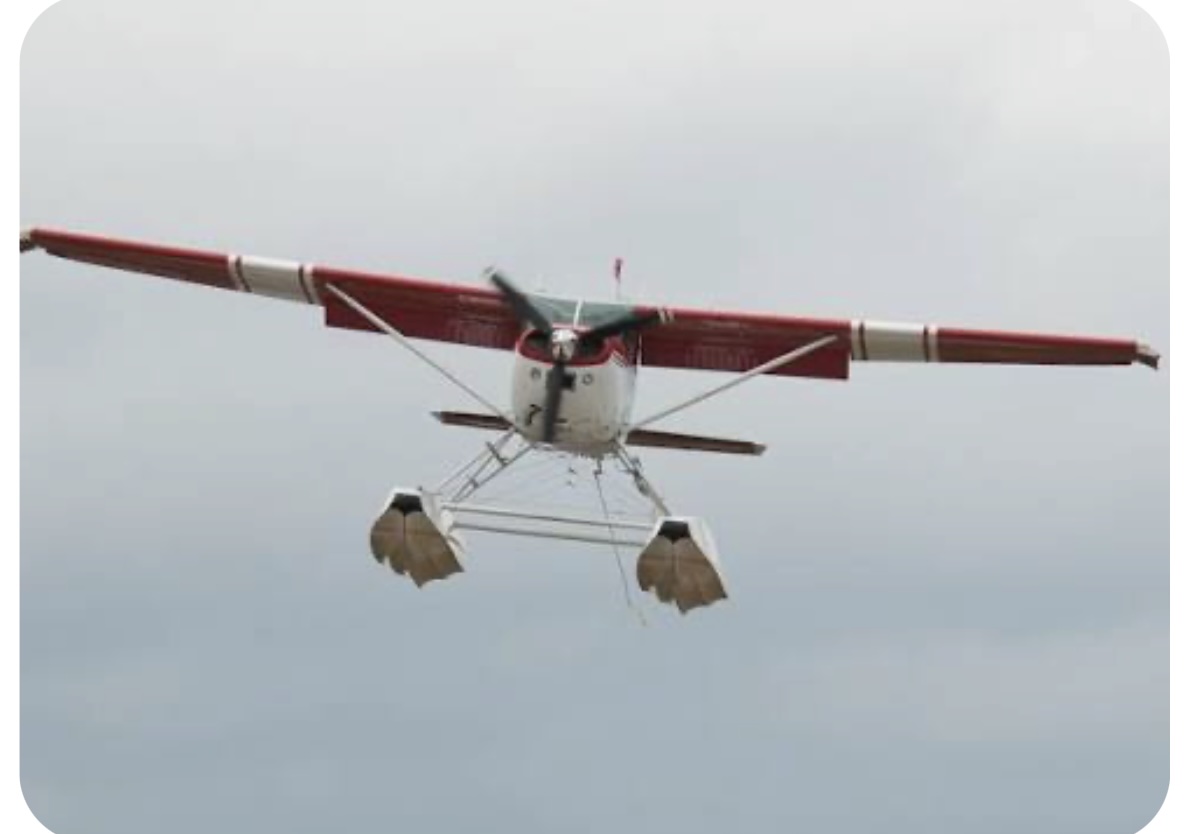
At the center of Jouppi v. Alaska is retired Fairbanks bush pilot Kenneth Jouppi, whose $95,000 Cessna 206 became subject to forfeiture after a passenger attempted to bring beer aboard a flight bound for Beaver, an Interior Alaska village that prohibits the importation, sale and possession of alcohol.
The case asks whether confiscating an airplane worth many times the maximum monetary fine for the offense violates the Eighth Amendment’s prohibition against excessive fines.
The dispute goes back to April 3, 2012, when Jouppi was preparing to fly a passenger and her groceries from Fairbanks to Beaver, about 110 miles to the north.
Alaska State Troopers searched the airplane before it departed and discovered three cases containing 72 cans of Budweiser and Bud Light. The passenger reportedly intended the beer as a gift for her husband, Beaver’s postmaster.
Jouppi maintained that he did not know the passenger had packed the alcohol. But troopers testified that he had handled some of the boxes and that one six-pack was plainly visible in a plastic grocery bag.
A jury convicted Jouppi and his company, KenAir LLC, of knowingly transporting alcohol to a local-option community. Jouppi received three days in jail, with the remainder of a 180-day sentence suspended, and a $1,500 fine. KenAir was fined another $1,500.
The airplane never left Fairbanks, the beer never reached Beaver and Jouppi had no previous conviction for the offense.
Alaska law, however, requires the forfeiture of an aircraft used to transport alcohol into a community that has legally prohibited its importation. The state consequently moved to seize Jouppi’s Cessna, valued at approximately $95,000.
The trial court twice refused to order the forfeiture, initially on statutory grounds and later after concluding that taking the entire airplane would constitute an unconstitutionally excessive fine.
After years of appeals and remands, the Alaska Supreme Court ruled unanimously in April 2025 that confiscating the plane would not violate the Eighth Amendment.
The Alaska justices agreed that forfeiture of the aircraft constituted a punitive “fine.” But they concluded that it was not “grossly disproportional” to Jouppi’s offense, citing the serious social and public-health damage associated with illegal alcohol entering rural Alaska communities.
The court also deferred to the Alaska Legislature’s decision that aircraft forfeiture is necessary to deter pilots from carrying alcohol into dry villages. It concluded that even knowingly transporting a single six-pack could justify the loss of an airplane.
Jouppi’s attorneys argue that the Alaska court considered the general harms associated with illegal alcohol rather than concentrating on what Jouppi himself actually did: a first-time misdemeanor involving a passenger’s beer that was discovered before the aircraft left the ground.
His lawyers also note that the Cessna’s value was more than nine times the $10,000 maximum fine authorized for the offense and more than 60 times the $1,500 fine Jouppi actually received.
The case will require the nation’s highest court to clarify how judges decide whether a property forfeiture is “grossly disproportional” under the Excessive Fines Clause.
The central question is whether courts may justify a large forfeiture by considering the broader dangers associated with a category of crime, or whether they must focus more closely on the individual defendant’s conduct, culpability, criminal history and the actual harm caused.
Jouppi is represented before the Supreme Court by the Institute for Justice, a public-interest law firm that frequently challenges civil and criminal asset forfeitures. The Cato Institute, legal scholars and property-rights advocates have also supported his petition.
The State of Alaska argues that Jouppi’s conduct falls squarely within the class of offenses the Legislature intended to deter. State attorneys maintain that illegal alcohol contributes to violence, alcoholism, fetal alcohol spectrum disorders and substantial public costs in rural communities, making strong penalties necessary even when a particular shipment is intercepted.
Jouppi, now in his 80s and retired, has retained possession of the aircraft while the litigation continues.
The Supreme Court’s eventual ruling could reach well beyond Alaska’s dry-village laws. It may determine how courts nationwide measure the constitutionality of government seizures involving cars, boats, airplanes, homes and other valuable property used in the commission of an offense.
The case is docketed as Kenneth J. Jouppi v. Alaska, No. 25-246. The Alaska Supreme Court’s 2025 decision upheld the forfeiture; the federal case’s filings and status appear on the US Supreme Court docket.



11 thoughts on “Hold my beer: Supreme Court takes Alaska case over seizure of bush pilot’s plane in dry-village beer case”
Good. Law enforcement and court should had just fined him sent him to jail for his knowledge of that alcohol was being packed to a dry village. But they should never taken his plane because it wasn’t the pilot’s alcohol.
There was an event in 2002 I seen in a mini van on the Alaska Marine Ferry on the car deck. Its stupid passengers had opened its sliding door so I and anyone else walking by could see it was loaded up (filled to the brim) with Budweiser. The car was headed to Angoon also a dry village. If Alaska law enforcement found out. Do you think they would be allowed to confiscate and make the state of Alaska lose its ferry because of transporting alcohol to dry villages?
Just like the passenger of that plane. He was stupid to not be hiding the beer from visibility. The pilot was also stupid after seeing it that he didn’t refuse flying the passenger. But because it’s not the pilot’s alcohol doesn’t give the state to take the pilot’s plane away just like it wouldn’t give the state troopers and federal authorities to take away an Alaska marine highway ferry away from the state.
A question for bush pilots to be settled is how much can they begin searching passengers belongings so the pilots can refuse transporting passengers head to a dry and damp community? So the other pilots don’t find themselves in the same situation as that pilot or in another situation because he went through passengers personal belongings. The federal and state authority took his plane away because he sounds like by the article he has foreknowledge of transporting beer because of clearly seeing a package of beer. To which would the pilots be allowed themselves to search through the rest of the baggage for more alcohol to leave it behind to refund and refuse transporting passengers. That’s a question for pilots, Alaska public safety dept, AK Judicual, and Ak legislature to settle in the future.
Because that Beaver passenger is not the only Alaskan regularly bringing alcohol on aircraft’s and car’s to dry and damp villages.
But also another product AK bush pilots need to be aware of not traveling on planes is Energy drinks because there are some villages who have banned its sale in their community because of deaths from it.
Pilots going through a persons private belongings on suspicion after a pilot finding exhibit A. So now he wants to find out more may open him to a court case by the passenger because of improper search. So for the future pilots need to know clearly what they can and can’t do if they find a forbidden item among the belongings of a passengers.
I believe the pilot in this case God was watching out for him and by Providence let the stupid passenger be sloppy at hiding his beer so the pilot was aware that passenger had alcohol heading a dry community so the pilot could make a decision to either throw the beer off the plane or refuse to travel the passengers.
Since when did transportation become law enforcement, Tina? More importantly, what law do you base that sort of intrusion upon? Cheers-
The state was engaged in ” policing for profit” . its a money grab. Asset forfeiture . is an area of law rife with abuse. They need to be smacked down, hard!!
The Institute for Justice is a great organization. Look them up, read the stories, pull yourself down off the ceiling, and consider donating to their cause. I’ve been a contributor for years. IJ.org
This is overkill. A case of beer, if you could ever find one is worth $150 bucks in a remote village. You can bet that it was for personal use. On the other hand a case of R&R or Gilbey Vodka (12, 750 ml) starts at $2400 and tops out at $3600.
It reminds me of how the sky was going to fall with the legalization of pot. Seems the sky didn’t fall and the Troopers haven’t switched their efforts to go after the hard drugs which are terrorizing every community in Alaska.
Give the man his airplane back and move on.
The pilot knew he was breaking the law. However, if the jury wanted to punish him harshly they could have just fined him the maximum $10,000. Seizing the plane is excessively punitive given the facts. The Supreme Court lost touch with practical reality; it was just a couple cases of beer; not a pound of Fentanyl for goodness sake.
The IRG in Iran hangs people in public for speaking out in opposition and there are plenty of fools in America who side the IRG so I am not surprised with this over reach of authority. Perhaps Jouppi registered with the wrong party…???
A fine? Yes. Taking his airplane? No. That’s extremely excessive under the circumstances.
Eighth Amendment
Excessive bail shall not be required, nor excessive fines imposed, nor cruel and unusual punishments inflicted.