

By SUZANNE DOWNING
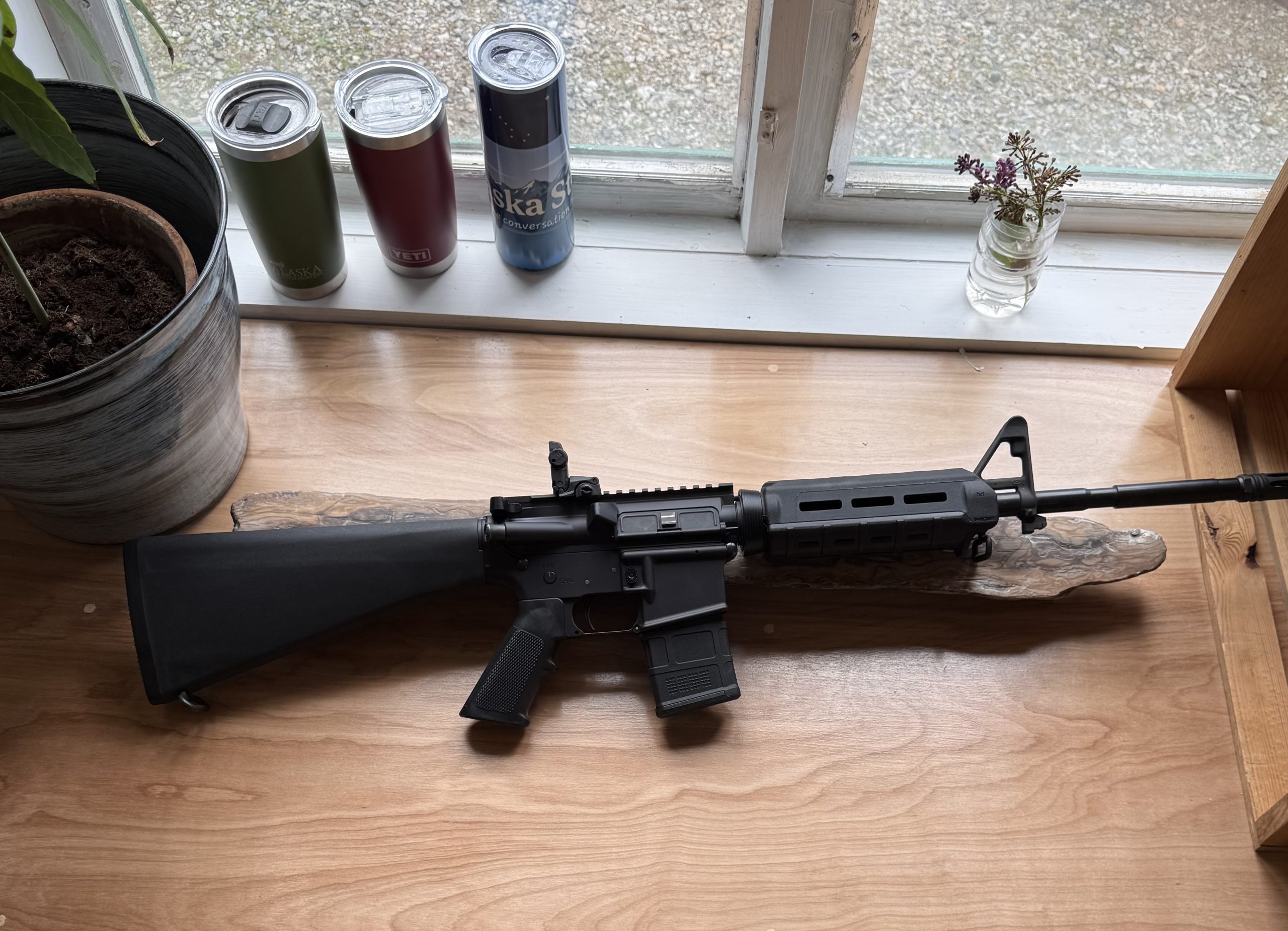
Nov. 24, 2026 – The US Supreme Court will hear arguments next week on whether the Second Amendment protects the right to own AR-15s and similar semiautomatic rifles. On Tuesday, Nov. 24, the justices put off a decision on Cook County, Illinois’ request to dismiss one of the two cases set for the Dec. 2 hearing.
The cases challenge a county ordinance in Illinois and a state law in Connecticut. For Alaska gun owners, the significance is national. A ruling on the merits could set the standard federal courts use to review similar bans across the country.
Alaska’s own Constitution expressly protects the individual right to keep and bear arms against infringement by the state or its political subdivisions. The cases before the justices concern the scope of the federal right.
The procedural fight began Oct. 29, when Cutberto Viramontes, a Cook County resident who had challenged the ordinance since 2021, asked to withdraw without giving a reason. The court granted his request on Monday. The case now appears on the docket as Khaya v. Cook County, named after remaining individual challenger Christopher Khaya.
Cook County argues that Viramontes’ departure leaves no challenger with standing to litigate the question before the court. It points to Khaya’s stated interest in owning an IMI Galil, which it says falls outside the scope of the court’s review. If the dispute is moot, there is no live controversy for the justices to decide in the Illinois case.
Lawyers for the challengers say the question before the court includes rifles similar to the AR-15 and that the Galil falls within that category. They also filed a declaration from Khaya saying he would acquire an AR-15 if he could lawfully do so.

Tuesday’s unsigned order deferred the county’s request pending oral argument. It cited Acheson Hotels v. Laufer, a 2023 case the justices dismissed as moot after hearing arguments.
The justices consolidated the Cook County case with Grant v. Higgins, the challenge to Connecticut’s ban, for briefing and argument. Even if the court ultimately dismisses the Illinois case, the Connecticut challenge gives the justices a separate case in which to decide the same constitutional question.