

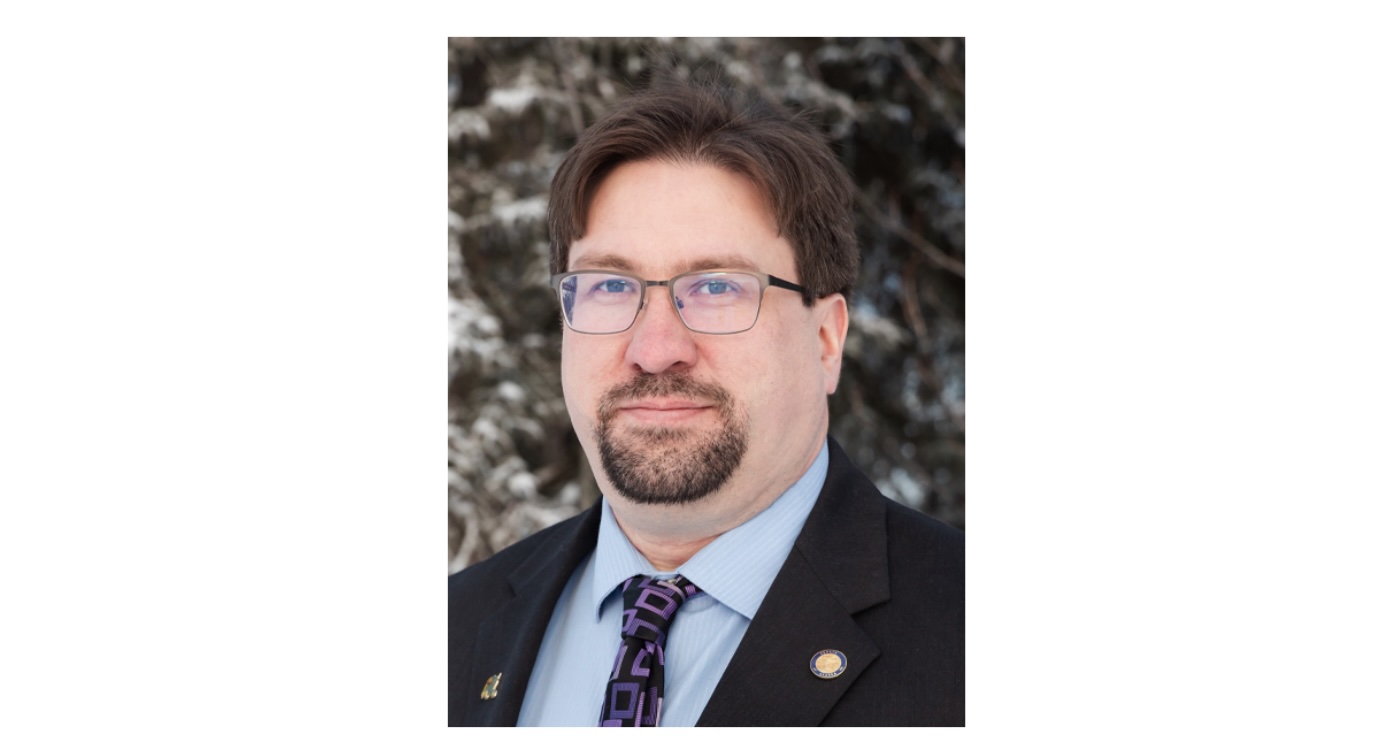
By SEN. ROBERT MYERS
Alaska Constitution Article VIII: Section 1: “It is the policy of the State to encourage the settlement of its land and the development of its resources by making them available for maximum use consistent with the public interest.”
Section 2: “The legislature shall provide for the utilization, development, and conservation of all natural resources belonging to the State, including land and waters, for the maximum benefit of its people.”
As we’ve been debating the gas line over the last year, these two sections that start the article in our state’s constitution governing our natural resources has loomed large in everyone’s minds. As we’re debating tax policy and how it relates to gas prices, world markets, impacts during construction, and the appropriate regulatory bodies, the central question has really been about maximum benefit of the people.
Is maximum benefit the highest amount of money that we can get from a resource or project, or is it allowing the people the maximum access and use of that resource, even if the state loses some money?
Before you say that we should always tax the most we can get, remember that we’re talking about more than just oil and gas resources in these sections. Let’s apply that to another resource: game management. If I go hunt a moose in Alaska, the state makes $45 from me: the cost of the hunting license. If a non-resident hunts a moose in Alaska, the state makes $960: $160 for the hunting license and $800 for the moose tag.
If we’re going to make the state’s policy that the definition of maximum benefit to the people from our natural resources is to extract the maximum revenue for state government to spend, the policy for our wildlife should be to end or severely curtail resident hunting in favor of non-resident hunting.
But that’s not all. Alaska has the lowest non-resident tag fees for moose of any western state, with the average being about $2,000 and Wyoming being the highest at $2,752. To stick with our maximum revenue policy, we should dramatically raise our tag fees as well. This same pattern applies to just about every other big game animal.
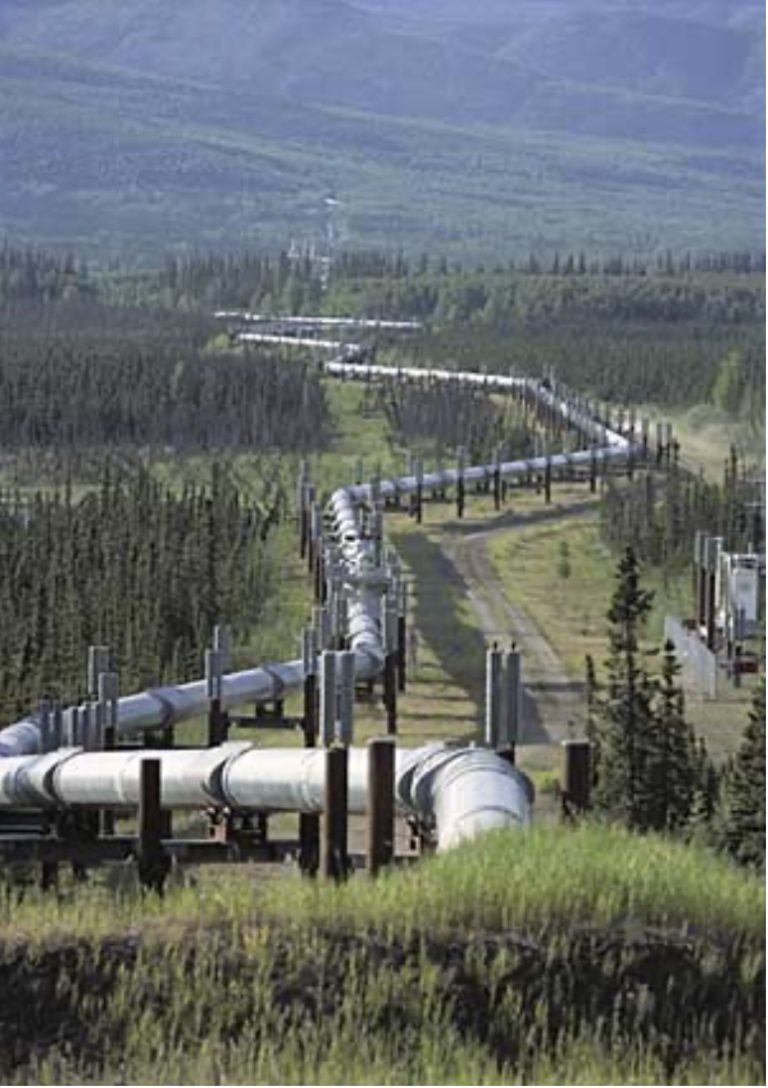
For myself and a lot of other legislators, that type of policy does not make sense, for either big game or natural gas. For us, while we want the revenue from export sales of gas, we first and foremost want Alaskans to have access to the resources that we have in this state. We want to see Alaskans have access to a stable supply of energy, and we want a path to finally bring down the cost of energy, both for heating and for electricity. Getting North Slope gas to Interior and Southcentral Alaska in a pipeline gives us a stable supply. Exports give us the volume needed to finally lower the cost. For many Alaskans, the debate is not between higher tax revenue or lower tax revenue. It’s between getting a project going that gets us access to cheaper energy or leaving the state because we can’t afford to live here.
Then there are the larger economic impacts. We’re talking about restarting the ammonia plant in Kenai. Donlin mine wants to build a spur to power their operations. Other large, industrial customers become viable as well with cheap energy. Those provide jobs that keep us here and improve our standard of living. Instead of losing working-age people with families, we can finally start gaining people again and give our kids a chance to stay here after they finish school. Cheap energy through gas volume gets us a path to not only surviving but thriving again.
But other legislators are looking at state revenue as the primary purpose of this project. Altering and lowering the state’s tax structure will mean that the state will lose roughly $200 million a year in property taxes. But if the project goes forward with that tax change, we’re looking at roughly $800 million a year to the state, mainly in gas royalties and production taxes. Legislators have a fiduciary duty to the state to make sure our budget works, and legislators are hesitant to give up revenue to the state.
But all of that economic activity comes at a cost to the state as well. More people and activity translates to things like more kids in school, more road maintenance, and more Troopers to keep an eye on people doing stupid things on payday. Those added costs add to legislators’ hesitation.
Most states have a hard time saying no to economic activity, particularly something as basic as a source of household energy, because that is the backbone of state revenue through some sort of broad-based tax. But our legislature has been given the gift of being able to say no because we have another revenue stream: the Permanent Fund.
With the Fund giving us approximately 64% of state revenue this year, we have a different set of incentives and attitudes compared to every other state when it comes to economic activity. Our legislators can say no to economic activity that benefits most state residents because the state will get money regardless of how the economy is performing or whether residents can afford to live here.
That puts them in the position of trust fund kid who has no reason to get a job because he doesn’t need the money. The state doesn’t need the money either, so the rest of us lose out on economic activity. Our legislators have a fiduciary duty to the state, but they don’t have the type of fiduciary duty to our residents.
Compare this attitude to the responses from the various municipalities along the pipe route. While they have been rightly concerned about some potential impacts during the construction of the project, the municipalities have been in clear support of this project. They recognize that lower energy costs reduce pressures on their residents to move out. More residents and more economic activity create more property and sales taxes. They are concerned about the short-term impacts, but they are happy with the long-term prospects.
Our constitution has us focus on finding the maximum benefit to residents from our natural resources. In most places, that would mean how resources benefit the residents directly, but that’s not always the case in Alaska. We have a tension between the monetary benefit to the state and the benefit to residents through direct use.
Can we talk about the use of the state’s gas in the same way that we talk about the use of our game populations for local consumption? We probably should, but we have to fix that tension in order to do so, which means fixing the incentives of our financial structure.
Removing at least part of the state’s dependence on the Permanent Fund and returning to a dependence on economic activity for state revenue is necessary to allow the state to do well only when its residents do well.
Senator Robert Myers was born in Fairbanks and spent much of his young childhood at the Salchaket Roadhouse, owned by his parents. He attended the University of Alaska Fairbanks, where he studied philosophy, political science, and history. While in college, he drove for a tour company, sharing Alaska with countless visitors. He currently drives truck and travels the Dalton Highway (Haul Road) frequently. He ran for office because he wants an Alaska his children will choose to make their home down the road. When not working for his Senate District B, North Pole, he enjoys reading, history, board games, and spending time with his wife Dawna and his five kids.

5 thoughts on “Robert Myers: Alaska’s Constitution says ‘maximum benefit.’ It doesn’t say ‘maximum tax revenue’”
Excellent and long overdue question.
“…….Is maximum benefit the highest amount of money that we can get from a resource or project, or is it allowing the people the maximum access and use of that resource, even if the state loses some money?………..”
“Maximum benefit” will mean whatever the Alaska Supreme Court eventually rules it to mean, because that’s where we’re going. I’m guessing that ruling is still a decade out, and then the resulting political and social fallout from whatever ruling comes will be another twenty years of turmoil.
Regarding your hunting analogy, ADFG has had a wonderful scam going for over thirty years now. It’s called the “greatest opportunity to hunt”. This entails charging both residents and non-residents the very affordable fees to hunt, then restricting the odds of harvest so low as to keep the harvest low. Spike/Fork/50″/x Brow Tines is the means with moose, and was initially “sold” to Alaskan hunters in the early 90’s with not a single follow-up biologic study anywhere statewide. Thus both the state and the transporter/guide industry gains with a managed harvest level, and the moose harvest success rate hovers at about 15% statewide, with certain areas boasting harvest levels of just 5%.
In a way, this gas pipeline (along with other public works projects like the Knik Arm Crossing) are managed similarly. We study/design/permit the Hell out of them repeatedly. The lobbyists, engineers, and lawyers are repeatedly getting rich off them, but we never get the gas or bridge. We just pay.
Subjective words and phrases, without clarity and specificity, are the foundational means by which Democrats derive their constitutional arguments.
Original intent means nothing to a progressive Democrat.
How come our elected officials believe the State (as in government ) is the primary beneficiary of Alaska’s resources, and the people are treated like an afterthought. Article VIII doesn’t say “maximum benefit of the State government.” It says “maximum benefit of the people.” Those are not the same thing.The State is not the beneficiary — it’s the trustee. The people are the owners.When we start talking about “the State losing money” or “the State needing revenue,” we’re already upside‑down. The State doesn’t own the resources. The people do. The State only manages them on our behalf. So when the conversation shifts to protecting government revenue instead of protecting the people’s access, affordability, financial gain and use, that’s the State putting itself above the population.
Does the State sees itself as the landlord and the people as tenants Does it remember that the people are the ones who actually own the resources, and the government is just the hired help.
Tell that to Bill Walker. Thieves and liars in politics are a dime a dozen.
The Alaska State Constitution states in Article I Section 2. Source of Government
All political power is inherent in the people. All government originates with the people, is founded upon their will only, and is instituted solely for the good of the people as a whole.
Sometimes the people who are the “government” meaning we the people, forget that we are in fact the government. The real problem begins when we forget that and unscrupulous people (politicians) take advantage of that.