

By RICK WHITBECK | THE TRUTH
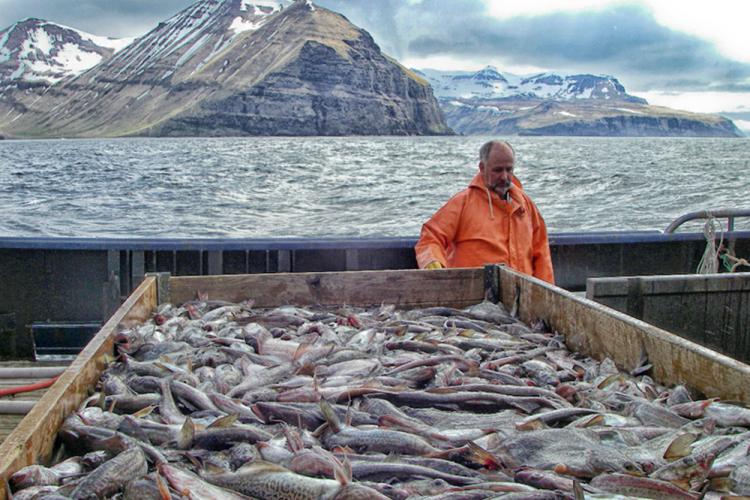
June 14, 2026 – Across Alaska, struggling salmon returns have devastated communities, disrupted subsistence traditions, and fueled growing public anger. Families along some of the state’s most iconic rivers have endured years of fishing restrictions, economic hardship, and uncertainty about the future.
Those frustrations are understandable.
Over the past eighteen months, Alaska’s fisheries debate has transformed from a discussion about resource management into something increasingly familiar across the United States: a political battle built around competing narratives, emotional appeals, and the search for someone to blame.
The details may be uniquely Alaskan, but the underlying dynamic is not. What happens next should concern every American.
Across the country, complex resource challenges are increasingly being reduced to simple stories of victims and villains. Whether the issue is energy development, mining, forestry, water management, data centers, infrastructure, or fisheries, public debate is drifting away from tradeoffs, measurable outcomes, and adaptive management and toward narratives designed for political mobilization.
Alaska’s fish wars are becoming a case study in what that looks like in real time.
The current fight began with legitimate concerns. Salmon declines across parts of Alaska are real and painful, particularly for Indigenous and rural communities that depend on salmon for food security, cultural continuity, and local economies. Crab stocks in the Bering Sea have collapsed. Ocean conditions are changing rapidly. Scientists continue working to understand the combined impacts of warming waters, changing food webs—including the growing influence of hatchery production from Asia, predator-prey dynamics, freshwater habitat conditions, international fishing pressure, and other environmental changes that affect fish survival.
Those concerns deserve serious attention.
Yet increasingly, public debate has been driven by a narrative that is easier to repeat than it is to prove. Despite a growing body of data showing that Alaska’s fisheries face multiple, interconnected challenges, a single industry is cast as the villain and a single policy outcome is promoted as the solution. Those who bring facts, data, and science into the discussion are often dismissed—not because the evidence is wrong, but because it complicates a storyline built on certainty rather than proof.
The search for villains is not the same thing as the search for solutions.
Complex systems rarely produce simple villains. They almost never produce simple solutions. Yet modern politics increasingly demands both.
In Alaska, some activists and advocacy organizations have centered their campaigns around the idea that trawl fisheries are the primary cause of broader ecosystem challenges and declining salmon returns. Similar arguments are appearing with increasing frequency in national publications, where complex fisheries management questions are presented as moral conflicts between communities and industry.
That framing is politically effective, while being far less effective as resource policy.
This is not really a fisheries story anymore. It is a resource-governance story.
The Eastern Bering Sea and Gulf of Alaska pollock fisheries operate under extensive scientific review, strict harvest limits, bycatch controls, observer coverage, habitat protections, and continuous regulatory oversight. That system is not perfect, and no serious person claims otherwise. In fact, it has evolved repeatedly over time through improved monitoring, technological innovation, ecosystem-based management approaches, and adaptive policy changes driven by new information.
That is what functioning resource governance is supposed to look like.
Healthy institutions are not institutions that never change. They are institutions capable of adapting when new information emerges. Fisheries management, energy policy, water systems, mining operations, and infrastructure networks all require continuous adjustment as conditions change and knowledge improves.
The danger arises when adaptation itself is treated as evidence of failure.
Questions are raised. New research emerges. Monitoring improves. Standards evolve.
That process should strengthen public confidence, not become proof that the entire system is illegitimate.
Unfortunately, America increasingly struggles to distinguish between improving complex systems and dismantling them.
That challenge extends far beyond Alaska fisheries.
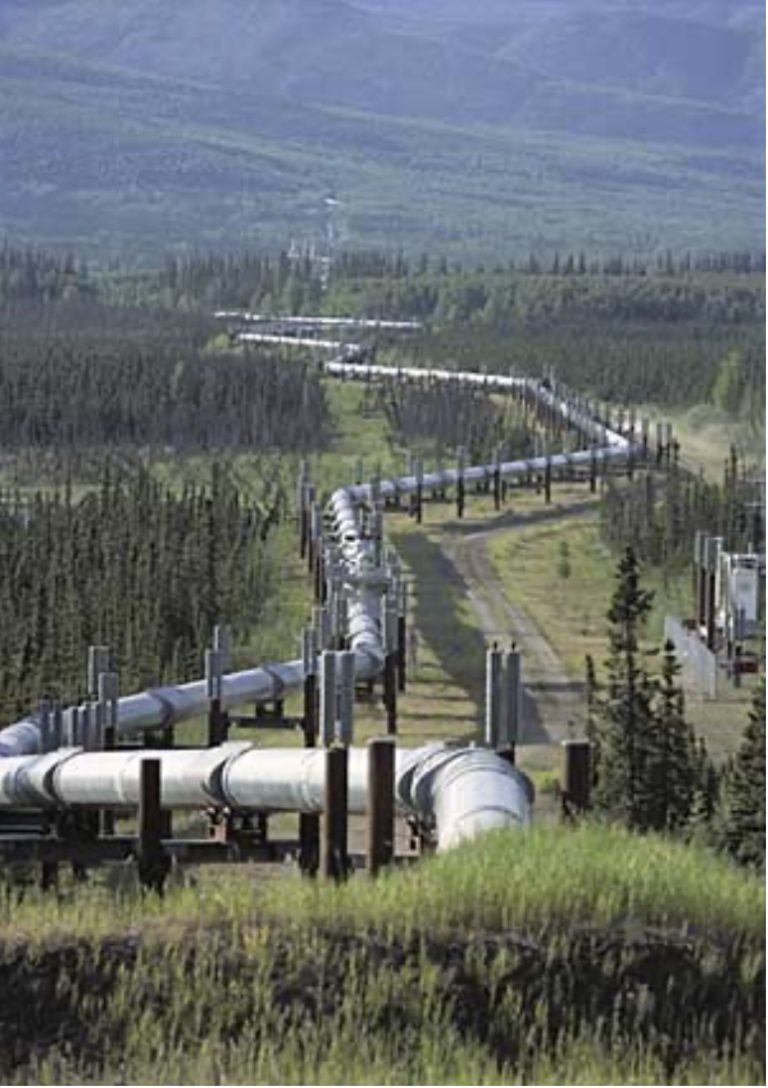
Across the country, similar battles are unfolding around pipelines, transmission corridors, critical mineral development, data center construction, forestry projects, water infrastructure, and energy production. Complex systems become simplified into narratives of heroes and villains. The political incentives are obvious. The policy outcomes can become catastrophic.
The result is a growing disconnect between the complexity of the systems Americans depend upon and the simplicity of the political conversations surrounding them.
Communities can suffer. Ecosystems can struggle. Institutions can make mistakes. But identifying a villain is not the same thing as identifying a solution.
That distinction matters because functioning systems are far easier to damage than they are to rebuild.
Americans have seen this story before. Across parts of Appalachia, the decline of coal reshaped entire communities. Whatever one’s views of coal policy, the economic dislocation, population loss, erosion of local institutions, and loss of cultural identity that followed proved far more difficult to reverse than many predicted. Once the jobs disappear, once the tax base shrinks, and once families begin leaving, rebuilding a regional economy can take generations. Resource systems can be reformed. They can be improved. But they should not be dismantled without a clear understanding of what may be lost—and whether a viable replacement actually exists.
For generations, Alaska’s fisheries have supported food production, transportation networks, coastal communities, local tax bases, and thousands of working families. Decisions affecting those systems should be made carefully, transparently, and with measurable outcomes in mind—not through narratives that reward certainty while ignoring complexity.
America’s environmental, economic, and resource challenges are becoming more complex, not less.
Meeting those challenges will require humility, adaptation, and a willingness to follow evidence even when the answers are uncomfortable.
America’s resource future will not be secured by finding villains. It will be secured by finding solutions.
If we lose the ability to govern complex resource systems through science, transparency, and measurable outcomes, fisheries will not be the only systems that become unstable.
Following a 35-year career spanning sales, business development, political campaigning, and congressional staffing, Rick Whitbeck joined The Truth, an Alaska nonprofit focused on fisheries advocacy, as its executive director. The Truth’s motto is Facts. Data. Science. Fish. Learn more at TheTruthAK.com or email Rick@TheTruthAK.com. This column first appeared at RealClearEnergy.org.

9 thoughts on “Rick Whitbeck: Alaska’s fish wars and the dangerous search for villains”
The pollock/bottomfish fishery (along with open ocean salmon management, which is now scientifically recognized as where the Chinook problem is occurring) is federally managed.
We can’t even seem to manage the Cook Inlet salmon fishery with balance, let along force the feds to do anything in the open ocean.
Good luck.
federal waters controlled by big lobby, you guess who they are. interest in the big bucks now and not in how long it will last. you name the fishery, overfished and destroyed with a long recovery or no recovery. not just the big guys but even the small that over harvest a stream or rob a creek, the result for the big guys is they go find someplace else to fish. the small guy is stuck with what they have done to the stock. the problem is as old as time. as long as we look at the problem as bycatch and not as food chain interruption and keep trying to blame fictional villains like global warming/climate change.
This article makes an important point: if Alaska is going to protect its fish, its economy, and its coastal communities, decisions need to be grounded in rational thinking. That requires a commitment to bringing people together rather than driving them apart.
The recent attacks and threats directed at trawl fishermen, their vessels, and members of the North Pacific Fishery Management Council, who recognize the important role this sector plays in Alaska’s economy, should not be condoned or encouraged by candidates seeking to lead our state.
Leading requires courage. Following the loudest voices on social media is not the same as leading. Voters should pay close attention when public figures refuse to condemn hostility and intimidation. Character is revealed not only by what leaders say, but also by what they are willing to tolerate.
I believe that most AK commercial salmon fisheries need to be much reduced in scope or shut down entirely. Salmon are too important to Alaskans struggling to meet high food costs, and too important to the tourism industry which returns far more to Alaskans for every pound of salmon than do limited entry permits. The commercial salmon industry has long been highly subsidized by the petroleum industry while many gear groups opposed mining, petroleum and forest products industries. Finally, China is the number one buyer of AK salmon (state-subsidized salmon) yet most salmon is shipped in the round, with just about no canning taking place. Limited entry has not worked (and I cannot remember how I voted on it back in 1975(?)).
No coincidence that the National Marine Fishery Service answers to the United States Department of Commerce! Some would say that is a problem for Alaska as corporate lobbyists seem to have captured the ear and minds of those bureaucrats based in Washington, DC to the detriment of the small boat Alaska commercial fishermen, sportsmen and subsistence users. That heavy hand of lobbyists and bureaucrats is even felt on local advisory boards and commissions. Pollock trawlers in Alaska – which is supposed to be a midwater fishery – have used their Beltway buddies influence to fiercely resist any regulatory efforts to keep their football field size nets off the seafloor where it decimates crab & halibut nurseries. This, in spite of the fact that they have admitted in regulatory hearings that their nets are on the bottom up to 80% of the time while chasing pollock!
Google AI mode shows that 40- 80% of mid water trawling nets rake the ocean floor causing damage. Trawling has also caught millions of salmon as by-catch and die before they can be released.
Marxist/Leftism is based on an oppressor/victim model. In turn, this model thrives on being able to find villains. The author demonstrates how this has infected resource management. The Left will always try to find someone to blame and that someone will usually be a corporation or a successful person. Thus, Uncle Bernie is and will be apoplectic over Elon Musk. Folks need to recognize when the Left is trying to dishonestly find victims and reject that form of analysis.
I think Musk is the ideal villain in the “oppressor/victim model”. I think it was Bill Gates that said that the world’s richest man kills the poorest child. That’s Musk.
Guys, the solution is to get as many nets out of the salt as possible. This means fish farming (onshore – RAS, and offshore) is in your future. Do it incrementally. Trade a commfish permit for a piece of land / seastead and get on with it. The sooner the commfish nets are out of the salt, the sooner the wild runs recover. It’s not that hard. 85%+ of all salmon are farmed today. Pollock can be farmed, as can halibut/ Time to join the rest of the worldwide marketplace and correct the idiotic mistake we made in 1990, nearly 2 generations ago. Cheers –