

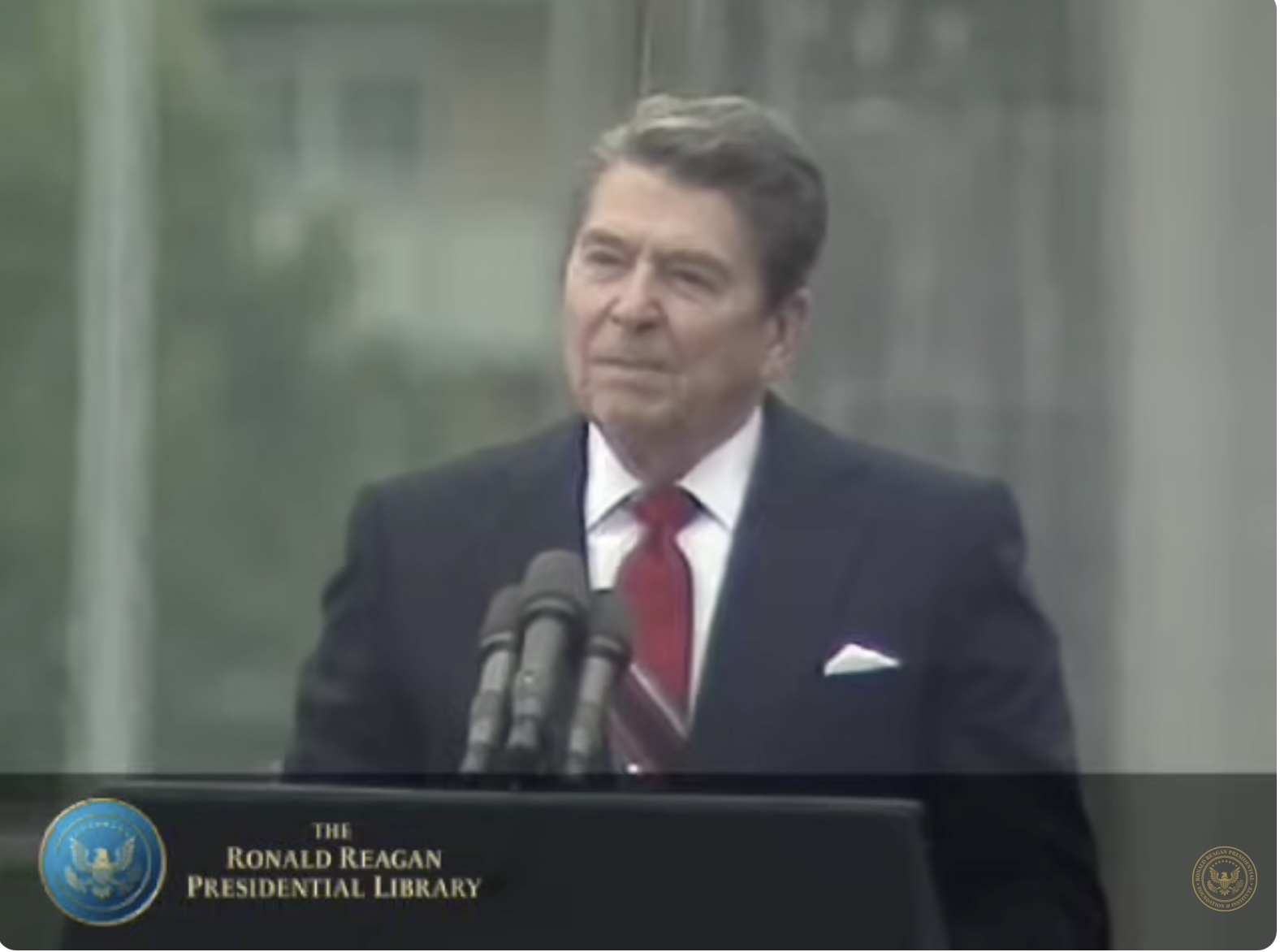
June 12, 2026 – On June 12, 1987, standing before Berlin’s iconic Brandenburg Gate, President Ronald Reagan delivered one of the most memorable speeches of the Cold War, issuing a direct challenge to Soviet leader Mikhail Gorbachev that would echo through history:
“Mr. Gorbachev, tear down this wall!”
The line, now regarded as one of the defining moments of Reagan’s presidency, came at a time when Europe remained divided by ideology, military alliances, and concrete barriers. Behind Reagan stood the Berlin Wall, the heavily fortified symbol of communist control that had separated East and West Berlin since 1961.
For nearly three decades, the wall had represented the Iron Curtain that divided free societies from Soviet domination. Guard towers, barbed wire, and armed patrols made crossing nearly impossible. Families were separated, freedoms were restricted, and the wall stood as a daily reminder of the Cold War’s tensions.
Reagan’s speech marked the 750th anniversary of Berlin and was intended to highlight the importance of freedom and democratic values. Yet it became famous for a passage that some of Reagan’s own advisers had recommended removing.
Concerned that the statement would be viewed as too confrontational, members of the administration urged Reagan to soften his language. The president refused.
Addressing Gorbachev directly, Reagan declared:
“General Secretary Gorbachev, if you seek peace, if you seek prosperity for the Soviet Union and Eastern Europe, if you seek liberalization: Come here to this gate. Mr. Gorbachev, open this gate. Mr. Gorbachev, tear down this wall!”
At the time, many commentators viewed the remark as rhetorical flourish rather than a realistic policy demand. Few expected the Soviet bloc to unravel anytime soon.
But events soon overtook expectations.
Over the next two years, reform movements gained momentum throughout Eastern Europe. Gorbachev’s policies of glasnost and perestroika loosened some restrictions within the Soviet system, while citizens across the communist bloc increasingly demanded political freedom.
Then, on Nov. 9, 1989, East German authorities unexpectedly opened border crossings. Jubilant crowds surged toward the wall, climbing atop it and beginning its destruction piece by piece.
Images of Berliners celebrating atop the wall became some of the defining photographs of the 20th century.
Within months, East and West Germany were moving toward reunification. By 1991, the Soviet Union itself had dissolved, ending nearly half a century of Cold War rivalry between Washington and Moscow.
Although historians will debate the precise impact of Reagan’s speech on those events, the challenge he delivered at the Brandenburg Gate came to symbolize the confidence of the West and the growing recognition that communist governments could not indefinitely suppress demands for freedom.
Today, the speech remains one of Reagan’s most enduring legacies and one of the most recognizable presidential addresses in American history.
What was once criticized as overly bold is now widely remembered as prophetic.
Two years after Reagan called for the wall to come down, it did. Four years later, the Soviet Union was gone.


2 thoughts on “Reagan’s challenge to Soviet leader Mikhail Gorbachev: ‘Tear down this wall.’”
Easily one of the most powerful and effective speeches ever made. President Reagan, you are missed.
Funny, back then, he was the Second coming of Hitler, before the Left decided that Bush was Hitler 2.1. Then Trump. So, does each new Republican inherit the Swastika Crown???