


By PAUL FUHS
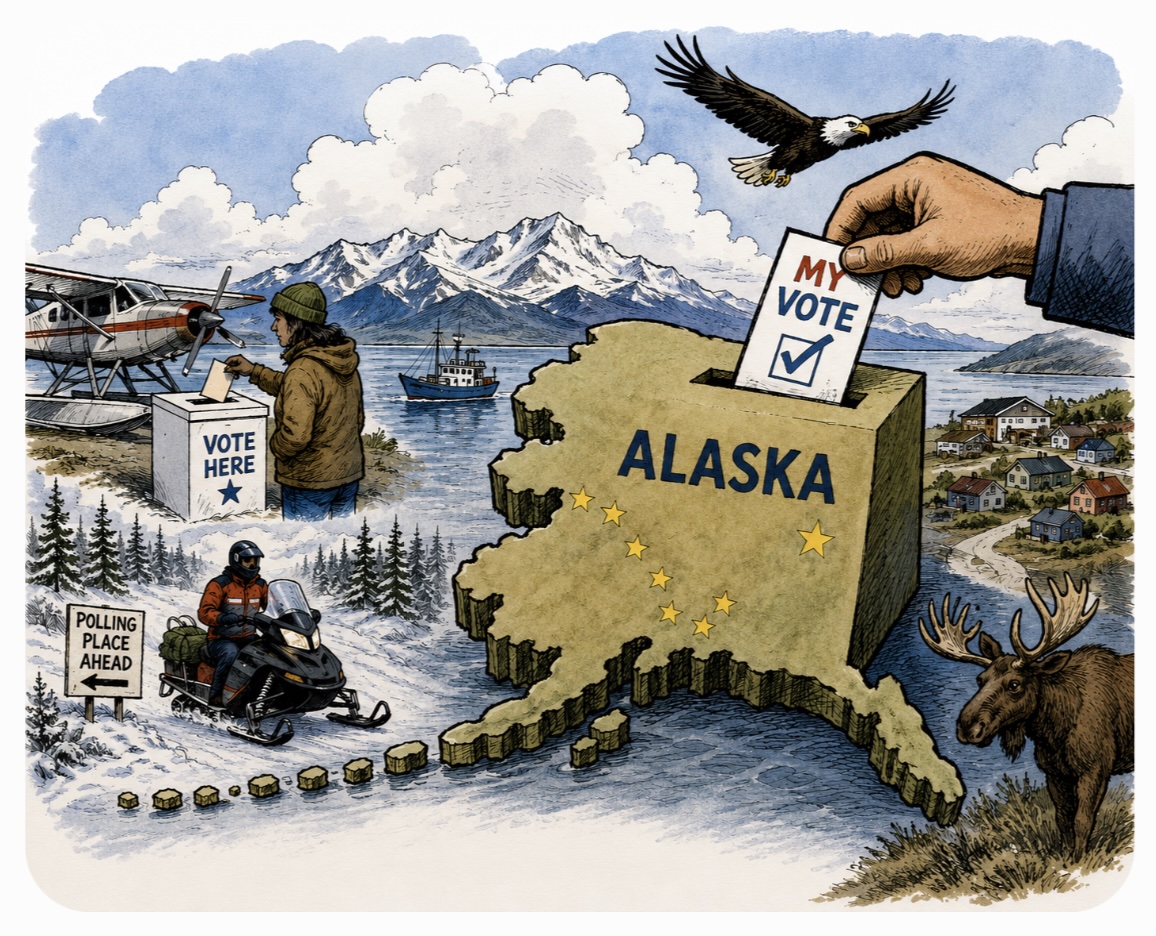
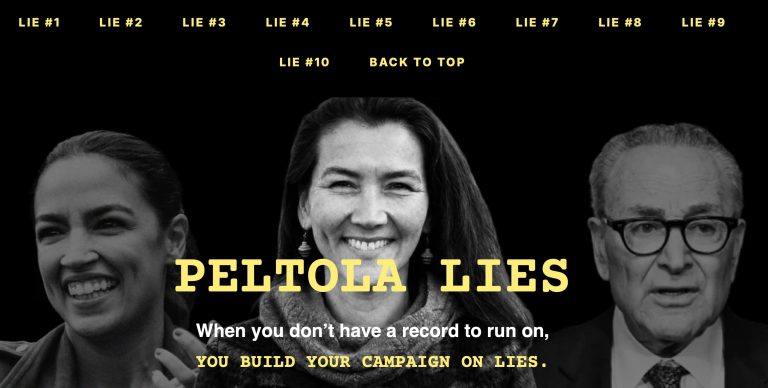
June 29, 2026 – This upcoming election season, we will see a campaign like none we have ever seen before. We will be inundated with ads, mailers, surveys, door to door efforts, for a campaign estimated to spend over $100 million dollars ($70 million alone promised by Chuck Schumer to Mary Peltola). That is about $430 per every voter in Alaska.
The campaign I am talking about is the race for US Senator for Alaska. Sullivan vs. Peltola. Sound like a heavy weight bout? It will be something like that.
But what are we voting for? The candidates themselves …. or some side issue about who they are associated with?
One of the campaign themes we are sure to see will be attempts to link candidates to every action taken by a president, whether or not they supported it, opposed it, or had any ability to influence the decision.
This is unfair to the candidates. No elected official agrees with every action taken by any administration. Too often, campaigns focus on assigning blame for decisions made in Washington rather than examining what a candidate personally accomplished for Alaska.
What if we decided to look on the more pragmatic side of things and evaluated our candidates on their ability to work WITH any administration when it benefits Alaska, while also standing up to Washington when Alaska’s interests are threatened?
That would be a fair question for anyone to ask during a community meeting, candidate forum or media interview. Alaskans deserve to know what each candidate has actually delivered, not simply which national political figure their opponents want to associate them with. That would mean a lot more to Alaskans than the blame game.
Alaska has too much at stake to take a simple minded approach like that.
So, let’s look at their records and accomplishments, rather than succumbing to emotionally driven attacks tied to decisions made by others in Washington. For Senator Sullivan, that means evaluating his 50+ bills signed into law and his record on resource development, military investment, fisheries, infrastructure, public safety, and the many issues that directly affect Alaska’s economy and future.
I don’t disagree that former Rep. Peltola is a nice person as we have seen in her ads, but within her association with DC Democrats, she did not get a single bill passed into law during her tenure. And these are some of the same people who have consistently proposed shutting down Alaska resource development.
With more than $100 million likely to be to be spent between the two campaigns, I am sure we are going to hear a lot about these records.
In the meantime, the Anchorage Daily News editorial board asks the question in their published editorial entitled “Will the real Dan Sullivan please stand up?” This implies that there is a real candidate and a fake one, and you can understand why given the circumstances.
First, there is no way a candidate such as this could meaningfully participate in a campaign that is estimated to cost $100+ million combined unless it is under our current ranked choice voting system, since there is no ranked choice in the primary. Due to the intentional confusion a deceptive Dan Sullivan is trying to cause, he would likely get a enough votes to place in the top 4. In the previous system, a game playing candidate like him would just be defeated in the primary and the party’s candidates would move on against each other.
In this system, and with 14 people running for the Senate seat (most of them unknown), if enough people cross over to make sure the ‘fake’ Dan would make it into the final four with as little as 2-3% of the vote, it could provide real confusion in the general election. I have recently been polled on the Senate race and the pollsters can’t tell me which Dan they are asking about. I admit that I am confused myself of whether it is the “S.” or the “J.” and couldn’t answer their questions. Perhaps they are polling to determine the level of confusion?
Was this kind of outcome intended by the design of ranked choice or was it unitentional? In either case, we now have a similar situation with Alaska’s Governor race with the ranked choice system in place where so many are incentived to run, that candidates could make it into the final 4 with as little as 10% of the vote. That is not majority choice. Yes, you get to choose who to vote for in the general election, but a thin minority of voters got to choose who you get to vote for.
It is quite clear that this whole situation smells of bad intent. Deceptive Dan wouldn’t submit a sworn statement about how his candidacy occurred and who he talked to about it, and how Amber Lee, who has now left the country, was involved. Since he has filed a court case against Lt. Gov. Nancy Dahlstrom, can he be compelled to take the stand and testify under penalty of perjury, how all of this happened? Or to tell who is paying for the three lawyers defending him?
No matter who you support in this race, you have to be concerned about this obvious election manipulation situation.
Perhaps the court will give leeway for ballot preparation in differentiating between the candidates, naming the real Dan “Senator Dan Sullivan (Incumbent)” or otherwise clearly identifying the sitting US Senator so voters can make an informed choice.
Otherwise the intended confusion will continue. It is a sad situation, one made possible by bad actors and our Ranked Choice Voting system.
Paul Fuhs is the former Mayor of Unalaska and former Commissioner of Commerce and Economic Development for Governor Wally Hickel.

6 thoughts on “Paul Fuhs: With so much election manipulation going on, how will we know who we are voting for?”
Just do what the Democrat voters do. Vote for the party. No matter how dumb their candidates are they will always vote for the Democrat.
Team work is a value Republican voters still yet have to learn
After the primary election Democrats will get focused on their one
I can’t think of a better illustration of our current voting system’s shortcomings than the whole Decoy Dan situation. The combination of RCV and the jungle primary does nothing but facilitate deception and manipulation by insiders and would be political operators.
“Alaska has too much at stake to take a simple minded approach like that.”
But, the problem is, Alaska has too many simple minded voters.
How??? …
You can always rely on “The Alaska Story” to tell the truth and give great advice.
Open primary where democrata will go to vote, RCV, decoy Dan and Walker = what could possibly go wrong
https://www.linkedin.com/pulse/my-current-assessment-alaskas-gubernatorial-alaska-sobocienski-mba-3fn5c
To date, no candidate has fully articulated the governance framework that matters most to me.
That assessment may evolve as the campaign continues, candidates release more detailed policy proposals, participate in debates, and demonstrate how they would govern.
My evaluations are not based on party affiliation, ideology, campaign messaging, or personality.
They are based on one question:
Will this candidate increase wealth, opportunity, and economic ownership for individual Alaskans?
That is the purpose of the Alaska Capacity Framework™—my independent governance methodology for evaluating public policy and executive leadership.
One principle sits at the center of that framework:
Alaska is not a third-party stakeholder. Alaska is the owner.
Every developer, financier, lender, engineering firm, contractor, strategic partner, equipment supplier, and global off-taker participates to advance its own interests. That is the role of private enterprise.
The responsibility of Alaska’s Governor is different.
The Governor’s fiduciary responsibility is to negotiate from Alaska’s position of ownership and convert our natural resources, infrastructure, procurement, and public leverage into measurable increases in wealth for individual Alaskans.
I reject the idea that the primary purpose of major public-private development projects is to expand government revenue that is later redistributed through poverty programs.
The objective should be to create more Alaska-owned businesses, stronger family assets, local investment, higher-paying careers, and greater economic independence.
What concerns me is not that global companies understand how to maximize value for themselves. That is expected.
My question is whether Alaska’s negotiating capacity and governance sophistication are keeping pace with the experience of the organizations sitting across the table.
That is the standard I am using to evaluate every gubernatorial candidate.
As campaigns evolve, so will my assessment.
Trudy Sobocienski®
The Alaska Capacity Framework™ is my original work, governance methodology, and personal opinion. It is independently developed and is not commissioned, sponsored, funded, or endorsed by any candidate, campaign, political party, corporation, government agency, or advocacy organization. Candidate assessments are based on publicly available information available at the time of publication and are subject to change as additional information becomes available. This article is intended to explain the framework—not to endorse or oppose any candidate.