


By SUZANNE DOWNING
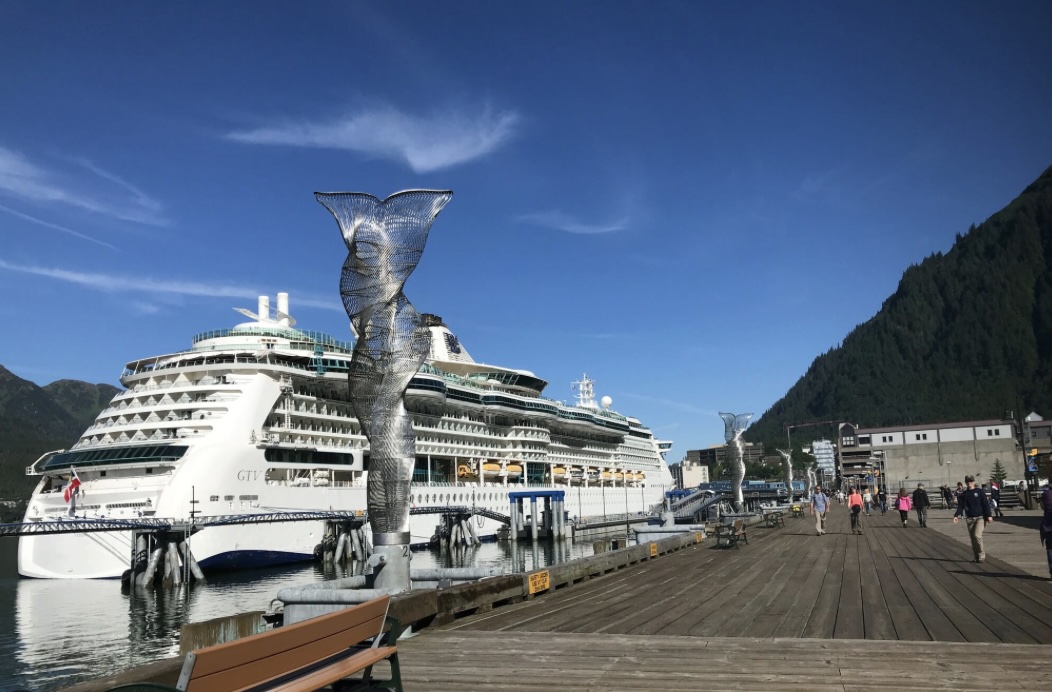
Sept. 2, 2026 – The Juneau Assembly has postponed a decision on whether to make the capital city’s voluntary five-large-cruise-ship limit permanent. Te unresolved policy question has major implications for Goldbelt Inc.’s proposed two-berth cruise port on west Douglas Island, far from the downtown Juneau tourist district.
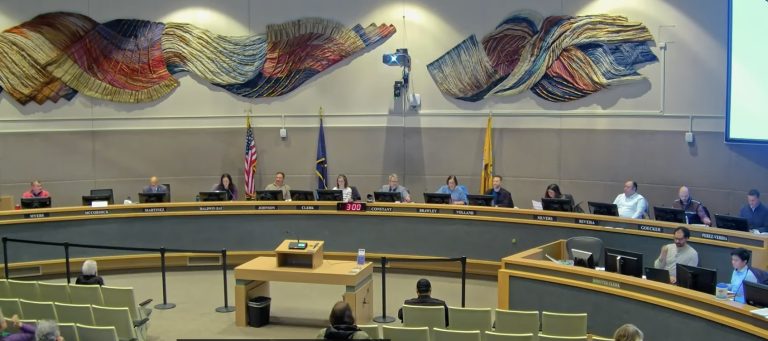
The vote to delay the ordinance was approved 5-4 on Monday. Mayor Beth Weldon, Deputy Mayor Greg Smith and Assembly members Nano Brooks, Maureen Hall and Neil Steininger supported waiting. Assembly members Ella Adkison, Alicia Hughes-Skandijs, Paul Kelly and Christine Woll voted against the delay.
The city’s Visitor Industry Task Force has yet to complete and deliver its recommendations to the Assembly. That may come later this fall.
At issue is whether Juneau should turn its voluntary agreement with the cruise industry into a municipal law. Since 2023, the City and Borough of Juneau and participating cruise lines have agreed to limit the number of large cruise ships in port to five per day during the visitor season.
Cruise lines have also agreed to a daily limit of 16,000 lower berths, with a 12,000-passenger limit on Saturdays beginning in 2026.
Anti-tourism advocates tried last year to place a mandatory five-ship limit before voters, but the petition effort failed to collect enough valid signatures to make it to the ballot.
The proposed ordinance discussed and delayed on Monday would make it illegal for more than five large cruise ships to berth on the same day anywhere within the City and Borough of Juneau.
Goldbelt, Juneau’s urban Alaska Native corporation, is developing plans for a private, two-berth cruise port along Stephens Passage, approximately nine miles northwest of downtown Juneau. The estimated $500 million project would be built on about 250 acres of Goldbelt property just beyond the end of North Douglas Highway.
Goldbelt owns about 1,800 acres along the northwest coast of Douglas Island between False Outer Point and Point Hilda. The corporation has said the project would create long-term economic benefits for its more than 4,300 Alaska Native shareholders while spreading visitor activity away from Juneau’s congested downtown waterfront.
Royal Caribbean Group has expressed strong interest in becoming the port’s primary cruise customer, although Goldbelt would own and develop the facility.
The project’s marine plans are extensive. State permitting documents describe two floating cruise ship docks, each measuring about 500 feet by 50 feet, along with trestles, mooring dolphins and passenger walkways. The development would also include a seaplane base, a multi-use harbor, a boat launch, fuel facilities and a separate dock for tour boats returning passengers to the property.
The upland portion is envisioned as more than a place for passengers to step off a ship. Plans include a welcome center, trails, visitor attractions, lodging, parking, access roads and employee accommodations. Longer-term concepts have included employee housing, child care, a recreated Lingít village and connections with other Goldbelt tourism operations.
Goldbelt intends to construct the port in phases. Initial work would concentrate on the basic dock, utilities and welcome-center infrastructure, with additional attractions and accommodations developed over several years. The company hopes to welcome its first cruise ship during the 2028 season.
The project would have its own water and wastewater treatment systems. Goldbelt also says the site’s proximity to Alaska Electric Light and Power transmission lines serving the Greens Creek Mine makes it a strong candidate for shore power, which would allow ships to turn off their engines while docked.
Traffic remains one of the most contentious questions. Without another crossing between Juneau and Douglas Island, vehicles carrying passengers into town would use North Douglas Highway and the existing Juneau-Douglas Bridge. Goldbelt says it has commissioned a traffic study and is designing the destination so more tours can begin and end at the port rather than sending every passenger downtown.
The company argues that the port could distribute visitors across a larger area, reduce congestion in downtown Juneau and create opportunities for local tour operators and retailers. Goldbelt also says the development would generate municipal property taxes, sales taxes and marine passenger fees.
But a permanent, borough-wide five-ship limit could fundamentally change the project’s role.
If Goldbelt’s two berths fall under the same five-ship ceiling as the downtown docks, the project would not necessarily bring additional ships to Juneau. Instead, ships using Goldbelt Aaní could take two of the five available daily slots, leaving fewer vessels at the existing downtown docks.
That could shift passengers—and their spending—away from downtown businesses and toward Goldbelt’s private destination.
The other possibility, under the current voluntary arrangement, is that Goldbelt’s port could operate outside the agreement. Goldbelt did not sign the memorandum between the city and participating cruise lines, and Goldbelt President and CEO McHugh Pierre has publicly opposed turning the five-ship limit into law.
Goldbelt’s facility would be Juneau’s sixth cruise dock if completed as planned, with a second berth potentially creating capacity for a seventh ship. Whether those ships would be allowed in addition to the five vessels currently permitted—or would have to compete for space under a citywide limit—is at the center of the Assembly debate.
Weldon and other Assembly members supporting the delay argued that the existing voluntary arrangement has worked and that the city should review additional data and the task force’s recommendations before adopting a law likely to trigger litigation.
Win Gruening: Áak’w Landing, a bright spot in Juneau’s economy


One thought on “Juneau Assembly puts permanent five-ship limit in dry dock for now; voluntary compliance stands for now”
Cutting off their noses to spite their faces. The borough lives,on the money made on tourism from the ships, must be that they want to remain a,government colony town