


By THE ALASKA STORY
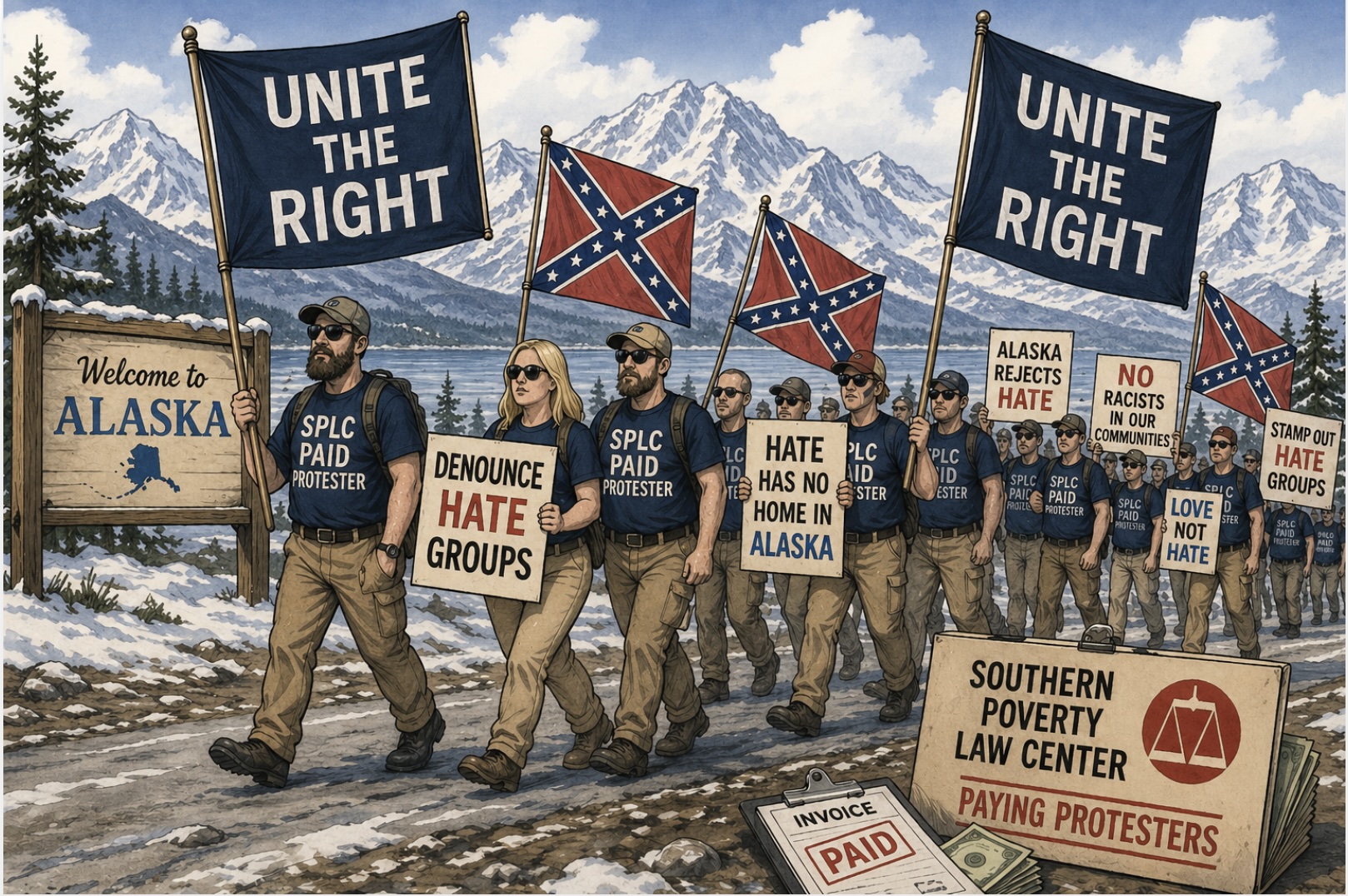
Aug. 12, 2026 — A former top official at the Southern Poverty Law Center was arrested Wednesday as federal prosecutors expanded their criminal case alleging that the nonprofit secretly funneled more than $4 million in donor funds to people associated with violent extremist organizations.
The case has an Alaska connection: The SPLC’s classifications were once used in military training at Joint Base Elmendorf-Richardson to label the Alaska Family Council a “hate group,” prompting the base to apologize and remove the SPLC material from its training material.
Heidi L. Beirich, 59, of Palm Springs, California, was served with a federal arrest warrant Wednesday morning and was expected to make an initial court appearance later today. Beirich formerly directed the SPLC’s Intelligence Project, which produced the organization’s reports and widely circulated lists of purported hate and antigovernment groups.
A federal grand jury in Montgomery, Ala., has charged Beirich and the SPLC with conspiracy to commit wire fraud and conspiracy to submit false statements to a federally insured bank. Beirich was also added as a defendant to an existing charge of conspiracy to commit concealment money laundering.
The SPLC, based in Montgomery, was previously charged in an 11-count federal indictment returned in April. The latest indictment adds Beirich as a defendant and expands the allegations against the organization.
Prosecutors say that between 2007 and 2023, the SPLC secretly funneled more than $4 million in tax-exempt donor money to individuals associated with violent extremist organizations. The payments were allegedly routed through bank accounts opened in the names of fictitious companies to conceal where the money was going and who controlled it.
Those receiving SPLC funds allegedly included leaders and members of the Ku Klux Klan, the neo-Nazi National Alliance, and other extremist organizations the SPLC publicly claimed it was monitoring or working to dismantle.
Some of the money allegedly helped finance recruiting, rallies, racist literature, Klan robes and materials used in cross burnings. Prosecutors contend the SPLC did not truthfully disclose that use of donor money and made false representations to financial institutions when opening and operating the accounts.
“The second superseding indictment alleges that, between 2007 and 2023, more than $4 million in donated funds were secretly funneled to individuals associated with various violent extremist groups,” the Justice Department said.
Beirich allegedly oversaw payments to one informant who received approximately $1.2 million while associated with the National Alliance. Prosecutors allege that she had a romantic relationship with the informant and that the two shared a home and joint bank accounts.
Approximately $140,000 in SPLC money was allegedly deposited into accounts jointly held by Beirich and the informant, with some of it used for shared living and personal expenses.
The indictment also alleges that an informant stole documents from the National Alliance’s West Virginia headquarters for use in SPLC reporting. Another person was allegedly paid to claim responsibility for the theft.
The Alaska implications extend beyond the federal courtroom.
In 2019, new military personnel attending Equal Opportunity training at JBER were shown SPLC material that identified the Alaska Family Council as a hate group. The Christian public-policy organization was presented alongside the Ku Klux Klan, the Nation of Islam and white nationalist organizations.
The training was also transmitted to personnel at Fort Wainwright in Fairbanks.
After Alaska Family Council President Jim Minnery objected, JBER’s public affairs office apologized and said the SPLC infographic would be removed from its training materials.
“We extend our deepest apologies to the Alaska Family Council members,” the base said at the time. “We have addressed the issue and will ensure the Alaska Family Council is not referred to as a hate group during this training.”
JBER also acknowledged that the SPLC graphic was not necessary to explain military restrictions on participation in extremist or protest activities.
More recently, the SPLC placed the Mat-Su chapter of Moms for Liberty on its Alaska hate map under an antigovernment designation. The organization’s lists have also been cited in Fairbanks public meetings and disputes involving local civic organizations.
That history gives the federal prosecution particular relevance in Alaska, where SPLC classifications migrated from an Alabama advocacy organization into military classrooms and local government debates, carrying potentially serious reputational consequences for Alaskans and Alaska organizations.
Beirich left the SPLC and later co-founded the Global Project Against Hate and Extremism.
Her attorney, Michael Proctor, said she is innocent and called the prosecution politically motivated. The SPLC has likewise denied wrongdoing, arguing that its use of paid informants was a lawful and necessary intelligence-gathering practice known to law enforcement agencies.
Federal prosecutors maintain that the case is about fraud, the concealment of financial transactions and representations made to donors and banks—not the legality of monitoring extremist organizations.
“The indictment unsealed today reflects the continued work of federal investigators and prosecutors in examining this alleged scheme,” US Attorney Thomas Govan said. “We look forward to presenting the evidence in court and allowing the judicial process to determine the facts and the defendants’ responsibility for the alleged crimes.”
The FBI is investigating the case.


5 thoughts on “Former SPLC intelligence director arrested in widening federal fraud case; Alaska felt reach of group’s ‘hate’ labels”
Bill Hill has nothing to offer Alaskans.
The outside money only pushes we the people of AK out of our own wants, wishes, needs for our state.
Blessings, W.
Being on SPLC’s hate group list should be a source of pride for AFC. Congratulations!
If an organization funds other extremist racist organizations doesn’t that define them as being an extremist racist organization?
Beirich’s actions likely represent the tip of that iceberg. Regarding the military connection, one has to wonder which particular mentally disturbed men in skirts made the decision to use SPLC materials in military training at all.
The SPLC has long been a domestic terrorist organization, along with the ADL which is cut from the same cloth!