


By SUZANNE DOWNING
Sept. 3, 2026 – The controversy over Flock cameras tracking motorists, cyclists, and pedestrians on public roads has raised new questions about how far government surveillance should reach.
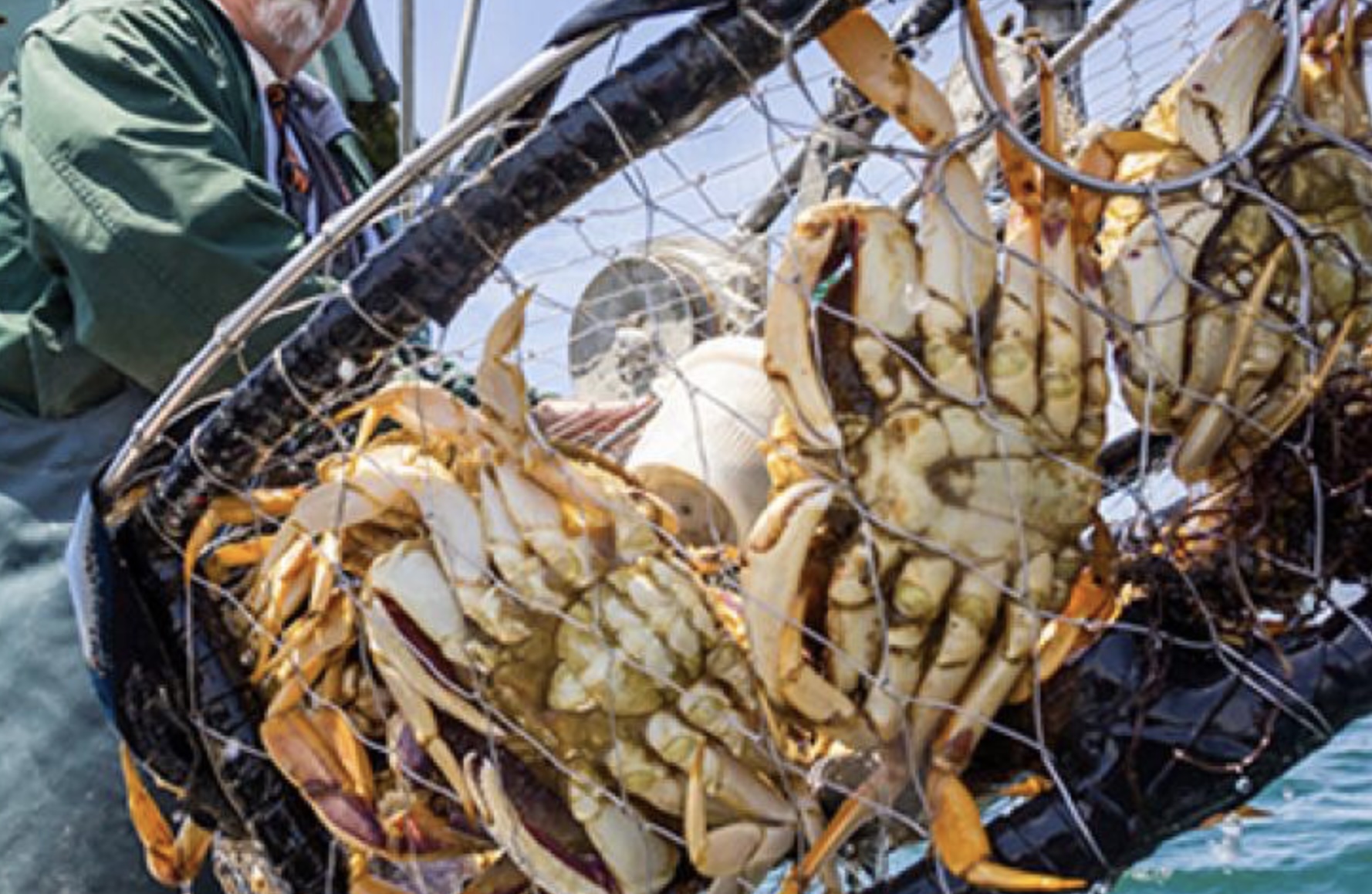
But in Washington state, that surveillance has now moved off the highways and onto the water, where commercial crab fishermen are required to pay for GPS equipment that tracks their boats around the clock — even when they are not crabbing.
A Sitka commercial fisherman is fighting Washington state’s requirement that he pay to have his boat tracked around the clock.
Washington state requires crab fishermen to transmit the locations of their vessels around the clock , even when they are not crabbing, and making them pay the cost of their own surveillance.
Three commercial crab boat captains, one of whom is from Alaska, are asking a state judge to pull the plug.
The New Civil Liberties Alliance filed a motion for summary judgment on behalf of Sarah Franey and Brent Young of Washington State, and Mark Young, of Sitka, Alaska. challenging the Washington Department of Fish and Wildlife’s Electronic Monitoring Program as an unconstitutional and unauthorized expansion of government power.
The fishermen use their vessels for more than harvesting Dungeness crab. Boats are used for transportation, sightseeing and other types of fishing. But as long as they have commercial crab pots in the water, the state requires their monitoring equipment to remain operating continuously, potentially throughout Washington’s nine-month crab season.
The state’s regulations require the system to record a boat’s position at least once every minute and transmit its location, speed, vessel name and hydraulic pressure information to a private service provider at least once every hour. The data are then made available to the Pacific States Marine Fisheries Commission and the Washington Department of Fish and Wildlife for management and enforcement purposes.
The equipment must operate continuously, 24 hours a day, unless the boat owner obtains a state-approved exemption. The fisherman is also responsible for purchasing, installing and maintaining the system and must “[p]ay all charges levied by the service provider” to keep it operating, according to Washington Administrative Code 220-340-421.
Failure to comply can be treated as a gross misdemeanor.
In other words, Washington is not merely requiring commercial fishermen to document their catch or report where they set their pots. It is demanding a minute-by-minute electronic record of where privately owned vessels travel, including journeys unrelated to crabbing, and threatening criminal punishment if the owners refuse to finance the tracking apparatus.
NCLA and local attorneys Harry Korrell and Makenzie Barron of Davis Wright Tremaine asked Washington Superior Court on Aug. 14 to declare the program unlawful and set it aside.
“The crabbers of Washington State do not give up their rights against unlawful search and seizure merely because they decide on the lawful pursuit of harvesting crabs,” NCLA Senior Litigation Counsel John Vecchione said in the group’s announcement of the summary-judgment motion.
The lawsuit argues that collecting the fishermen’s location histories without a warrant violates the Fourth Amendment’s protection against unreasonable searches as well as Washington’s own constitutional privacy protections.
It also raises a Fifth Amendment claim. The state, the fishermen contend, is commandeering space aboard their privately owned boats for government-required equipment, taking their location data and forcing them to pay for the system without compensation.
The program also allows the location information to be supplied to law enforcement agencies without a warrant, according to NCLA. That means data collected under the banner of fisheries management could potentially be used for broader investigative purposes.
The state has presented electronic monitoring as a fisheries-management and enforcement tool. Washington officials have also tied improved monitoring of the Dungeness crab fishery to efforts to understand fishing activity and reduce the risk of marine-life entanglements.
But the plaintiffs argue that the government already has less intrusive ways to monitor crab harvests and fishing activity, including catch tickets, landing records, logbooks, pot limits, buoy tags and enforcement patrols. Washington’s rules themselves provide for the use of harvest logbooks when an electronic monitoring system is unavailable.
The lawsuit contends the GPS mandate does not meaningfully improve the state’s ability to measure crab populations or protect wildlife. A vessel’s location may tell the government where a boat traveled, but it does not count the crab population.
The challengers are also questioning whether the Department of Fish and Wildlife had authority from the Legislature to create such a sweeping surveillance system.
Washington law permits the state to regulate equipment used to take fish or shellfish. NCLA argues that a GPS tracking device is not equipment used to catch a crab and that the agency cannot invent a new crime by stretching its regulatory authority beyond what lawmakers authorized.
The case was originally filed in November 2024 and remains active in Washington Superior Court. The latest motion asks the judge to decide the principal legal questions without a trial because the operation of the monitoring program is not materially disputed.
At its heart, the case asks whether accepting a government license means surrendering the right to be left alone.
Commercial fishing is already one of America’s most closely regulated and financially hazardous industries. Boat owners pay for permits, fuel, crews, insurance, maintenance and compliance with an expanding thicket of state and federal mandates. Washington has now added another cost: Fishermen must buy and maintain the digital leash the government uses to follow them.
The implications extend well beyond Washington’s crab fleet. If an agency may demand continuous GPS tracking simply because someone participates in a regulated business, the same rationale could eventually be applied to loggers, truckers, miners, farmers, guides and other workers whose livelihoods require government permits.
For Alaska fishermen, including those who work across state lines or deliver into Pacific Northwest ports, the case is worth watching closely. Government monitoring programs rarely remain confined to the jurisdiction or purpose for which they were first created.
Washington says it is monitoring crab boats. The lawsuit argues that it is monitoring people — without a warrant, without adequate legislative authority and at the expense of the citizens being watched.


8 thoughts on “Flock afloat: Washington forces crabbers to pay for 24-hour GPS tracking”
So many of our elites have looked at the Chicom model of total surveillance and said yes that’s great. When resistance grows against Flock camera or data centers or the NSA collecting all our data, I’ve noticed neocon talking points include opposition to this is Chicom propaganda. Unbelievable- as in Washington State’s requirement for commercial crab fishermen to pay for their own surveillance.
To me, the most important line from the article is: “The equipment must operate continuously, 24 hours a day, unless the boat owner obtains a state-approved exemption.”
The state-approved exemption defines the fraud built into this requirement. You grease the right palms, and you can do whatever you want wherever you want to do it.
The equipment isn’t all that expensive, as all of us have continuous GPS trackers in our smart phones and in our newer vehicles. With the rollout of cell direct to satellite service, fees for connection and equipment is ultimately a few tens of dollars / month, which feeds back into the corruption angle. Grease the right palms, and you don’t need the connection or the service. Given that this is Washington State, I expect there is also a political component, with Friends of the Regime getting their exemption easily while political enemies never quite measure up. Cheers –
The bible does tell us one day in the future one world government will Know where each of us are and there be no place to hide. Constant surveillance. Just like what Europe is using The Digital ID to hire and purchase, Flock cameras and the Entrance corrals at Fred Meyer, Walmart, and Carrs Safeways look as if they are grooming Freerer Americans into one day excepting a Digital ID for employment and buying.
One day they’ll going to start forcing us to put a chip in us so we can’t just Totally unplug from all technology and go “get lost” in God’s mountains and wilderness.
Constant surveillance is all part of Revelations. Paul the apostle tells the Church to stay awake during the end days not to seek comfort and go to sleep because Christ is close to returning.
Christians believe they are under constant surveillance, as God sees everything we do and think. The State wants to get into the act.
A cynical view is that privacy is already gone, and has been for a long time. Worse, we are actively embracing the constant surveillance in the name of safety and security, which is something Franklin foresaw in 1755.
The Surveillance State has been beaten back a bit since Trump took office in 2025, but it and its adherents on the political left are lurking in the background itching to reactivate what they installed during COVID to enforce compliance the instant they reinfest political office again. It is up to us to make sure they can’t by making the cost to try far larger than whatever they think they can gain by turning the surveillance back on. Cheers –
Plaintiffs lose the lawsuit, mandatory 24-hour GPS tracking on private vehicles and airplanes may be next.
.
This could be a great source of tax revenue for perpetually cash-strapped state and local governments. Data centers can be built in state to store accumulated tracking data. Population movements can be tracked and controlled. Future lockdowns can be enforced efficiently. Data can be sold to data-mining companies.
.
What’s not to like?
These boats already have GPS and AIS, so economics is not the problem.
While it’s true that these boats already have GPS , it is not necessarily true that they have AIS ( automatic identification system ). AIS requires an upfront cost to install that can easily cost the boat owner a couple of grand.
[…] Flock afloat: Washington forces crabbers to pay for 24-hour GPS tracking […]