


By SUZANNE DOWNING
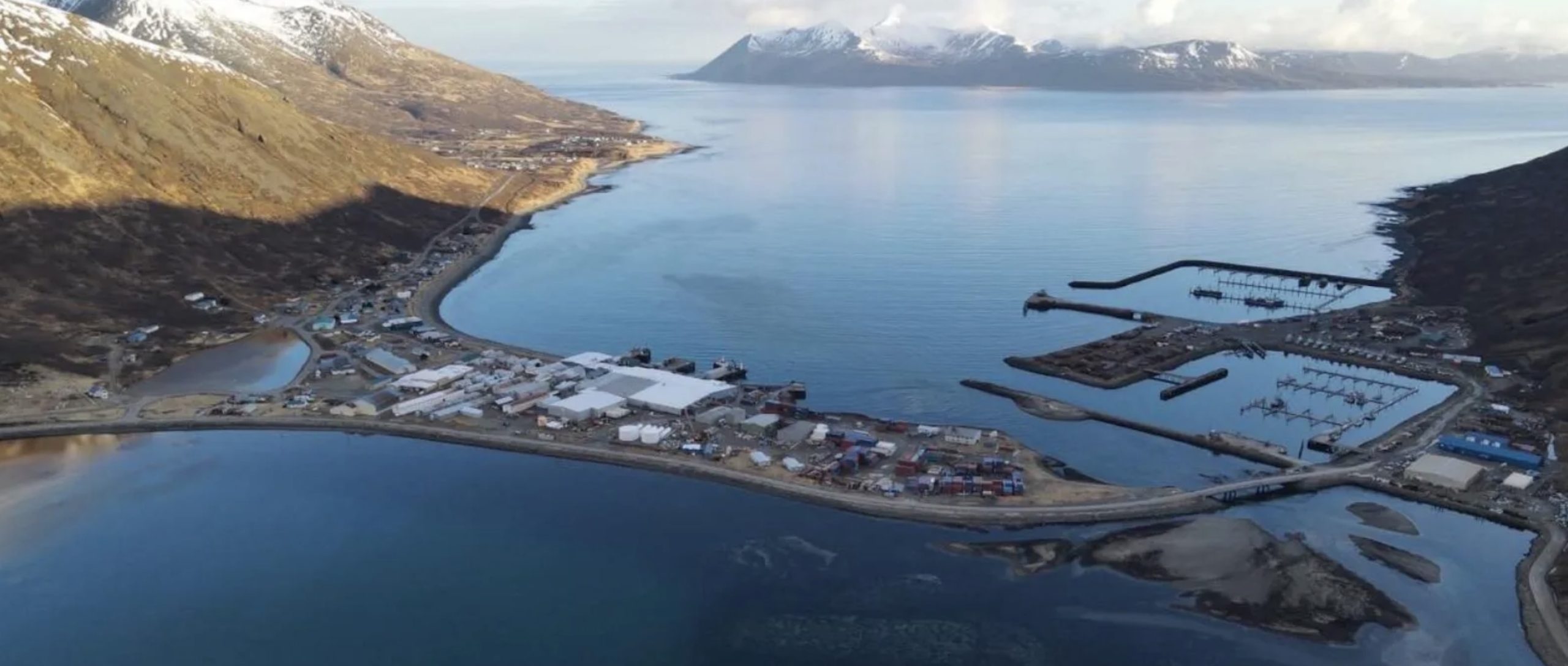
Sept. 5, 2026 — A federal judge has again rejected an environmental group’s attempt to stop Alaska from building the first 2.8 miles of the long-sought road between King Cove and the all-weather airport at Cold Bay.
US District Judge Aaron Peterson denied Defenders of Wildlife’s request for an injunction pending appeal, leaving the state free to continue construction on the initial segment unless the Ninth Circuit Court of Appeals intervenes.
The ruling is a limited but important victory for the State of Alaska and King Cove residents after a separate federal court decision invalidated the land exchange needed for most of the approximately 19-mile route.
The first 2.8 miles are being built on land King Cove Corporation owned before the disputed 2025 land exchange. That means the segment is not dependent on the now-vacated transfer of federal land through the Izembek National Wildlife Refuge.
“The current plan for that road is largely contingent on a land exchange between the federal government and King Cove Corporation that has been invalidated, leaving most of the project on pause,” Peterson wrote.
But he distinguished the initial segment from the rest of the project.
Alaska begins first 2.8 miles of King Cove road as legal battle continues
“Alaska wants to begin building the first 2.8 miles of the road and the King Cove Corporation already owns the land where that stretch will be built, so it is not contingent on the land exchange,” the judge wrote.
Defenders of Wildlife filed a separate lawsuit in August challenging a U.S. Fish and Wildlife Service compatibility determination for construction and operation of the first section. Although King Cove Corporation owns the property, it is subject to special federal restrictions because it lies within the exterior boundaries of the Izembek refuge.
Under Section 22(g) of the Alaska Native Claims Settlement Act, certain Native corporation lands within refuge boundaries remain subject to federal laws and regulations governing use and development of the surrounding refuge. The Fish and Wildlife Service issued the compatibility determination earlier this summer, concluding that the work could proceed without materially interfering with the purposes of adjacent refuge and wilderness lands.
Alaska planned to begin construction Sept. 1. Defenders of Wildlife asked Peterson to issue emergency relief blocking the state from moving forward.
Peterson previously denied the group’s request for a preliminary injunction. Defenders appealed that decision and asked him to prevent construction while the appeal is considered.
The judge rejected that request as well, incorporating his earlier order addressing nearly identical facts and legal claims.
The latest ruling does not restore the land exchange or authorize construction across the central portion of the Izembek refuge. It applies only to the short segment on land already owned by King Cove Corporation.
That segment extends the existing King Cove road toward Cold Bay and includes the project’s only planned bridge, an approximately 150-foot structure over an unnamed creek near mile 2.6.
The state began mobilizing for the work in August, barging heavy equipment and construction materials into King Cove. More than 20 local residents completed safety training and received Alaska Department of Transportation and Public Facilities certificates in preparation for the project, while five others enrolled in commercial-driver training.
The broader road remains tied up in separate litigation.
In October 2025, Interior Secretary Doug Burgum approved a land exchange that would have conveyed a corridor through the Izembek refuge to King Cove Corporation. The exchange was intended to allow construction of an 18.9-mile, single-lane gravel road linking King Cove with Cold Bay.
On Aug. 18, US District Judge Sharon Gleason invalidated the exchange, ruling that the Interior Department had failed to follow requirements under the Alaska National Interest Lands Conservation Act, the Endangered Species Act and the National Wildlife Refuge System Administration Act.
The US Army Corps of Engineers then suspended the Clean Water Act wetlands permit it had issued for the broader project in July.
The Dunleavy administration plans to appeal Gleason’s decision. No construction has begun on the federal corridor, and the state previously told the court that it did not expect to authorize work on the exchanged lands until 2027.
Defenders of Wildlife can now ask the Ninth Circuit directly for emergency relief stopping work on the privately owned segment. Unless the appeals court grants such a request, however, Peterson’s ruling allows the initial construction to continue.
King Cove residents have sought the road for generations as a reliable route to Cold Bay’s airport, which can accommodate larger aircraft in weather that frequently grounds smaller planes serving King Cove.
Interior’s 2025 decision found that King Cove experienced 217 medical evacuations between December 2013 and June 2025, including 32 that required assistance from the U.S. Coast Guard.
The road is an essential public-safety link for an isolated Alaska Native community that must now depend on small aircraft or dangerous marine transportation during medical emergencies.
For now, most of the road remains blocked. But with Peterson’s latest order, environmental groups have again failed to stop Alaska from moving the existing King Cove road 2.8 miles closer to Cold Bay.

3 thoughts on “Federal judge again refuses to halt construction of first 2.8 miles of King Cove road”
“Someone” just needs to keep going once they hit the 2.8 mile marker. Let’s see what Gleason does.
She will pull the rug and make everyone bow to their knees when entering her torture chambers.
[…] Federal judge again refuses to halt construction of first 2.8 miles of King Cove road […]