


By SUZANNE DOWNING
May 27, 3036 – Homeland Security Secretary Markwayne Mullin is exploring an immigration enforcement strategy that could have unintended ripple effects reaching all the way to Ted Stevens Anchorage International Airport.
Mullin, who was confirmed and sworn in as Homeland Security secretary in March 2026, has publicly and privately floated the idea of reducing or withdrawing US Customs and Border Protection staffing from airports located in so-called “sanctuary jurisdictions” that do not cooperate with federal immigration enforcement.
The proposal is still under consideration and no formal policy has been announced. But the idea has already sparked memos across the airline, cargo, tourism, and travel industries because international airports cannot legally process overseas passengers or cargo without customs officers present.
That means if staffing were significantly reduced at airports such as New York’s JFK, Los Angeles International, Seattle-Tacoma, Chicago O’Hare, or San Francisco International, airlines could be forced to reroute, delay, divert, or cancel international operations altogether.
In early April, Mullin told Fox News that it made little sense for the federal government to process international arrivals into jurisdictions that refuse to cooperate with Immigration and Customs Enforcement after migrants are released. He framed the idea as both a resource-allocation issue and a pressure tactic against sanctuary policies.
More recently, reports indicated that Mullin privately discussed possible customs staffing reductions with airline and travel industry executives during May meetings, reigniting discussion that the administration may seriously pursue the strategy.
Airline groups and tourism organizations have blasted the concept as economically destructive, saying that even partial staffing cuts at major ports of entry could create cascading disruptions throughout the national aviation network, especially ahead of major international events like the 2026 FIFA World Cup.
For Alaska, the biggest possible impact would likely center on cargo rather than passenger travel.
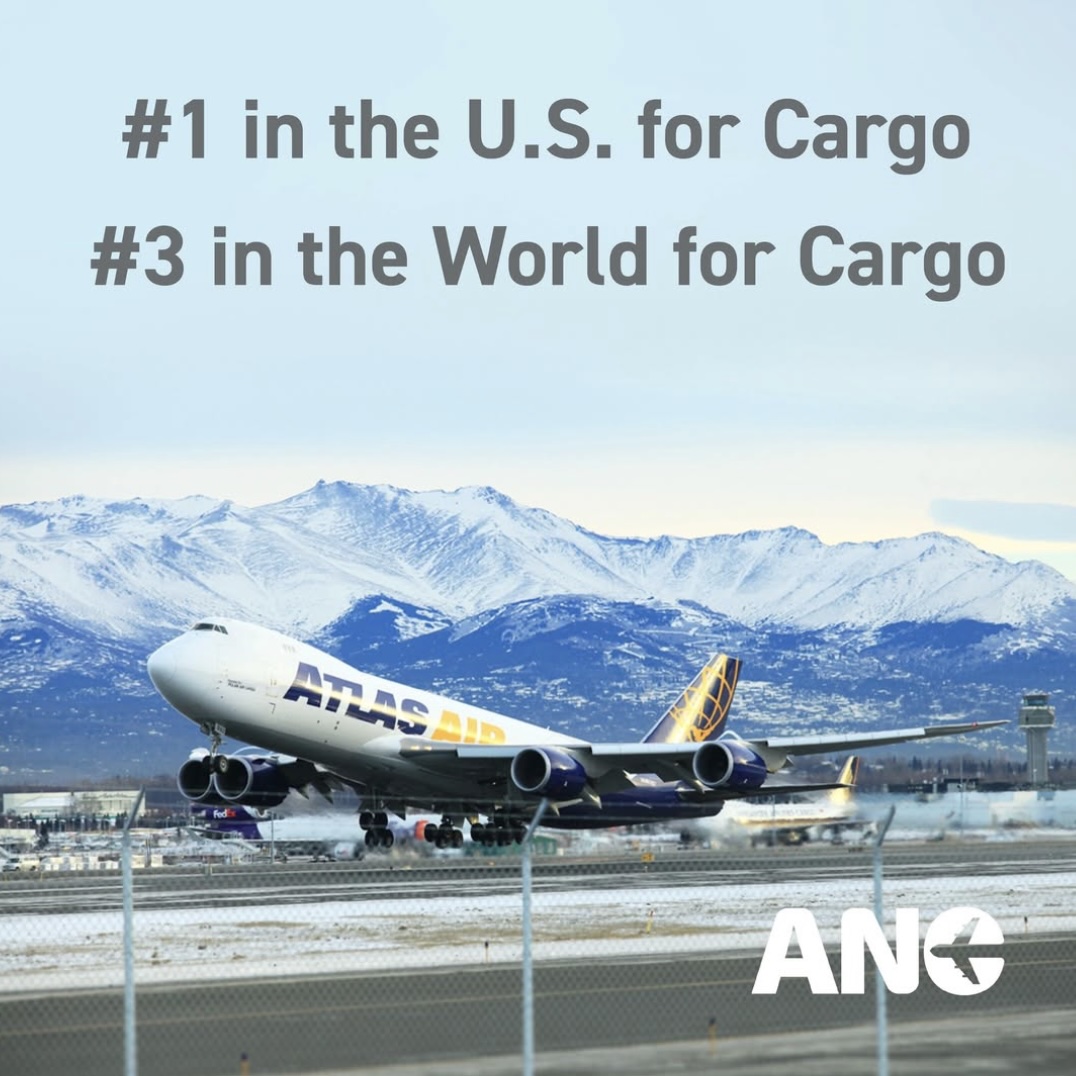
Anchorage’s airport already serves as one of the busiest cargo hubs in the world and has long played a critical role in trans-Pacific logistics. Its geographic location, long runways, extensive refueling capabilities, and established customs infrastructure make it uniquely positioned to absorb at least some diverted cargo operations if disruptions occur at major coastal gateways.
Cargo carriers flying between Asia, Europe, and North America already use Anchorage extensively for fuel stops, crew changes, and freight transfers. If airports like Seattle, San Francisco, Los Angeles, or Chicago faced customs bottlenecks tied to CBP staffing reductions, some cargo operators could shift portions of their routing through Anchorage instead.
While Anchorage has world-class cargo infrastructure, it does not have the passenger capacity, terminal space, gate availability, or international connection network needed to absorb large-scale passenger diversions from airports like JFK or LAX.
Anchorage handles roughly five million passengers annually, a fraction of the traffic seen at America’s major international hubs. International passenger service at ANC remains relatively limited, with most traffic tied to domestic Alaska Airlines operations.
As a result, Anchorage is unlikely to become a replacement international gateway for displaced sanctuary-city traffic.
In late May 2025, the Department of Homeland Security added Anchorage to its list of “sanctuary jurisdictions.” That was disputed by Mayor Suzanne LaFrance, For years, the Anchorage Police Department followed a general policy of not routinely inquiring about immigration status during routine interactions (a common “don’t ask” approach in many cities). The city has participated in refugee resettlement programs and joined the Welcoming Cities network (a hands-off immigration enforcement coalition), which some people view as sanctuary-like behavior but with a different moniker.
Rather than Anchorage being an alternative to sanctuary airport locations, the more probable outcome would be airlines shifting flights toward larger non-sanctuary hubs such as Dallas-Fort Worth, Houston, Atlanta, or Miami, while Anchorage picks up only marginal additional cargo activity and occasional technical stops.
The administration has not released an official list of airports under review or a timeline for implementation.



6 thoughts on “Customs operations may be pulled from sanctuary city airports: Would Anchorage benefit?”
“………if staffing were significantly reduced at airports such as New York’s JFK, Los Angeles International, Seattle-Tacoma, Chicago O’Hare, or San Francisco International, airlines could be forced to reroute, delay, divert, or cancel international operations altogether……….”
This is how you get the local authorities to toe the line. Shut down international flights and take over shipping importation in their bailiwicks.
Reggie, this dumbwad idea is meant to do one thing: partially fulfill Stephen Miller’s and Trump’s racist agenda.
If restrictions arise, I would fully expect the Anchorage Assembly to TRIPLE DOWN on Anchorage being a sanctuary city. The Leftists will never pass up an opportunity to kill jobs and cripple the economy. People making money are not passive and harder to control.
I voted for and expect mass depotations.
Ever since a few marxists went on parade in Minnesota, Trump has been weak.
Not only do I want strong patrols in blue states, I want employers to face stiff fines for hiring illegals and no more remittances. I want Americans hired and I want all the money to stay in our economy.
Then we can talk about no more H1B visas. Hire Americans and to hell with multinational corporations- many of whom are monopolies and need to be broken up to allow for competition.
“a few marxists went on parade in Minnesota” You mean innocent citizens protesting using their constitutional right? How about those marxists Pretti and Good?
After the january 6 insurrection by thugs, thieves and floor-poopers, the Republican National Committee called the attack “legitimate political discourse”. You lie like they did.
“That may be the dumbest of the impressive array of dumbfuckery that the Trump regime has unloaded to date. First of all, it is government intrusion into private enterprise that the airline industry isn’t going to tolerate. Secondly, it is based entirely on political biases that adds a new layer of illegality to a plan that couldn’t pass constitutional muster anyway. Thirdly, it would send the nation into an economic tailspin, causing irreparable harm to every business associated with travel and hospitality. Just what the already faltering economy needs.” – somebody