


By THE ALASKA STORY
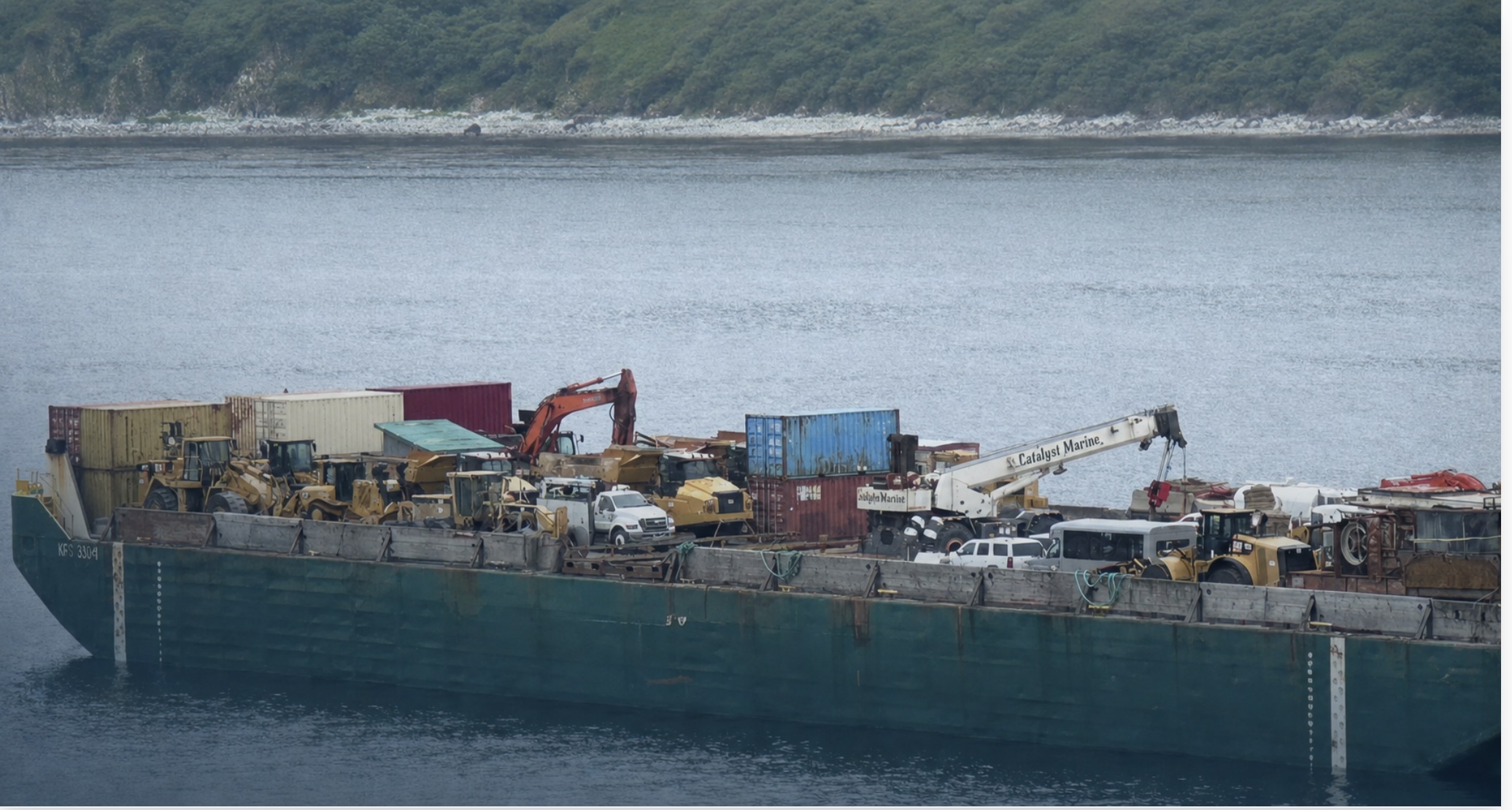
Aug. 8, 2026 – A barge loaded with heavy equipment and construction materials has arrived in King Cove, marking another major step toward building the road residents have sought for generations — a dependable link to the all-weather airport at Cold Bay and lifesaving medical care beyond the Alaska Peninsula.
The arrival is the clearest physical sign yet that the King Cove-Cold Bay Road Project is moving from decades of political and legal battles into construction.
The Alaska Department of Transportation and Public Facilities said the equipment and materials will support stockpiling and preparations for the work ahead.
The mobilization follows the state’s receipt in July of the final federal approval needed for the project. The US Army Corps of Engineers issued a Clean Water Act Section 404 permit to DOT&PF, clearing the way for the state to begin moving equipment and supplies into the remote community.
Three Western Alaska tribes, environmental group sue to block King Cove road permit
Gov. Mike Dunleavy called the permit approval a historic moment for King Cove and Alaska.
“This is a historic day for the people of King Cove and the people of Alaska,” Dunleavy said when the permit was announced July 10. “I want to thank President Trump and his administration for putting the people of Alaska first and allowing this road to become a reality.”
The road will provide King Cove residents with ground access to the airport at Cold Bay, which has a long, all-weather runway capable of handling large medical evacuation aircraft. King Cove’s smaller airport is frequently affected by the region’s notoriously severe winds, fog and rapidly changing weather.
When patients require medical care unavailable in King Cove, they must first reach Cold Bay before they can be flown by jet to Anchorage or other medical centers. That trip has historically depended on small aircraft or a dangerous marine crossing, both of which are options that can become unavailable precisely when a medical emergency is most urgent.
Breaking: King Cove Road Section 404 permit approved, another hurdle cleared for remote Alaska town
Medical evacuations have been delayed or canceled over the years because aircraft and boats could not operate safely. King Cove residents, Coast Guard personnel and others have risked their lives attempting to move patients through some of the most hazardous weather in Alaska.
The community has pursued a road connection since at least the 1980s. The effort became one of Alaska’s longest-running disputes with the federal government because a portion of the route crosses the Izembek National Wildlife Refuge.
In 2013, Interior Secretary Sally Jewell rejected a proposed land exchange after a four-year federal review, siding with environmental groups and federal officials who argued that construction would damage wilderness and waterfowl habitat. The Obama administration acknowledged King Cove’s medical-access problem but insisted that transportation alternatives could be improved instead.
Those alternatives never provided the dependable, year-round access the community sought.
A federally funded hovercraft operated between King Cove and Cold Bay from 2007 to 2010 and completed requested medical evacuations, but the Aleutians East Borough discontinued the service because of operating and maintenance challenges. Residents were again left dependent on boats, small aircraft and emergency Coast Guard assistance.
State of Alaska files three motions to intervene as King Cove Road case heads to expedited court decision
The road effort was revived during President Donald Trump’s first administration, only to become entangled in lawsuits and policy reversals. The Biden administration withdrew from a previous land-exchange agreement in 2023.
Trump placed the project back on the federal government’s priority list when he returned to office in January 2025, directing the Interior Department to expedite a road corridor between King Cove and the Cold Bay airport.
In October 2025, the Interior Department completed a new land exchange with King Cove Corporation. The agreement transferred 490 federal acres for the transportation corridor in exchange for 1,739 acres of high-conservation-value land. Interior said the exchange increased the amount of protected wilderness while allowing the lifesaving road to move forward.
The last major regulatory hurdle was removed this summer when the Army Corps issued the wetlands permit. The arrival of the construction barge shows that mobilization is now underway.
DOT&PF is also working to ensure that King Cove residents participate directly in the project.
In fewer than five days, right during the community’s busy fishing season, more than 20 residents completed safety training and earned DOT&PF certificates supporting their participation in the work. Five additional residents are enrolled in a four-week course to earn Class A commercial driver’s licenses.
“This investment is about more than building a road—it is also about creating local skills, employment opportunities, and lasting benefits,” DOT&PF said. “We are honored to work with the people of King Cove to advance a road the community has sought for generations.”
Transportation Commissioner Ryan Anderson has said the project combines public safety with workforce development.
“The King Cove Road is about safety,” Anderson said in July. “This project will improve transportation for the community while also creating local jobs and workforce development opportunities for the people of King Cove.”
For King Cove, the barge’s arrival represents more than another shipment of equipment. After nearly half a century of government studies, environmental reviews, court fights and changing presidential administrations, the machinery needed to build the road is finally reaching the community.

2 thoughts on “Barge arrives in King Cove with equipment for road work for Cold Bay airport access”
See. It’s a done deal.. Already signed off and approved for building.
The road will Finally be built. Any protest is too late.
I predict you will see protestors with signs out there trying to block the new road. Of course, they will have to use the road to get to their protest point. And then the weather will change and blow them into the lagoon. I would like to see that.