


By SUZANNE DOWNING
Oct. 18, 2026 – Jonathan Kreiss-Tomkins, the lone Democrat in Alaska’s gubernatorial race, boarded an Alaska Airlines jet in Anchorage on Sunday, heading to his hometown of Sitka for Alaska Day observances. His trip comes one day before early voting begins for the Nov. 3 general election, bringing a touch of campaign-season politics to the community’s commemoration of Alaska’s transfer from Russia to the United States 159 years ago.
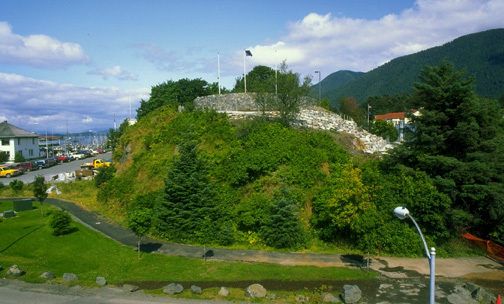
On a hill overlooking Sitka, a Russian flag came down and an American flag went up on Oct. 18, 1867. The ceremony marked the formal transfer of Alaska to the United States, a transaction that would reshape the nation’s map and Alaska’s future.
Today, Alaskans mark the anniversary of that transfer. Alaska Day falls on Sunday this year, with the state government holiday observed Monday, Oct. 19.
The purchase price was $7.2 million, roughly 2 cents an acre. Secretary of State William H. Seward negotiated the agreement with Russia under President Andrew Johnson, with the treaty signed March 30, 1867.
Critics associated the acquisition with names that generations of schoolchildren would learn: “Seward’s Folly” and “Seward’s Icebox.” But the familiar story of a universally ridiculed purchase overstates the opposition. Many newspapers supported the deal, and the Senate approved the treaty by a vote of 37–2.
Gold, fisheries, timber, oil, and Alaska’s strategic position would help establish the acquisition as the most consequential in American history.
The paperwork was completed in Washington, but the formal handover took place nearly seven months later in Sitka, then known to the Russians as New Archangel.
About 250 American troops marched to the Russian governor’s residence on Castle Hill. Russian Commissioner Capt. Alexei Pestchouroff formally transferred the territory to American representative Gen. Lovell Rousseau.
Even that carefully arranged ceremony had a complication: The Russian flag snagged as it was lowered. Historical accounts describe soldiers climbing the pole to free it before the exchange could be completed. Artillery salutes accompanied the transfer, and the American flag rose over the former Russian colonial capital.
Sitka remains the center of Alaska Day observances. Its annual festival brings together military members, musicians, costumed participants, residents, and visitors for a celebration rooted in the community’s place in history.
This year’s parade is scheduled to begin at 1:30 pm Sunday, according to the City and Borough of Sitka. The traditional transfer commemoration on Castle Hill is a signature part of the festival, returning participants to the site where the flags changed in 1867.
The festival organization describes its purpose as commemorating the transfer of Russia’s claim to Alaska while celebrating the diversity of cultures and historical perspectives of its people.
That history reaches well beyond the agreement between two governments. Alaska Native peoples had inhabited the land for thousands of years and were not parties to the treaty. The agreement excluded them from the citizenship protections offered to other inhabitants, and American governance brought profound changes to Native communities, languages, and ways of life.
For some, the anniversary therefore carries grief and reflection alongside the public celebration. The National Park Service has documented those perspectives through its “Voices of Change” exhibit, which examines both the losses and the cultural resilience of Alaska Native peoples following the transfer.
Alaska Day also marks a different milestone from Seward’s Day, observed on the last Monday in March. Seward’s Day commemorates the treaty’s signing; Alaska Day remembers the actual handover in Sitka.
Statehood would follow in 1959. That October, Castle Hill again became a setting for history when one of the first official raisings of the new 49-star American flag took place at the site of the original transfer.
Today’s observance returns to that same hill, a place where Alaska’s Native, Russian, and American histories meet, and where a brief ceremony 159 years ago began a new chapter.


One thought on “Alaska Day: 159 years after the flag changed, Sitka remembers”
Geez, I bet JKT’s family was there when the flag was raised. Anyone know “anything” about JKT’s background other than his mommy was a doctor and he lives at home in Sitka? Anything? Anyone?