


By BARBARA HANEY, PhD
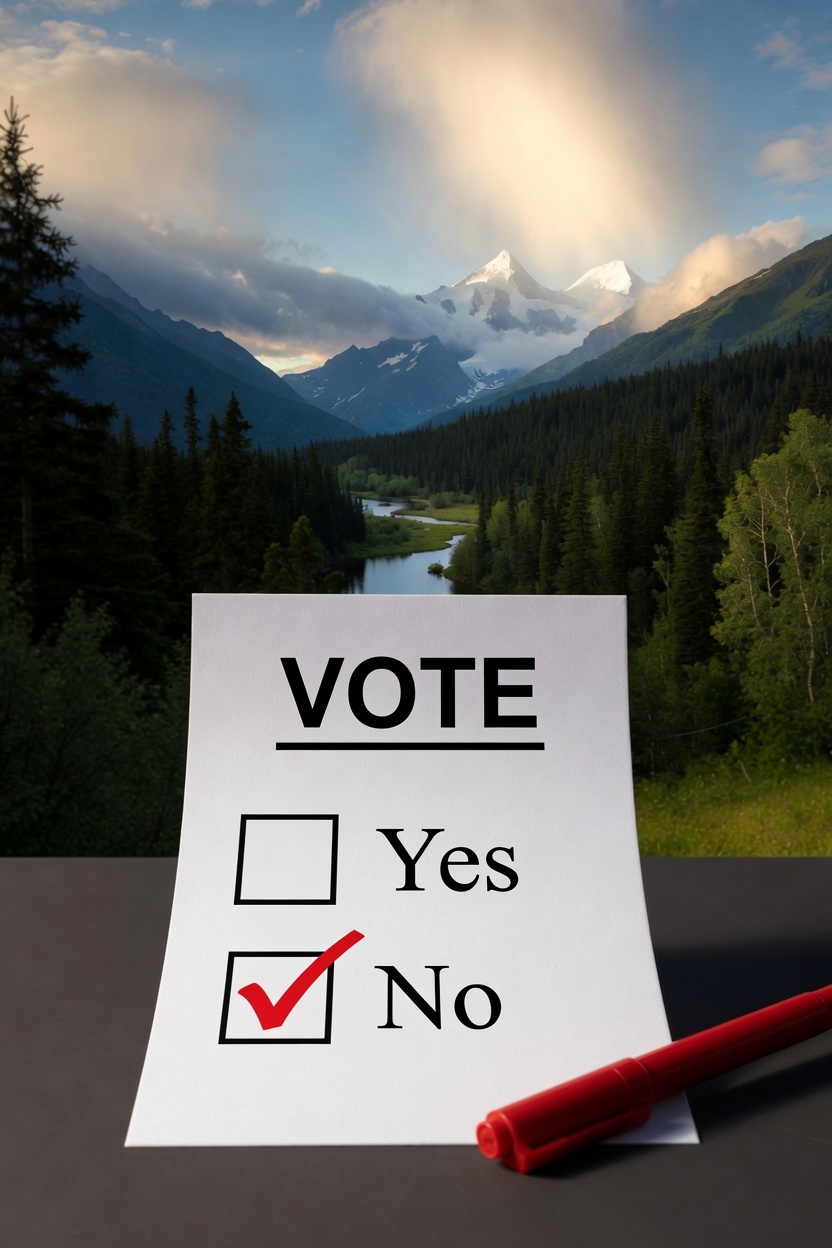
July 18, 2026 – Voters in the August 18 primary will decide Ballot Measure 1, which would restore limits on campaign contributions in Alaska. I plan to vote no.
The measure restricts the one channel of campaign money that belongs to ordinary Alaskans while leaving every other channel entirely untouched.
Consider first what the measure does. An individual could give no more than $2,000 per candidate in a two-year cycle, or $4,000 to a gubernatorial ticket. A group could give no more than $4,000 per candidate. Direct contributions of this kind are disclosed, reported to the Alaska Public Offices Commission, and traceable to a named donor.
They constitute the most transparent money in politics, and they are the only money this measure restricts.
Consider next what the measure cannot reach.
It cannot reach independent expenditure groups. The US Supreme Court’s Citizens United decision protects unlimited spending by these organizations, and no state law may cap them. Alaskans have watched this dynamic firsthand: the campaigns to impose and later defend ranked-choice voting were funded overwhelmingly by Outside money routed through precisely these groups. Capping direct contributions does not make that money disappear. It merely redirects the flow toward the channel with weaker disclosure and no candidate accountability.
Alaska revives ballot measure pamphlet for first time since 2014
It cannot reach self-funded candidates. Since Buckley v. Valeo in 1976, the courts have held that a candidate’s spending on his own campaign may not be limited. Governor Dunleavy made this point in vetoing House Bill 16, the near-identical measure the Legislature passed in May. A contribution cap binds your neighbors but not the millionaire running against you, and one candidate in this year’s governor’s race has already committed more than a million dollars to his own campaign.
Nor does the measure restore Alaska’s former protection against nonresident money. The state’s previous law included an aggregate limit on out-of-state contributions, which the 9th Circuit struck down in the same 2021 litigation that ended the $500 individual limit. Ballot Measure 1 makes no attempt to replace it. The measure treats a donor in North Pole and a donor in New York identically, while the serious Outside moneybypasses the caps altogether through independent groups.
The arithmetic is straightforward: Personal wealth remains uncapped. Independent expenditure groups remain uncapped. Outside money flowing through those groups remains uncapped. The retired teacher in Badger who wants to support a candidate she has known for thirty years is the only participant this measure restrains.
Supporters observe that three cycles without limits have allowed single donors to write six-figure checks to candidates. That is true. Those checks were also fully disclosed, which is more than can be said for the money this measure would push into the independent expenditure system. Transparency, not restriction, is the standard Alaska campaign finance law should protect.
The measure appears on every primary ballot on Aug. 18. I will be voting no.
Barbara Haney, PhD, is an economist and former Fairbanks North Star Borough Assembly member. She is a candidate for House District 33.


6 thoughts on “Barbara Haney: Ballot Measure 1 Caps Alaskans While Outside Money Flows Free”
Our current election process is designed for corruption on soo many levels, and measure 1 is the bandaid for this cancer?
Barge load “Donations” of money from outside of Alaska are often required to even compete in elections. Rep McCabe offered numerous amendments to HB 16 requiring disclosere of actual campaign funding, defeated by a democrat “majority”.
Ballot measure 1 is pushed by NEA, New Venture Fund, Bruce Botelho and democrat aligned stooges. Another Trojan horse farce is expected to easily pass by selling it as election reform, same as rcv.
Ballot Measure 1 Caps Alaskans While Outside Money Flows FreeLY
Can I buy an adverb for $50?
$50 won’t get you a comma.
Barbara, thank you for this piece. Yes, I will fact check you, but your plain and obvious perspective bodes well. 🙏
Yet another attempt by the unions to defund everyone who isn’t union in Alaska elections. Neat trick, that. Happily, it is completely unconstitutional. Cheers-
Hopefully, a majority of Dems in DC will repeal Citizens United!