


By BARBARA HANEY
May 6, 2026 – Alaska families learned the hard way (twice in recent memory) just how fast grocery shelves can go bare. When the 2018 magnitude 7.1 Southcentral earthquake struck, ports, roads and supply lines shattered. Stores emptied almost overnight. Then Covid-19 hit and national supply chains seized up, sending prices soaring and forcing Alaskans to scramble.
Wildfires, volcanic ash clouds, brutal winter storms and flooding have driven the same point home again and again: we import roughly 95 percent of our purchased food. Stores and distributors keep only 3–7 days of inventory , sometimes stretching to ten, in a fragile “just-in-time” system that depends almost entirely on barges and container ships steaming through the Port of Alaska.
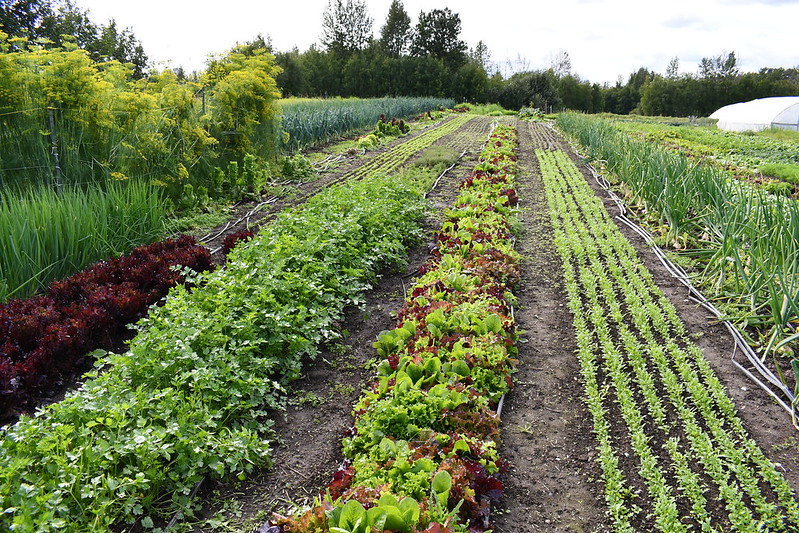
This is our everyday reality. And it’s exactly why I strongly support Senate Bill 200. The bill modernizes Alaska Statute 29.45.060 and our Farm Use Land Assessment Program. It’s fiscally responsible, economically smart, and one of the most practical steps we can take right now to strengthen local farms, protect rural communities, and start reducing our dangerous dependence on distant supply lines.
Why Use-Value Assessment Makes Sense — and Why Alaska Is Playing Catch-Up
Right now, too many Alaska farms get taxed as if they’re tomorrow’s subdivisions or strip malls. That’s economic suicide, punishing farmers who are actually growing food, speeding up the loss of productive land, and keeping us dangerously hooked on importing billions of dollars worth of food every year.
Use-value assessment fixes this by taxing farmland based on what it actually produces for the table, not on some speculative “highest and best use” dream that the farmer has no intention of chasing.
Here’s the reality check: Every one of the other 49 states already has some form of use-value or preferential assessment for farmland. Programs like Ohio’s CAUV (which protects millions of acres), Pennsylvania’s, California’s and dozens more have successfully slowed farmland conversion and supported working farms for decades. They require practical proof of real farming — modest sales or income thresholds, annual verification, and strong recapture penalties if land is developed, and they work.
Alaska’s current setup is stuck in the past by comparison — outdated, overly restrictive, and still excluding S-corporations, the standard structure for any serious farm operation. SB 200 finally brings us in line with best practices that have proven themselves across the country, while tailoring the fixes to Alaska’s needs.
Common-Sense Reforms That Actually Help Real Farmers
The bill requires annual applications with solid IRS Schedule F proof and a modest $2,500 sales threshold — simple proof that you’re really farming. It opens the door wider for new farmers with provisional entry, expands qualifying uses to cover livestock, hay, flowers and conservation practices, and finally brings S-corporation farms into the program.
That last piece matters more than most people realize. Excluding S-corps created a ridiculous two-tiered system where two identical operations get completely different tax treatment just because of paperwork. SB 200 ends that nonsense.
Without these changes, small, new and diversified farms — the ones already operating on thin margins — stay hammered by taxes based on phantom development value. That drives more land out of production and leaves Alaska even more dependent on Outside food.
Real Numbers, Real Returns
The current program already delivers $802,773 in annual tax relief to 404 parcels covering 10,753 acres. With SB 200 I project 20–30 percent growth in participation over the next three to five years. That means:
- $160,000 – $240,000 more tax relief for farmers each year
- $320,000 – $480,000 in new direct farm output
- $576,000 – $1.2 million total annual economic boost once multipliers kick in
- 3–8 additional rural jobs (on-farm plus processing)
Even tiny reductions in food imports (just 0.05–0.15 percent) would keep $1.5–$4.5 million circulating in Alaska’s economy every year. The cost-benefit math is overwhelmingly positive: $2 to $3 or more in economic return for every dollar of local tax relief.
Zero State Cost, Built-In Safeguards
SB 200 carries a zero state fiscal note. Cities and boroughs can handle the paperwork within existing budgets. The local tax-base impact is tiny — less than 0.05 percent — and strong recapture rules (back taxes plus interest) prevent anyone from gaming the system.
Most of the benefit flows to the Matanuska-Susitna Borough, with solid gains for Kenai and Fairbanks North Star. Anchorage keeps its opt-out. Everyone else sees little or no direct effect.
This Is Smart, Targeted Economic Development
SB 200 is a practical correction that rewards productive land use, keeps more dollars and jobs in Alaska, and builds real resilience against the next earthquake, pandemic or supply-chain meltdown. The payoff is more local food on Alaska tables, stronger rural economies, and greater peace of mind for every family, which will keep compounding for decades.The Legislature should pass SB 200 without delay or dilution.
Public Testimony Hearing
The Senate Community and Regional Affairs Committee will take public testimony on SB 200 on May 7 at 8 am. Written testimony can be sent to : Senate.Community.And.Regional.Affairs@akleg.gov(mailto:Senate.Community.And.Regional.Affairs@akleg.gov).
Barbara Haney, Ph.D., is an independent economist with a Ph.D. from the University of Notre Dame and more than 34 years analyzing issues unique to Alaska’s economy.

One thought on “Barbara Haney: Why we need Senate Bill 200 to strengthen local farming”
Texas has the Ag exemption ( on property taxes)for property used to grow,crops for sale and raise livestock. It lowers the high taxes for folks who raise a specified amount of crops or livestock for market. It also includes those who set aside land for wildlife conservation. Land not used to raise kids shouldn’t be taxed for schools.