


By SUZANNE DOWNING
Feb. 28, 2026 – Two Anchorage Assembly members are proposing new land use regulations for data centers, a move that comes as Gov. Mike Dunleavy continues promoting Alaska as a potential destination for high-tech infrastructure and energy-intensive industries.
Assembly Vice Chair Anna Brawley introduced AO 2026-27, an ordinance designed to clarify how large-scale data centers would be regulated in the Municipality of Anchorage, including Eagle River and Girdwood. Assembly Member Daniel Volland signed on as co-sponsor.
“Across the country, communities are responding to the development of large-scale data centers to drive economic activity and support growing computing needs,” Brawley said. “Those projects often bring significant community impacts, from operational noise to very high demand on public water, wastewater and electrical utilities.”
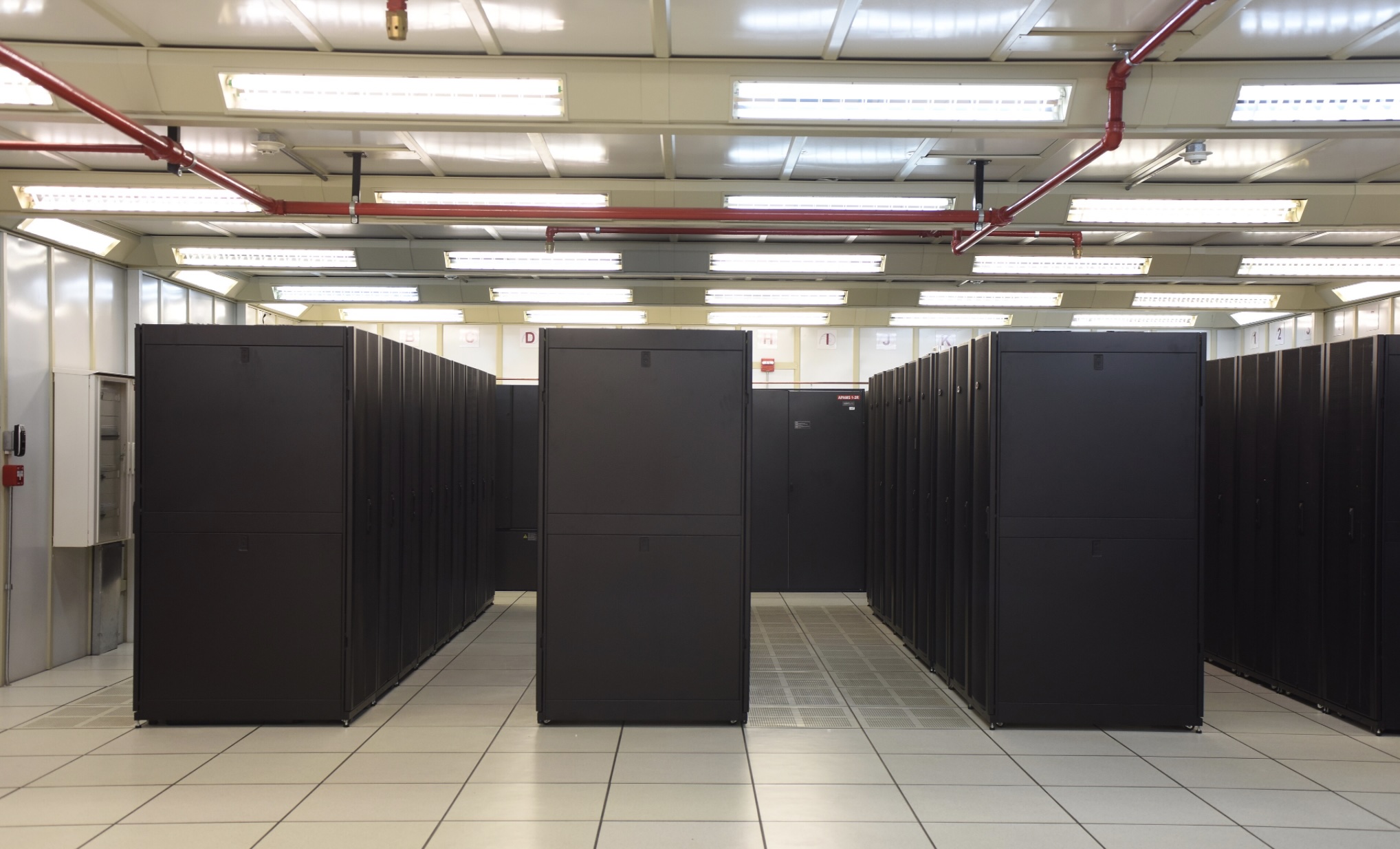
Data centers are currently undefined in Anchorage municipal code. They are most closely aligned with “data processing facilities,” which are allowed in commercial and industrial zones. The proposed ordinance would create a formal land use definition for “data center,” limit such facilities to commercial and industrial zones, and require a conditional use permit rather than automatic approval. The measure would also require coordination with public utilities and subject proposals to a more robust public review process.
Volland said the ordinance aims to balance economic opportunity with public interest. “Amid concerns about Railbelt energy shortages and rising utility costs, it’s exciting to imagine the potential economic benefits innovative projects could create for Alaska,” he said. “Those benefits don’t come without a cost to our community. Now is the time to establish a proactive regulatory framework that balances public interests with evolving industry needs.”
The Anchorage proposal comes as data center construction has accelerated nationwide, largely driven by artificial intelligence, cloud computing, and other data-intensive technologies. While often promoted as economic development engines, large-scale data centers (sometimes referred to as hyperscale campuses) have generated opposition in several states.
In other parts of the country, people have raised concerns about the enormous electricity demands of such facilities, which can consume as much power as tens of thousands of homes. In some regions, that demand has strained local grids, contributed to higher utility rates, and required additional generation capacity. In Alaska, where Railbelt energy supply has been the subject of ongoing debate amid declining Cook Inlet gas production, large new industrial loads would likely draw scrutiny.
Water use is another issue cited elsewhere. Many data centers rely on water-based cooling systems, and in some communities consumption has reached millions of gallons per day. While cooling is not a big concern in Alaska and Anchorage is not facing drought conditions, any substantial industrial water draw might require careful planning and coordination.
Residents in some Lower 48 communities have also complained about constant operational noise from cooling systems and periodic emissions from diesel backup generators. Construction of large facilities can take years and significantly alter surrounding landscapes, particularly in areas near residential neighborhoods.
So far, no major hyperscale data center project has been publicly proposed within Anchorage city limits. The ordinance appears to be a proactive effort to get regulations in place before a project materializes.
A public hearing on AO 2026-27 is scheduled for March 3 during the regular meeting of the Assembly, at the Loussac Library Assembly Chambers. The meeting begins at 5 pm. Residents may testify in person, by phone, or in writing through the Assembly’s website. Here is the meeting agenda and information.


11 thoughts on “Anchorage Assembly moves to regulate data centers”
“…….“Across the country, communities are responding to the development of large-scale data centers to drive economic activity and support growing computing needs,” Brawley said. “Those projects often bring significant community impacts, from operational noise to very high demand on public water, wastewater and electrical utilities.”……..”
That’s significant, especially since the Assembly supports the elimination of the Eklutna dam, which provides 90% of the municipality’s water.
What the hell do these assembly members know about data centers?
Fo they know that they take billions if not trllions in water to keep them cool?
And that people in the areas these thing have been built have taken water from residents in those areas ?
These resisdents have no water in their homes
Thats all we need is more politicians taking our data and doing God knows what with it
Assembly members are not educated on many things but this will be a disaster for Alaskans if we let some assembly member try and find a feather to put in their cap and making us all suffer for it.
Ugh!!
Can you give up your Apple, Samsung, Computer sources using Ai systems? Don’t be throwing rocks from a glass house. You know you can’t. There is a good chance you used your phone to make your online comments.
Data Centers are being built because generations do not want to give up their use of their technological devices.
It’s just as the paper product fight. We don’t want to give up our use of it, but also Alaskans don’t want to give up Alaska’s timber for it. Alaskans want the timber coming from someone else’s backyard while data centers are built in someone else’s state.
We are an Arctic state or Arctic nation. One day Alaska government will not be led by dysfunctional leaders who are backward thinking because of there is too much opportunity and power within Alaska’s land, air, and water resources while much of it Still unused, undrilled, undamned, undeveloped that new leaders will be brought up here and they will build a Mega Data Center. We are in a strategic area of the Earth that it makes sense to have a Mega Data Center on Alaska.
But don’t worry and tell your leftist friends on the Assembly it’ll not likely be built in the Cook Inlet areas because of its geographic vulnerability to earthquakes.
Typical Leftist thinking: “Here’s something new”. “Great, let’s regulate it and tax it”.
I am a bit surprised that the Leftist Assembly hasn’t tried to regulate bodily functions, the sunrise or rainfall.
They simply didn’t get what they feel is ” their cut”. No beaks have yet been wetted
Alaska’s Corrupt Bastards Club first are complaining about the cons of a gas pipeline built and now they don’t Mega Data centers built here. You know why? Because new mega projects bring New leaders to the state and the club know they don’t have the brain power to compete to defend territory against leaders who know how to lead.
There are better places for data centers than Los Anchorage. There is a plan underway to build one on the north slope and power it using flare gas in a new power plant. There might be room for something like this in Healy where energy in the ground and wind might be converted to sparks; and it’s much cooler ‘up there.’ Given the politics here, no investor would put their resources on the line in L.A.
This is exactly right. Far north is where the fiber to the rest of the planet’s population centers, stranded gas, colder temperatures, and lack of absurd “big city” regulatory shenanigans Anchorage cosplays with are where the data centers will end up.
I’m so glad we’re at a point where we have no larger issues to work through and can spend time on proposed theoretical circumstances that will most likely never happen. Will data centers come to Alaska? Yes, most likely. Will they be within the MOA? Most likely NO.
Thank you! – sd
Let’s forego the “economic benefits of innovative projects” argument for the moment. As someone who has a family member employed by AWS (government contractor) within a regional “data center” let’s review: Data centers collect and STORE terabytes of geolocation, video, cellular calls, personal devices, even television activity – that’s phones, PCs, cars, Ring, Nest, traffic cameras, commercial property cameras, government cameras, GPS, et al. The NRO, NSA, CIA, etc. will be accessing it all. No bones about it – Alaska will be a surveillance state, quite literally. Who will access, use, and weild that power and for what purposes?