


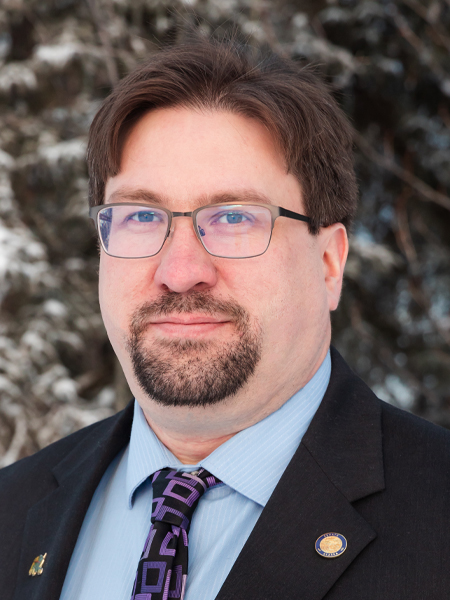
By SEN. ROBERT MYERS
In my last column, I asked why we’re getting so little value for the money that we’re spending on state services. In this piece, I want to examine a related question. In a state that has so little infrastructure but so much money in government per state resident, why don’t we build anything meaningful? Obviously, the state of Alaska builds things. Construction has been a good career for many people in this state for decades. But why do so few things that we build seem to have a meaningful impact on the state and its economy?
Building can mean both public and private construction. On the public side, the early money from Prudhoe Bay helped us build things like the Parks Highway and the Bradley Lake dam, now the cheapest source of power on the Railbelt. At the same time, private money built the Trans-Alaska Pipeline System and most of the Dalton Highway.
In most ways, the private side is easier to answer. Having a private sector willing and able to build is a matter of economics and having a stable investment climate.
One perpetual problem we have for the private sector is economies of scale. We need large investments to deal with the distances and other problems that Alaska presents, but we don’t have the population here to earn back the return on investment that they need to justify the scale. We can always point to the one project that seems to defy it all (TAPS), but that project is the exception that explains the rule. Alaska benefited greatly from TAPS, but TAPS wasn’t paid for by Alaska. It is more properly looked at as an American project that happened in Alaska.
That’s still a good thing for us, but we have to recognize the limitations that we have. For large projects, they only get built if either we have a large population outside of the state that is benefiting, and hence willing to pay for it, or if Alaskans can justify high prices, which we already pay enough of, for a long time to pay off the project.
We are finally seeing some movement on the long-discussed gas line, but it is illustrative of why. First, Southcentral Alaska has been dependent on gas for decades and is running low on readily accessible supplies. Switching to another fuel source for both electricity and heating is expensive and takes a very long time. Facing the prospect of expensive imports, expensive gas became a realistic solution. Second, Russia invaded Ukraine. The resulting sanctions have reordered the LNG market around the globe, creating an opening for Alaska LNG to be competitive in the world market. Exporting would then finally bring down prices within Alaska as the economies of scale kicked in.
Like TAPS, it’s the exception that proves the rule. We either have to endure very high unit costs within Alaska or have a large export market to make a megaproject like this work.
In most cases, the best thing for us to do is to ignore the megaprojects. In the vast majority of cases, they will need support from outside of the state to be economical. If one happens, we should embrace it, but they can be distractions if that is all we’re looking at.
We can spend time and effort chasing them with nothing to show for it when they fail. Instead, we should concentrate on growing our main economy incrementally. That will grow our population and make the megaprojects feasible in the long run because we can build the economies of scale locally that they will require. So, how do we in state government do that? We keep a stable investment climate for business and look like a good partner. We keep our regulatory scheme stable. Governor Dunleavy’s push to reduce regulations should help with that. We push for a spending cap to give businesses the signal that we’re not going to be increasing taxes on them for just a cash grab as soon as we find something else to spend money on.
For publicly financed construction, we have a different set of challenges. Having the state own both the richest natural resources and the largest financial resource (the Permanent Fund) changes the incentive. What about those projects from the 70s that I mentioned? It’s instructive that those were done in the early days of oil money and not later. Those were done by public officials who still operated under the old way of doing things: government should spend money on projects that will help the economy but take years to see the full fruits of. In the new model, that’s not what government spending is for.
Like our operating spending, a large part of our capital spending has been captured by business interests who see it as a reason to build a political infrastructure to tap into that money in the short term instead of building a physical infrastructure that will build our economy over the long term. Politicians have responded to that change by making capital spending about sending money home to their districts to employ people to boost their reelections. And the sad part is that they don’t have a reason to think a different way.
Unfortunately, we have set up a system where the government doesn’t have to care about the economy. Since the state effectively gets its money from only one sector of the economy (oil) or from outside of the state’s economy (the Permanent Fund), it has no reason to want the economy to thrive. In one sense, an economy that is not doing well is a good thing for government. A good economy would mean more people in the state, which would mean more kids in school, more road maintenance, and more Troopers needed to catch people who do stupid things on Friday nights. A smaller economy, and hence a smaller population, means fewer costs for the government. It then has more money available to spend on politically popular things instead of economically necessary things.
So what do we do with our capital budget instead of building things that help the economy in the long term? We use capital spending as a substitute for maintenance. Remember in the article on spending that I mentioned that DOT has seen its budget drop by a third from 1968, when accounting for inflation and population growth? Repurposing our capital spending is why. Substituting capital spending for regular maintenance can sound attractive because it leverages federal money. But think about what that means. First, it means that we are effectively shortchanging maintenance for a decade or two (and increasing the wear and tear on everyone’s vehicles) until the project is approved to rebuild a section of road. Second, it means that money that could have been spent to build something truly useful for growing the economy is instead spent on keeping what we do have operational.
When the priority is to spend money to keep people employed instead of building useful things, it doesn’t matter what gets built or if we can afford the maintenance. It only matters that we build something. We prioritize construction that benefits the few because it’s an organized group that can be counted on to help with reelection. We don’t prioritize maintenance for the many because then there is no one group that is a direct beneficiary and feels indebted to certain people.
We also use the capital budget as a shock absorber for our volatile revenue. So long as the federal match programs are maintained, we can still employ a lot of people. The downside here is that assuming volatility in the capital budget makes it virtually impossible to commit to large, multi-year projects that really help us build the economy.
As an example, we’re currently trying to come up with the match that we need for a grant from the federal government that will build a new transmission line across Cook Inlet that will let us more effectively use the power generated at Bradley Lake, but that’s only a 1-to-1 match. If we’re struggling to spend $206.5 million over eight years on a project where the federal government is paying for half of the project, how much more will we struggle to spend billions on projects like Susitna-Watana, where the state will pony up all of it?
The best recent example of all of this short-term, jobs-over-results focus is the internet for schools bill we passed a few years ago. It was updating a program that already existed, where the federal government gave us a 9-to-1 match for money to be spent to help connect schools to the internet.
The update was switching from a basic internet connection to a broadband internet connection. For most rural schools, it would have been cheaper to do it through Starlink or some other satellite connection, but the bill was written in such a way as to require a wired connection because that leads to many more construction jobs, particularly for a company like GCI that already has significant political connections to preserve its government subsidies.
These situations are why we have millions of dollars but don’t significantly improve our infrastructure.
Senator Robert Myers was born in Fairbanks and spent much of his young childhood at the Salchaket Roadhouse, owned by his parents. He attended the University of Alaska Fairbanks, where he studied philosophy, political science, and history. While in college, he drove for a tour company, sharing Alaska with countless visitors. He currently drives truck and travels the Dalton Highway (Haul Road) frequently. He ran for office because he wants an Alaska his children will choose to make their home down the road. When not working for his Senate District B, North Pole, he enjoys reading, history, board games, and spending time with his wife Dawna and his five kids.



13 thoughts on “Sen. Robert Myers: With so much money in government per state resident, why don’t we build anything meaningful?”
> With so much money in government per state resident, why don’t we build anything meaningful?
The actions speak to that not being a priority or even an intent. Looting and self enrichment seem to be by the actions over time.
Because, where is the graft in good governance? The beaks of the connected must be wetted, thats what is important to the Democrat organized crime syndicate running Juneau
“Meaningful” is a subjective term. Suzanne, I’m wondering… why no dates on the articles anymore?
We do build something. Bloated bureaucracy.
It’s a jobs industry that Alaska has more to. Weight the number of government jobs with good paying private sector jobs and the scale is definitely tipped.
I know individuals that get 10 or more weeks off a year paid. That’s government holidays, sick days and vacation days. We don’t even wanna get into maternity leave. For a couple of guys kidnapping, a child and calling it their own.
Sen Meyers with his Legislators con workers they all been in the legislature too long that He is showing himself in his writings a jaded and discouraged man. He and his coworkers no longer have imagination and innovation to recognize There is always a way to move forward
For Alaska our moving forward begins with Alaska and Alaskans making hard choices about government size and we been spending government money which will require sacrifice
I warn that before hard choices are made about government size and how we been spending money the people who stick it out here will been their full pfd end of year bonus to help them get through the hard transition
To be honest we have elected Ak community leadres who are overwhelmed by responsiblity which is why our leaders can’t lead properly and prone to get jaded or corrupt and discouraged
To be honest no government dependent should be earning a higher wage and better benefit package than the private sector workers who are working and serving to make their business owner money
It’s backward that a Server, Bartender, Hotel worker makes than less 20.00 while a government dependent makes well over 25.00 an hour
Government takes so much from our business owners they can’t do as much as they would like for their employees who are laboring for them to provide a service and make money for their owner
A government dependent makes no revenue of any kind their work does nothing that generates wealth coming from a sold product or service
If it wasn’t for a private sector who can freely develop and build them you eventually will not have a government to pay for in the most important services as law enforcement. Fire and emt, and road and bridge maintenance and building new roads.
That’s why government dependents should be earning minimum wage not the private sector employees who are paying for the wages of government dependents
Its backward thinking to pay someone far greater than someone whose work and service is contributing to the US economy
I would suggest Sen Rob Meyers go find something he can build or rebuild with his legislative salary then sell it on Craigslist
I see lots of vehicles on Craigslist (but I’m sure there are cars on Facebook marketplace) including vehicle auctions.
They can be perfectly reliable if a man who needs to build something can take a car that was poorly maintained to correct its issues for safety and reliability before re-selling it so to buy another car.
The legislature is not a place where men or women can build, it’s a place to maintain order like a law enforcement officer but you don’t build anything important. To be honest leadership has responsiblity but it’s a boring place of work because the nature of the work is overseeing your community. But leaders don’t build anything so you can easily get jaded or corrupt.
A man doesn’t have to build with their hands. Every week Alexander Dolitsky demonstrates a good example of a man who regularly uses his mind to build by builds his mind with knowledge on History subject
He’s happy
Just as happy as a man would be if he got a hobby of taking vehicles not in such disaster shape to repair and rebuild because of the previous drivers poorly maintained the vehicle for a lack of knowledge how to care for a vehicle or lack of money
Did you know the State’s greatest population of depressed and anxious residents are government dependents? Because they aren’t doing doing meaningful in their life. They aren’t building anything.
Hotel Housekeeper is happier than a government dependent because everyday she gets to see what she did putting a room back together again for the next guest.
Producing a product or service isn’t the one thing that makes a person happy but building is a starting point for moving forward to finding the complete happiness one hopes to find if one is so lucky to see God.
People were designed to build and serve not sit around in office rooms to overlook a kingdom
I think king David got bored often as king of Isreal which is why he strolled often back n forth pacing his rooftop then in his boredom he got in trouble if you know the story. Just like our government dependent workers often struggle under the weight of depression and anxiety.
Tina. I worked in the private sector all my life. But one time, I was a government employee and was not “depressed”. I was actually very happy in my job as a U.S. Census worker in 2010. It only lasted 2 months, but I enjoyed earning $25 per hour while it lasted. It was a free-market situation, because they were scrambling to try to get enough workers to do the job, and so they had to jack up the wage to attract applicants. There was no collective bargaining or union involved. I found great satisfaction in the job, because I knew I was worth what they were paying me, and I was producing a good and useful product – counting the population, as is required by the U.S. Constitution. There was no “collective bargaining” hovering in the background propping me up above my free-market value, by threatening to go on strike and shut the whole operation down.
I must confess, that if I had a government job with a government union, with collective bargaining, where it was hard to get rid of me and my fellow employees, and we could slow way down and not produce much, I would feel uncomfortable in that situation and perhaps even a bit “depressed”. I tend to feel much better in a situation where they can fire me, but they don’t want to, because I’m doing a good job.
(By the way, I’m sure that there a good number of hard-working government employees even where there is collective bargaining, simply because they are good people with a conscientious nature. But I prefer to work in a non-union environment, even if I’m paid less.)
Why don’t you ask the Politicians that are getting richer and richer every year
Son, you answered your own question very succinctly.
.
With so much money –in– government per state resident, why don’t –we– build anything meaningful?
.
See it now, “in state government” versus “we”?
.
Could productive citizens, about to be stiffed with state income and sales taxes and already stiffed with an education industry among the country’s worst and most expensive, be forgiven for not giving much of a damn about building anything meaningful?
.
Hell’s bells, Robert, even you admit “we” can’t or won’t take care of what “we” built until it’s falling apart, but “we” gotta build way overpriced new stuff and watch it fall apart too because nobody takes care of it …which “we” know in advance will happen?
.
Want to build something meaningful, why not bug the Seven Pillars of Wisdom who prop up the Denali Commission? They got a pipeline to the U.S. Treasury, they got more money and muscle than “we” ever will, so why not bug them instead of “we”?
(https://denali.gov/about/meet-the-commissioners/)
.
One last favor, Robert, can you stop saying “struggling” while the Alaska Municipal League Investment Pool has $842,730,276.32 stashed safely out of taxpayers’ reach?
(https://amlip.org/)