

By SUZANNE DOWNING
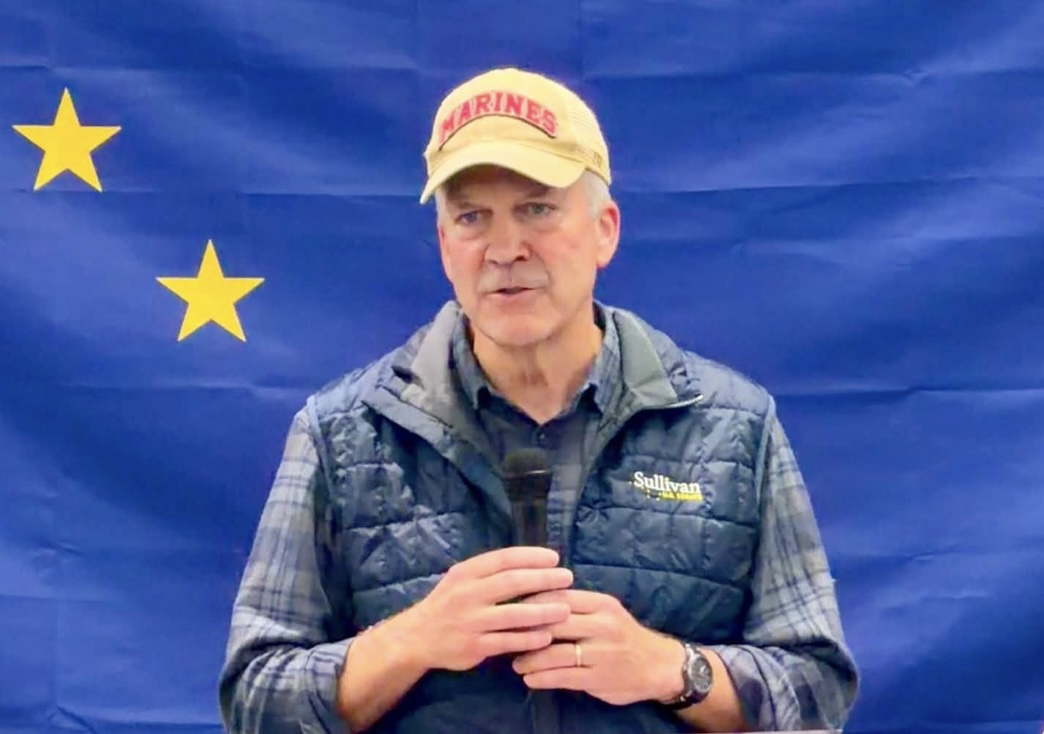
Sept. 16, 2026 – US Sen. Dan Sullivan’s legislation to reduce fisheries bycatch and trawl-gear damage to the seafloor cleared the Senate Commerce, Science and Transportation Committee on Wednesday by a vote of 22–4.
All four opposing votes came from Democrats: Sens. Maria Cantwell of Washington, Amy Klobuchar of Minnesota, Edward Markey of Massachusetts and Brian Schatz of Hawaii.
Cantwell’s opposition is noteworthy for Alaska. Washington state is home to many of the large trawling companies and vessels that operate in federal waters off Alaska, including the Bering Sea and Gulf of Alaska. Cantwell is also the ranking Democrat on the Commerce Committee, which oversees federal fisheries policy.
The committee vote advances S. 4938, the Bycatch Reduction Act, for possible consideration by the full Senate. Sullivan introduced the measure June 24 after taking input from commercial, sport and subsistence fishermen, coastal communities and members of the Alaska Salmon Task Force.
The legislation is aimed at reducing the unintended harvest of salmon, crab, halibut and other species while limiting the effects of trawl gear on seafloor habitat in the Bering Sea, Aleutian Islands and Gulf of Alaska.
The bill would establish performance standards for midwater and bottom-trawl gear and require technology capable of detecting when a net comes into contact with the seafloor. It would also impose new monitoring and enforcement requirements intended to keep midwater trawl nets from repeatedly striking bottom habitat.
Pollock vessels would be required to use proven salmon-excluder devices designed to allow salmon to escape from trawl nets while the targeted pollock catch remains inside.
The legislation would expand salmon tagging and genetic testing to help scientists determine where salmon caught as bycatch originated and better track migration patterns through Alaska waters. It would also require a wider ecosystem analysis covering the Bering Sea, Aleutian Islands and Gulf of Alaska.
That analysis would examine bycatch alongside other possible causes of declining fish populations, including changing food supplies, marine heatwaves, sea-ice loss and ocean acidification. Sullivan has argued that Alaska’s salmon declines cannot be attributed to a single factor and that better data are needed before policymakers can fully understand what is happening.
The bill grew out of recommendations from the Alaska Salmon Task Force, which was created through an earlier Sullivan measure signed into law in 2022. S. 4938 would reconstitute the task force and give Alaskans a direct role in reviewing NOAA’s collection and reporting of information about trawl activity, bycatch and seafloor impacts.
It would also require NOAA to publish observer-coverage requirements and bycatch data in plain language, making it easier for fishermen and the public to understand how bycatch is measured and reported.
Other provisions would update electronic-monitoring programs and increase transparency at the North Pacific Fishery Management Council. Council meetings would be recorded, public-comment opportunities would be expanded and conflict-of-interest procedures would be reviewed.
The bill also calls for construction of a flume-tank testing facility capable of simulating ocean conditions. Fishermen, gear manufacturers and researchers could use the facility to test nets and other technology intended to reduce bycatch and seafloor contact.
Sullivan’s measure would reauthorize NOAA’s Bycatch Reduction Engineering Program and make it easier for commercial fishermen, including operators of smaller vessels, to obtain experimental fishing permits for testing new gear and monitoring equipment.
A bycatch mitigation fund would provide money for research, equipment and other projects designed to reduce the unintended harvest of marine species and damage to bottom habitat.
The bill also targets foreign seafood producers that compete with Alaska fishermen while operating under weaker environmental and conservation standards. It would restrict seafood imports from countries that fail to impose bycatch and conservation requirements comparable to those required of American fleets.
Suzanne Downing: The ‘other’ Mary showed up in Kodiak fish debate, and it was not the nice Mary
That provision could affect seafood originating in or processed through Russia and China, two major competitors in global seafood markets. Sullivan has repeatedly pushed to close loopholes allowing Russian-caught seafood to enter the United States after being processed in third countries.
When he introduced the bill, Sullivan called it the most comprehensive bycatch legislation ever introduced in Congress. He said its goals are to protect Alaska fisheries and habitat, improve transparency and accountability, and accelerate the development of fishing gear that reduces unintended catch.
The measure has drawn support from representatives of Alaska’s sportfishing, longline, crab and marine-conservation sectors. Some supporters have emphasized that the legislation’s performance standards must ultimately be measurable and enforceable if they are to produce meaningful changes on the water.
The 22–4 committee vote gives Sullivan’s legislation substantial momentum, with most Republicans and Democrats on the 26-member committee supporting its advancement. S. 4938 must still pass the full Senate and House and be signed by the president. A date for Senate floor consideration has not been announced.
The bill and its legislative status can be found at Congress.gov, while the Senate Commerce Committee has information on Wednesday’s executive session.


One thought on “Sullivan’s bycatch bill clears Senate committee 22–4; four Democrats vote no”
Sullivan’s bycatch bill clears Senate committee 22–4; four Democrats vote no
4 Ds vote in a purely political fashion.
LOL