


By SUZANNE DOWNING
July 27, 2026 – Data centers have suddenly become one of the most controversial forms of development in America.
The facilities that provide the computing power behind artificial intelligence, cloud storage, banking, telecommunications, health records and nearly every other part of the digital economy are being blamed for everything from higher electric bills to water shortages. The phone you are holding in your hand requires the massive computing power of data centers.
Some concerns are legitimate. Large data centers require substantial and dependable electricity, and poorly planned projects can place new demands on local utilities. Communities are right to ask who will pay for new generation, transmission lines, roads and other infrastructure.
But much of the opposition is uninformed. Data centers are not an optional extravagance in an increasingly digital economy. They are the physical infrastructure behind services Americans use every day.
And although many Alaskans may not realize it, Alaska already has them.
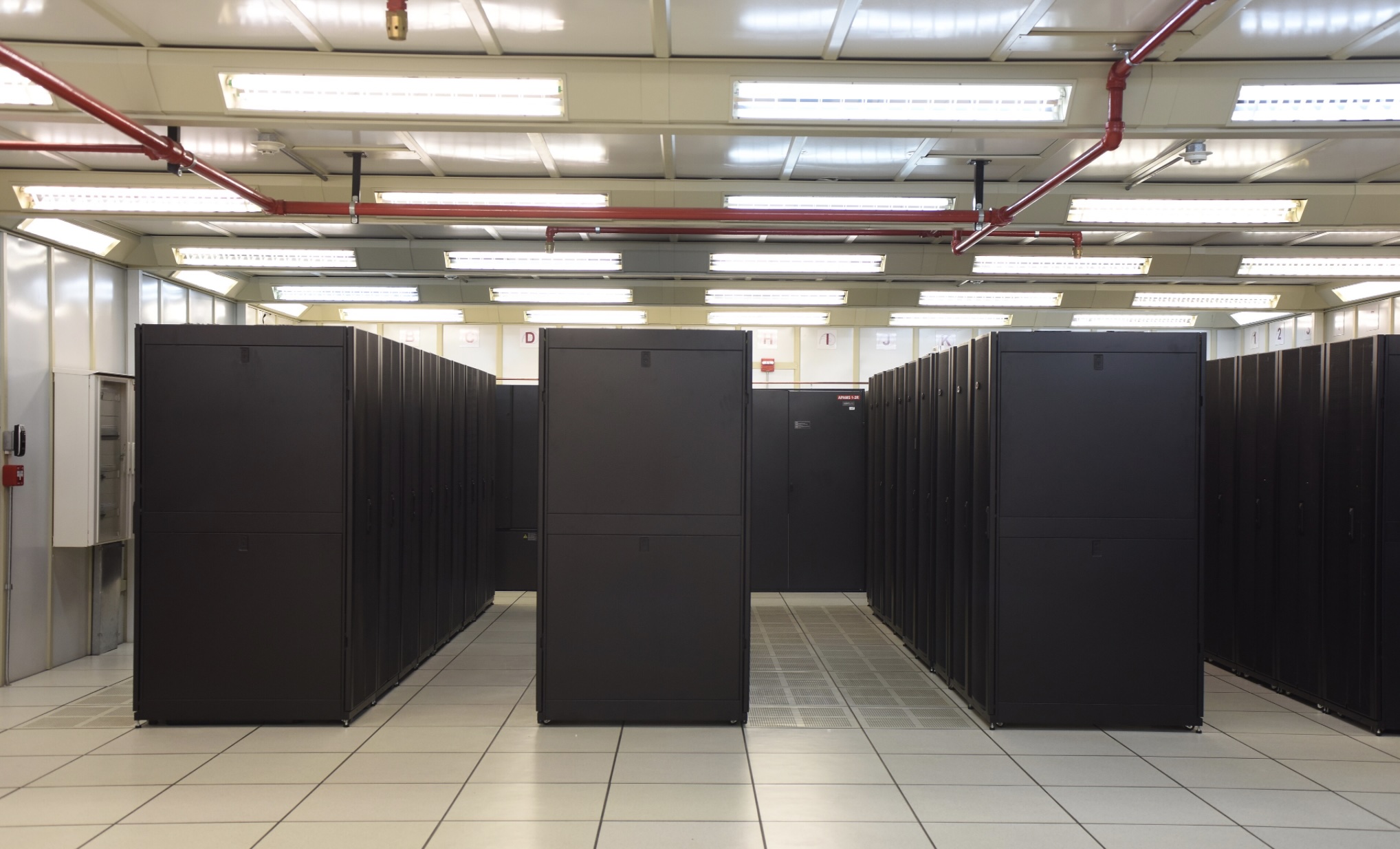
Data Center Map, a specialized industry tracker, lists eight data centers in five Alaska markets: three in the Anchorage area, two in the Prudhoe Bay area, and one each in Fairbanks, Wrangell and Petersburg.
The number varies depending on how a “data center” is defined. Some trackers count only operating commercial colocation facilities. Others include telecommunications sites, modular edge-computing units, planned campuses or facilities built to serve a single industrial customer.
That explains why some sources list only three Alaska facilities, while broader counts reach 11 or more. Trackers that are focused exclusively on hyperscale or artificial-intelligence capacity may say Alaska has no major operating facilities at all. Both descriptions can be true.
Alaska’s data centers are relatively small facilities serving local businesses, telecommunications networks, government operations or industrial users. The state does not yet have the massive campuses now appearing in Virginia, Texas, Arizona and other states.
Existing Alaska facilities include GCI and AlasConnect operations in Anchorage, an AlasConnect facility in Fairbanks, the Talkeetna Alaska Teleport, and small hydro-powered Greensparc operations in Southeast Alaska. The centers provide such services as secure server space, data backup, disaster recovery, cloud hosting and network connectivity.
In other words, the argument is not about whether Alaska will “allow” data centers. They are already here. The real question is whether Alaska will position itself for the next generation of computing infrastructure or regulate it out of reach before the opportunity arrives.
Alaska has obvious natural advantages, including more land than any other state, (one fifth the size of the rest of the USA), much of it far from dense residential development. Its cold climate can reduce the energy needed to cool computer equipment. It has vast supplies of natural gas, along with hydroelectric resources in some regions. Its location could be strategically valuable for Arctic communications, national defense and data traffic between North America and Asia.
As New York and Seattle slam the brakes on data centers, Alaska sees opportunity
Fiber connectivity, once one of Alaska’s greatest disadvantages, has improved as new undersea and terrestrial lines have been installed. The state remains remote and expensive, but it is not digitally isolated in the way it once was.
The Department of the Air Force has already identified approximately 4,700 acres of underused land at Joint Base Elmendorf-Richardson, Eielson Air Force Base and Clear Space Force Station for possible private development of advanced AI data centers. The federal initiative contemplates projects requiring at least 100 megawatts of new electric load and investments of at least $500 million.
That is not a proposal to casually plug a giant computer complex into a neighborhood utility system. Developers would have to bring substantial new power generation and other infrastructure to the sites.
On the North Slope, Anchorage-based Stak Energy has proposed a large data center campus south of Deadhorse that could eventually reach as much as 3 gigawatts if built through all its phases. The proposed operation would use North Slope natural gas for on-site power and Alaska’s cold climate for cooling.
The project remains in the development, permitting and leasing process. It is not an operating 3-gigawatt facility, and its eventual size and construction schedule are not assured. But it illustrates the scale of interest now turning toward Alaska.
The North Slope may be particularly well suited for large computing operations because a project there could generate its own power near the source of the natural gas, rather than compete with households for electricity on an already constrained Railbelt grid. It could also turn stranded or underused gas into a valuable product without first transporting every molecule hundreds of miles south.
Alaska may need to require that major developers pay for the infrastructure they require and not shift their electrical costs onto families and small businesses. Water use, emergency services, local tax treatment, noise, backup generation and eventual site restoration are all fair subjects for negotiated agreements.
But those questions can be answered project by project. They do not require a statewide moratorium.
The moratorium on data centers has now entered Alaska’s race for governor.
The San Francisco Treat: Six Anthropic employees pour historic money into one Alaska candidate’s race for governor
Democratic candidate Jonathan Kreiss-Tomkins recently proposed an immediate moratorium on all new data centers until the Legislature passes a statewide regulatory system. His plan would require local approval and protections intended to prevent electric-rate increases or public subsidies.
The proposal came just as campaign finance reports revealed that Kreiss-Tomkins had received extraordinary financial support from people working in artificial intelligence and technology.
Six employees of Anthropic, the San Francisco AI company, contributed a combined $372,000 to his campaign. Broader AI- and technology-linked contributions exceeded $500,000, according to an analysis by The Alaska Story.
That raises an unavoidable question: Why are executives in an industry pouring money into the campaign of an Alaska candidate who wants to control where and how the physical infrastructure for that industry may be built?
It also raises questions about who would write the future regulations, which companies would be able to comply with them and whether those rules would favor large, well-financed corporations over smaller competitors.
The politics surrounding data centers are becoming even more complicated nationally with increasing propaganda.
In June, OpenAI reported that it had detected and banned clusters of accounts associated with likely influence operations originating in the People’s Republic of China.
One operation used ChatGPT to generate social-media messages and images claiming that American AI data centers were driving up electricity prices for ordinary families.
OpenAI called it the “Data Center Bandwagon” campaign. The company said it found no evidence that the operation had meaningfully changed public opinion. Its significance was that China-linked operators appeared to be testing arguments against the infrastructure needed for American AI development.
Foreign influence operations often work by amplifying real disagreements rather than inventing controversies from nothing.
But China has an obvious strategic interest in slowing American computing capacity while rapidly expanding its own power generation and AI infrastructure.
The Bitcoin Policy Institute has separately alleged that organizations connected to Shanghai-based American financier Neville Roy Singham have participated in campaigns against data center projects around the country. Its June report identified the Party for Socialism and Liberation as an organizer or participant in 21 campaigns across 14 states that contributed to moratoriums, project delays or cancellations.
Republican members of Congress and Sen. Tom Cotton have called for federal investigations into whether foreign-linked money or influence is helping organize campaigns intended to weaken American AI development.
The strategic stakes are difficult to ignore. Artificial intelligence will influence military planning, medical research, energy exploration, logistics, cybersecurity, education and virtually every advanced industry. The countries that control the greatest computing capacity will have an enormous economic and national-security advantage.
America will need data centers. The only questions are where they will be built, who will power them and which communities will capture the investment and jobs that come with them.
Alaska has spent decades exporting raw resources while watching much of the value-added economy develop elsewhere. Data centers offer the state a chance to convert its land, climate, energy and Arctic location into a new industry.



8 thoughts on “Alaska already has data centers, but will the Alaskan public turn against them?”
Why should we fund or help create further chains to bind the American people? These centers are not being built for us, but will be used against us to surveil us and take resources for their maintenance. For the state to have more power and for the tech bros to enrich themselves more from government contracts. Haven’t we had our fill of both?
Ultimately, no proponent of these “data centers” have clearly stated their benefits, to say nothing of their many negatives. “We can’t fall behind!” or “It’s the future!” are not arguments, but fear based pathos. What are you “falling behind” from? Unexplained. And nothing outside of Jesus is inevitable. He is the only sure future.
Oh really Micah? And where are you posting from that your timestamp says 9:36 pm and I’m reading it at 3:16 pm? I think you’re part of the propaganda machine that is trying to keep us riled up and at each others’ throats. Surveillance, ha…. methinks your tin foil hat has slipped off.
I’d be careful of unhinged incoherent public posting Lori.
That said, purely for entertainment purposes, what do you think data centers are for?
The data center the Army is working to build on JBER is going to happen regardless of what people want or don’t want. The feds don’t care about public sentiment when they need something.
The lack of the gas line puts a big dent in private industry building such centers. They require a lot of electricity, and dwindling gas supply threatens that.
Bring them on. The more the better. We need jobs and a corporate presence that will keep the tax-hungry legislature at bay.
Against a data center? Then give up your cell phone, laptops and any streaming and gaming. Also, any wireless appliances you have. Won’t do it, then data centers will be built.
> Then give up your cell phone, laptops and any streaming and gaming.
Don’t have one, don’t have one, don’t do that, don’t do that either.
OK. That’s easy.
But for those who do- and have for decades- they now have to be surveilled by corporations even more for their gain? We get what? More screens that are already damaging our health. Very odd thinking.
[…] Alaska already has data centers, but will the Alaskan public turn against them? […]