


By SUZANNE DOWNING
The Yukon Legislative Assembly voted unanimously on Dec. 17 to oppose oil and gas development in Alaska’s Arctic National Wildlife Refuge, approving a motion that calls on the Canadian government to seek permanent protection of ANWR’s coastal plain and to oppose US lease sales in the area.
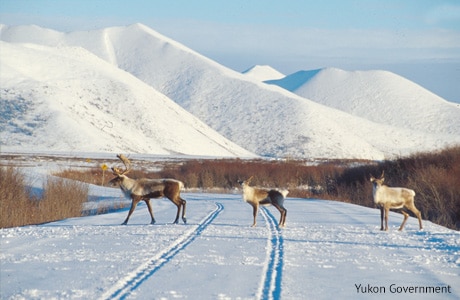
The motion was introduced by Vuntut Gwitchin MLA Debra-Leigh Reti, urging the Yukon government to support efforts by several Yukon First Nations to protect the Porcupine caribou herd, which calves on the coastal plain before migrating across the Alaska-Canada border. The resolution follows recent pro-Alaska actions in the United States Congress and by President Trump, reopening the full ANWR coastal plain, including the 1002 Area, to oil and gas leasing and reinstating leases covering more than 350,000 acres.
While the motion was about food security, cultural preservation, and ecological concerns, it has no legal or regulatory authority over US land management decisions. ANWR’s 1002 Area was specifically designated by Congress for potential oil and gas development, and decisions regarding leasing, exploration, and production rest with the federal government and the State of Alaska; Canada has no authority here.
The Yukon government and legislators repeatedly cited concerns that oil and gas development could threaten the Porcupine caribou herd. However, available scientific data does not support claims that responsible oil development in Alaska has harmed caribou populations. The Porcupine herd reached a record high of approximately 218,000 animals in a 2017 photo census, with estimates ranging from 202,000 to 235,000, up sharply from roughly 169,000 in 2010. As of 2024 and 2025, wildlife managers consider the herd generally stable or only slightly declining.
Notably, the Porcupine herd remains one of the healthiest large Arctic caribou herds. Across the Arctic, many herds have declined by 65% or more due to climate change, shifting habitat conditions, changing predation patterns, and environmental variability. By comparison, the Porcupine herd is often cited as relatively resilient and robust.
Decades of experience on Alaska’s North Slope show that caribou can and do coexist with oil infrastructure when development is carefully planned. Herds such as the Central Arctic caribou herd have grown significantly alongside oil fields at Prudhoe Bay and Alpine, benefitting from improved habitat conditions in some areas and strict mitigation requirements imposed on industry.
Yukon Environment Minister Wade Istchenko emphasized the territory’s participation in the Porcupine Caribou Management Board, a cross-border body established to coordinate stewardship of the migratory herd between Alaska and Canada. Yukon officials stated they will continue working with US agencies and Alaska to monitor development impacts and minimize surface disturbance, particularly from seismic exploration.
Several Yukon legislators spoke in favor of the motion, citing long-standing advocacy efforts in Old Crow and among Vuntut Gwitchin leadership. The resolution passed unanimously, reflecting broad political consensus within the Yukon.
Despite the strong symbolic message, the Yukon legislature did not introduce new evidence regarding the health of the Porcupine caribou herd.

4 thoughts on “Yukon Legislature opposes ANWR development, despite stable Porcupine caribou herd”
Suggestion to our neighbors in the Yukon: You do you and we will do us. And feel free to live cost-free under the security provided by the United States of America. You ingrates.
Who cares what the Yukon or Canadians think or want. What have they done for us lately? Nothing, and not just lately. Let them eat cake.
The health of the Herd clearly demonstrates that responsible Industry stewardship can successfully coincide with the entire eco-system on the North Slope, and ultimately has been an excellent partner by providing world class jobs and opportunities for local Alaskans and Alaska Businesses.
How ridiculous. Caribou have thrived on the north slope completely oblivious to structures, equipment or roadways. I worked on the slope in the early 80’s and there were caribou all over, grazing, napping, hanging out, doing what caribou do no matter where they are. Nothing but political posturing, and foreign at that. Mind your own business Yukon deluded interlopers.