


By SUZANNE DOWNING
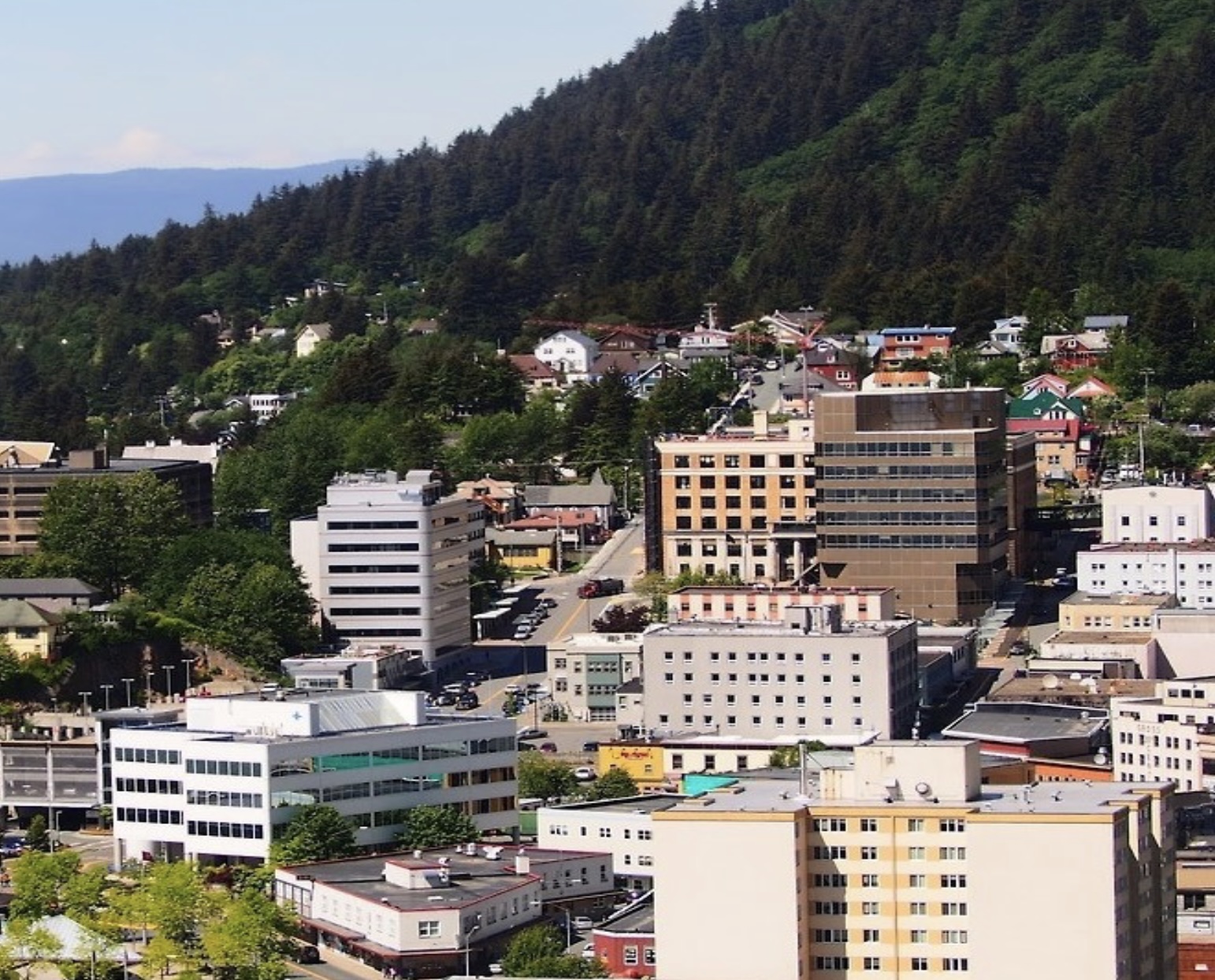
April 12, 2026 – Juneau, a government town snuggled between mountains and sea, holds the distinction that stands out even among America’s wealthier regions: an unusually high concentration of millionaire households.
Data compiled by Kiplinger using modeling from Phoenix Marketing International showed that in 2017, Juneau ranked first among small US cities for millionaire concentration.
At the time, 1,109 of the capital city’s 12,986 households — about 8.5% — had at least $1 million in investable assets. By 2020, that number had grown to 1,231 households out of roughly 12,521, or 9.7%, still placing Juneau near the top nationally, at No. 3, behind Los Alamos, New Mexico and Summit Park, Utah.
Put another way, roughly one out of every 10 to 12 households in Juneau meets the millionaire threshold based on liquid or investable wealth. That does not include primary home equity. Homes in Juneau average $460,000.
That’s a striking ratio of millionaires for a remote city of just over 30,000 residents that has no roads in or out. It raises a question: Where is that concentration of wealth coming from?
The answer is not private-sector wealth creation or old money inheritance. There are no real tech startups in Juneau, it’s not a finance hub or business center. What’s creating the wealth is government jobs.
As Alaska’s capital, Juneau is dominated economically by government. A significant share of its workforce is employed directly or indirectly by the State of Alaska or federal government, in roles that tend to offer stable salaries, exceptional benefits, and long-term retirement structures. Over time, that stability translates into wealth accumulation, particularly when paired with Alaska’s absence of a state income tax.
Unlike boom-and-bust private industries, government employment provides consistency. Employees can remain in their positions for decades, steadily contributing to retirement accounts and avoiding the risk volatility that can derail wealth-building elsewhere.
In Juneau, that pattern appears to have produced the millionaire next door.
The correlation is not proof of causation, but it is difficult to ignore. Cities with high concentrations of federal or state employment, especially administrative capitals, often show elevated income stability. What makes Juneau unusual is how that stability translates into investable wealth at a level comparable to far larger and more economically diverse communities like Anchorage, where there are approximately 13,334 millionaire households, or 9%.
Alaska as a whole has historically ranked relatively high in millionaire households per capita, with more than 22,000 such households statewide in the most recent widely cited data from the late 2010s — about 8% of all households. Oil wealth, both directly through industry employment and indirectly through state spending, has long flowed through the economy.
Still, the government factor in Juneau stands out. It feeds into a broader conversation about Alaska’s fiscal structure. State government is funded heavily by resource revenues rather than broad-based taxation, allowing for higher public-sector compensation without the same tax burden seen in other states. That model has helped sustain incomes in places like Juneau, and, by extension, wealth accumulation.
Median household income in Juneau now exceeds $100,000, and a large share of households report six-figure earnings, both consistent with continued wealth-building potential.


10 thoughts on “Why does Juneau have so many millionaires?”
You’re missing something here. Juneau is also a very desirable place to live – especially from April through September. It’s isolated but still has many of the services and stores of a larger community. The transportation options to the lower 48 are frequent. If you can afford to live in Juneau, it’s a great place to be. So there are many outsiders who have purchased condos and boat condos to live in this community as their primary residence. Those who can afford to make those choices are often wealthy. Also, career state workers do not have to contribute to Social security, so many of their SBS accounts have grown with the markets. Unlike social security where it is not owned by the payer.
I have lived in Juneau multiple times spread over many decades. Suzanne’s article is basically correct. When the big money hit in the late 70s many State workers prospered and the higher up the salary schedule, the more they prospered. From then on, many State employees, and particularly those in the exempt and partially-exempt service, realized that continuation of the mainly Leftist regimes – Hammond, Sheffield, Cowper, (even Hickel with Bruce Botehlo) and Knowles – was existential to a lucrative career. Many of these folks, including many lawyers in State service rode this horse for a long time. A person didn’t need to be in a top position to make it work. Someone in the classified service at range 21 or 22 can obtain longevity increases and do very well. Juneau is insulated from reality and competitive pressures. If a person likes living in a small Leftist community and having a boat it is nice. Air service is OK. Juneau is a disaster for raising a family with terrible drug problems for kids. And the weather s**ks eight months per year. I hope I never return.
From Anchorage: “With age, the Anchorage Fire Department fleet has become ‘inadequate’ and ‘somewhat unreliable’”
This is what government buys you.
JMARK is correct, however it wasn’t just folks with Law Diplomas that benefitted from working for the State. Many of my former Juneau classmates who came of age during the 1970’s and chose a career in State Service are wealthy. Why? SBS! ( plus gold plated healthcare)
I do not begrudge them for making that decision. The opportunity to work in a State Office Building was there for me also, but I couldn’t get past the soul crushing drudgery of such enslavement.
I’m happy, and I wish the same for all of my Juneau friends!
Its a sad testament to any culture wherein the best career choice for a young person is to become a government bureaucrat.
Wayne Douglas Coogan,
What gives a person a choice of careers in any society is access to development and manufacturing.
You and I were privileged to have landed in an era where we put a man on the moon and built infrastructure like the Trans Alaska Pipeline. Ultimately the bureaucrats existence depends upon development and those that do the developing. We both have enjoyed the satisfaction of building critical infrastructure that benefits society.
Young people today deserve the same opportunities.
Let’s build the damn LNG line!
Your baby boomer generation TOLD 20 year old GenXer’s and millennials 25-30 years to get a government internship and government job telling them its wise because of they will have excellent pay and benefits. We have three generations Dependent on government because of baby boomers. Boomers themselves, majority of GenXer’s and Millennials. thankyou God! working age adults and teens GenZ and GenAlpha don’t seem to really care if they have a government job or private sector job, they just want a job.
The only risk factor to the government employee is IF the private sector and global markets go Splat. Then goes all the government employees. Weeeeeee Go down down down. Frankly because Alaska and America isn’t growing its private sector faster than the government is growing, a collapse is coming because government departments don’t make money of its own. Its not a matter of IF. Its a matter of Time and When it happens. Just like a person whose weight is greater than his body organs can hold up. Eventually he has a heart attack from the weight.
Frankly, Government employees Should Never be earning more than what the average private sector employee is earning because its the private sector’s wealth (in taxes) that is paying for the government employees. While the markets are unpredictable it doesn’t make sense to be locked into paying more to a government employee when the government managers can’t cut hours if markets have fallen.
Which even though summer visitor season is just starting this week. travel is being predicted there are less travelers booking flights this summer, so for the private sector in tourism, it might feel slower this summer and employees hours are cut and weeks shortened to accommodate the economic downturn which these employees cut hours it’ll negatively affect other businesses by less spending.