


THE ALASKA STORY
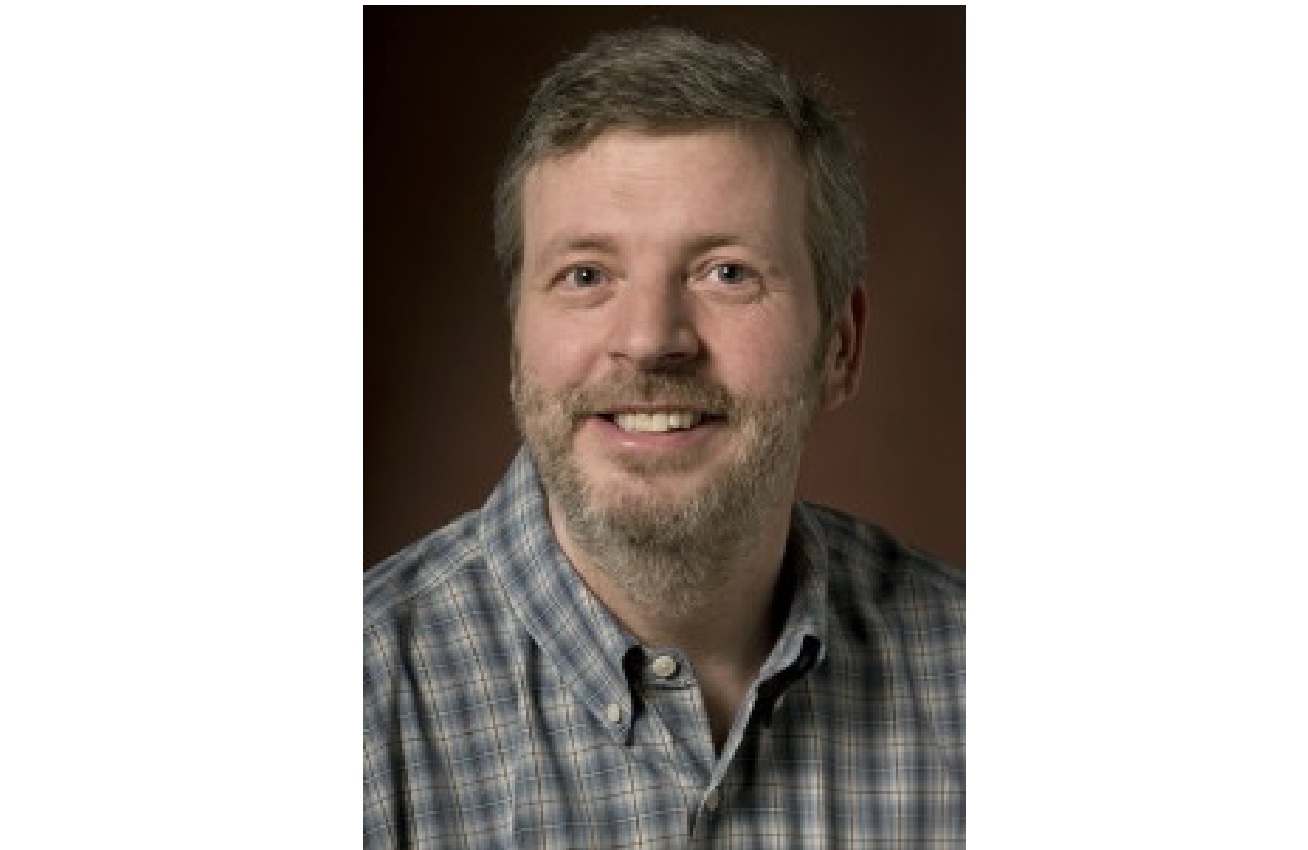
Sept. 8, 2026 – Apparently, the University of Washington has no sense of humor. For that, the university will be paying $600,000 to settle a four-year legal battle with a computer science professor, who the campus administration punished for placing a parody of the university’s recommended Indigenous land acknowledgment in his course syllabus.
The Foundation for Individual Rights and Expression announced the settlement that covers damages, attorneys’ fees and costs incurred by professor Stuart Reges. It follows a published ruling in which the US Court of Appeals for the Ninth Circuit found that university officials retaliated against Reges and discriminated against him because of his viewpoint, in violation of the First Amendment.
The decision may have implications in Alaska, because the Ninth Circuit’s jurisdiction includes Alaska and seven other Western states, and Alaska has become a stronghold for the performative land acknowledgement, which is now read before every Anchorage Assembly meeting and other official meetings around the city and state.
Fairbanks City Council inching toward ‘land acknowledgement’ requirement
From taxes to ‘occupied land’ politics, a Juneau hearing takes detour
The dispute began in January 2022 at UW’s Paul G. Allen School of Computer Science & Engineering, where Reges has taught introductory computer science courses since 2004.
The school encouraged faculty members to place a land acknowledgment in their syllabi recognizing the Coast Salish peoples and the Suquamish, Tulalip and Muckleshoot nations.
Reges, who is a a critic of DEI — diversity, equity and inclusion — initiatives, had previously objected to the statement in a faculty email. He described land acknowledgments as political and performative and questioned the historical premise behind the university’s language.
Instead of using the recommended statement, Reges placed his own version in the syllabus:
“I acknowledge that by the labor theory of property the Coast Salish people can claim historical ownership of almost none of the land currently occupied by the University of Washington.”
The statement invoked English philosopher John Locke’s labor theory of property, under which ownership rights can arise when a person mixes his labor with natural resources.
Reges said he intended the statement as a parody and as a demonstration that competing views existed about land acknowledgments. UW administrators took great offense and removed the statement from the online syllabus, violating his First Amendment rights. UW also established a competing section of the course so students could avoid taking Reges’ class, and began an investigation under its nondiscrimination and anti-harassment policy. That investigation lasted nearly a year.
Administrators ultimately reprimanded Reges, warned him about possible future discipline and denied him a merit-based salary increase. Reges retained his position and continued teaching throughout the dispute.
FIRE filed a federal lawsuit on his behalf in July 2022 against then-UW President Ana Mari Cauce and other university administrators. FIRE and Reges alleged that the university had retaliated against him for protected speech and engaged in viewpoint discrimination by allowing the preferred land acknowledgment while suppressing his dissenting version.
A federal district judge ruled for the university in 2024. Although the judge concluded that Reges had spoken on an issue of public concern, the court found that the disruption attributed to his statement outweighed his free speech rights.
Reges appealed. Last December, a divided three-judge panel of the Ninth Circuit reversed the lower court. The court issued an amended opinion in May 2026 and denied rehearing.
Judges Daniel Bress, appointed by President Donald Trump, and Milan Smith Jr., appointed by President George W. Bush, formed the majority. Judge Sidney Thomas dissented from portions of the ruling. He was appointed by President Bill Clinton and has ruled against gun rights, ruling that the Second Amendment does not protect a general right of the public to carry concealed firearms.
The majority, however, held that Reges had spoken in his own capacity as a professor rather than on behalf of the university. It also found that UW took adverse employment actions against him specifically because of the viewpoint expressed in his syllabus.
“Student discomfort with a professor’s views can prompt discussion and disapproval,” Bress wrote. “But this discomfort is not grounds for the university retaliating against the professor.”
The majority said UW had not produced sufficient evidence that the statement caused the kind of operational disruption necessary to outweigh Reges’ First Amendment rights.
“First Amendment protection that rises and falls depending on how upset students become at a professor’s message is little protection at all,” the court said.
The panel directed the federal district court to enter summary judgment for Reges on his retaliation and viewpoint-discrimination claims. It also revived his challenges to the university’s anti-harassment policy and sent the case back to determine the appropriate relief. The Ninth Circuit’s amended opinion is available here.
The settlement resolves those remaining questions without another trial.
Under the agreement, UW may not remove Reges’ parody from his present or future syllabi. The university also agreed not to investigate him again over the statement, create competing or “shadow” sections of his courses, or deny future salary increases because of the statement or complaints about it.
“I hope that my protest can help reverse a decade-long trend towards ideological conformity in academia,” Reges said in FIRE’s announcement. He said universities should prepare students to cope with disagreement rather than protect them from controversial ideas.
UW did not apologize or admit wrongdoing.
“The University of Washington maintains that we acted appropriately, and this settlement is in no way an admission of any wrongdoing,” university spokesman Victor Balta said, according to Seattle Times reporting, as published by The Spokesman-Review.
Balta said the university settled to avoid the additional attorneys’ fees and expenses that would follow the Ninth Circuit’s decision.
The university’s position does not alter the appellate court’s published legal conclusion. The settlement itself contains no admission of liability, but the Ninth Circuit separately determined that UW’s actions constituted retaliation and viewpoint discrimination.
While the lawsuit was pending, UW also rescinded Executive Order 31, the policy administrators had relied upon while investigating Reges. It had permitted corrective or disciplinary action for conduct deemed “unacceptable or inappropriate,” even when the conduct did not meet the legal definition of discrimination, harassment or retaliation.
The Ninth Circuit found that language broad enough to warrant further judicial review, rejecting the district court’s narrower interpretation of the policy.
UW replaced it in July 2025 with Executive Order 81. The newer policy defines discriminatory harassment more narrowly, generally requiring conduct that unreasonably interferes with work or academic performance or is sufficiently severe, persistent or pervasive to create an intimidating, hostile or offensive environment. UW’s current policy is published here.
FIRE attorney Gabe Walters said the settlement protects more than Reges’ ability to keep one sentence in a syllabus.
“Reasonable people can disagree about the value of land acknowledgments,” Walters said. “What’s not up for debate is academic freedom.”
17 thoughts on “UW to pay $600,000 to professor after losing First Amendment fight over his parody land acknowledgment”
Prosecution or adverse actions of almost any kind to enforce ideological conformity is just about the worst conduct I can imagine. Orwell, Solzhenitsyn and Thomas Jefferson have written about this. I suspect that many on the Left found the discussion too complex and pretended to read Folcout.
For the record, I am of the view that at no time in the past has any indigenous person set foot on my property, or, in any way exercised “stewardship” over it. I am ready for the re-education camp, when it comes for me. I will resist and not passively.
This destructive “performative land acknowledgement” has gotta go IMMEDIATELY!
… We must not tolerate // normalize it.
… We must not accept it.
… We must not promote it.
This is the absolute WRONG trajectory, bringing only division and devastation to Alaska.
Good.
It’s good that you name the judges and who appointed them as well as the demo judge details. It’s great that professor Reges didn’t quit, and is doing a service to all who respect freedom of speech as a 1st amendment right.
Of course the DEI sort believes in freedom of their speech, and all parrot mouths who agree with them.
Indigenous Descendants need to recognize our great great great great grandparents had made treaties with the USGovernment for exchange of land.
Every time We use IHS and our tribal institutions receive federal money through BIA or directly the US Government is paying us what is owed to us Descendents through treaties. Meaning the land is already Paid for and is not stolen ever nor belongs to today’s indigenous people.
University of Washington was stupid to not consult their own attorneys before telling the professor no. The law firm representing him just made 600,000.
No. $200K. Client get the remainder. Plus attorney fees which is probably $250K or more.
The Juneau Assembly routinely says, “We want to take this opportunity to acknowledge the Borough of Juneau is on Tlingit land.” In Western common law tradition, those occupying someone else’s land pay market rent. It’s only fair. The assembly clearly admits it is occupying “Tlingit land.” I suggest we pay the tribe $2,000,000 per month, starting next month. Then, we should negotiate reparations for unpaid rent since when Juneau first began it’s occupation. Let’s put our money where our mouths are….. unless, of course, we are all talk–no action.
They are ant to put YOUR money where their mouths are. Lots,of big talk, but when it comes down to personal responsibility, they’re nowhere to be found. They’re more than happy to talk big, but when the bill comes to them,its instant Poor Mouth.” Me??? “You can’t possibly expect ME to pay up!!! No, but we will be happy to use the levers of state power( including seizure by force of law) to strip the,public to fund our demonstrations of generosity!”
Land acknowledgement is nothing more than white liberal appeasement as an effort to make the Natives feel like they accomplished something. When was the last time the Natives got together and thanked white people for settlements founded by whites that Natives have come to enjoy and live at effortlessly? When did the Natives acknowledge white technological know-how and invention that they glamor in today? Snow mobiles, four-wheelers, pick ups, outboard engines, boats, GPS, pizza delivery, etc. All invented by whites. How about academia? Natives can now get college degrees in Northern Studies, Native culture, Climate Action, Native languages, etc courtesy of the UA run by white liberals. Land acknowledgement is more carrot on the stick for those distressed at having very little to show for their own achievement. It’s actually a sick way to receive compliments by the white liberals who cheated them out of a competitive spirit and an independent mind for reasoning. White liberals did the Natives no favors at all. Just more handouts, which ultimately spawns more resentment.
You’re giving “white liberals” too much altruistic credit. Actually, land acknowledgements are nothing more than white liberal appeasement as an effort to make white liberals feel like they accomplished something.
Thank you for the addendum, Sarvagy. The white liberals you speak of are the college professors, politicians, and journalists who propogate their BS. Brainwashing begets more brainwashing. And you are correct. These white liberals feed with each other, then pat each other on the back and give themselves an award.
Adverse possession trumps land acknowledgement. A rightful and legal taking by anybody, so long as the previous holder doesn’t protect his/her interests in the land and proclaim possession against all others. Land acknowledgement is a mere apology for taking something that was never theirs.
Interesting. The louses that have forced “land acknowledgements” on the rest of us, are probably the same ones who stole the most from the oppressed.
One of the biggest problems in our culture is people not saying clearly what they mean. If “land acknowledgement is a mere apology” the those saying so need to clean up their language…. in which they clearly admit they are currently occupying someone else’s land. In other words, they are not apologizing; rather, they are admitting to the crime of trespassing.
One of the biggest problems in our culture is people not saying clearly what they mean. If “land acknowledgement is a mere apology” then those saying so need to clean up their language…. in which they clearly admit they are currently occupying someone else’s land. In other words, they are not apologizing; rather, they are admitting to the crime of trespassing.
Wayne, they will not admit to that. Then there would be a penalty tacked on……probably monetary, such as a reparation. An apology gets not reparation. It’s easier and not costly. Just say a few words, wink and nod. It’s all good.😉