


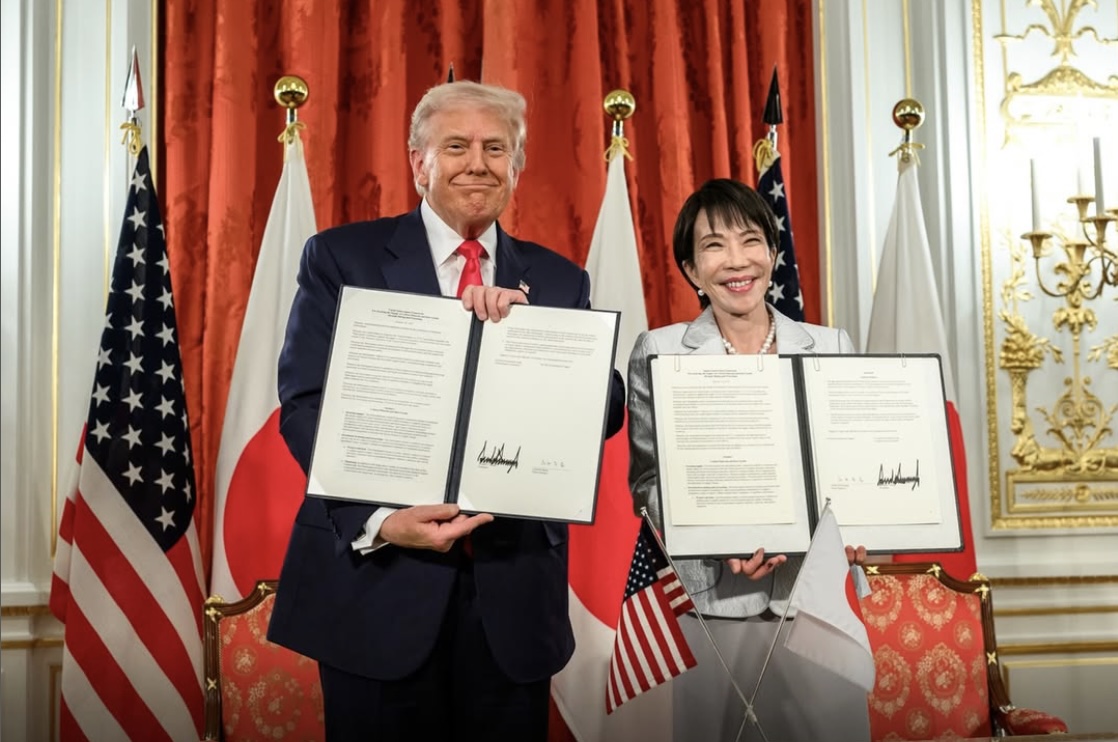
President Donald Trump and Japan’s new Prime Minister Sanae Takaichi on Tuesday announced a series of agreements to expand the US industrial base, strengthen supply chains, and deepen defense ties between the two allies.
During their bilateral summit in Tokyo, the two leaders signed the US–Japan Framework Agreement, detailing projects tied to Japan’s previously pledged $550 billion investment in businesses in the United States. The package spans critical rare earth minerals, energy infrastructure, manufacturing, and advanced technology, representing one of the largest foreign investment initiatives in US history.
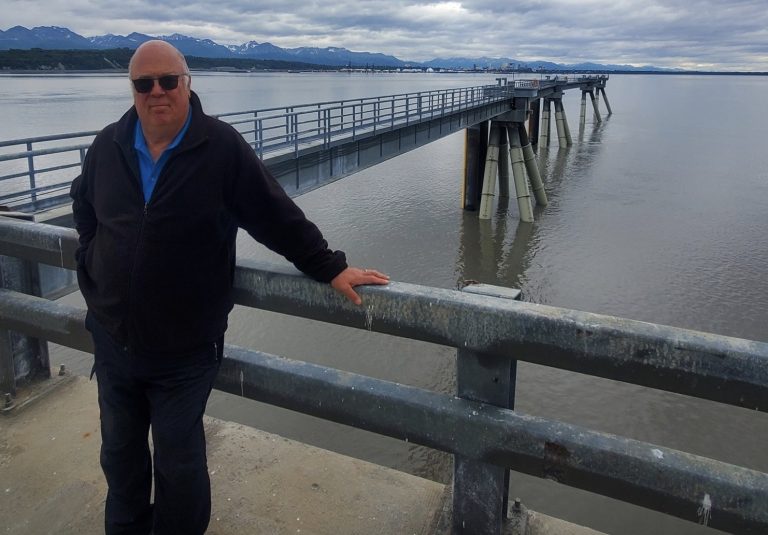
The summit also produced major deals in energy security. Japanese firms Tokyo Gas and JERA announced new liquefied natural gas off-take agreements tied to a proposed Alaska pipeline project, now representing more than 10% of that project’s total export capacity. JERA also announced a $1.5 billion investment in Louisiana’s Haynesville Shale basin.
The landmark critical minerals agreement is intended to diversify both nations’ supply chains for essential materials such as copper, lithium, and rare earth elements, an area of growing strategic importance amid global competition for industrial resources.
According to the White House, Japanese companies plan to invest more than $330 billion in US energy infrastructure, including partnerships with Westinghouse, GE Vernova, Hitachi, Bechtel, and Kiewit to construct new nuclear and modular reactors, substations, and grid systems.
Other major commitments include:
- $25 billion for advanced grid equipment from GE Vernova,
- $25 billion for transformer and substation manufacturing with Toshiba,
- $20 billion for thermal cooling systems in partnership with Carrier, and
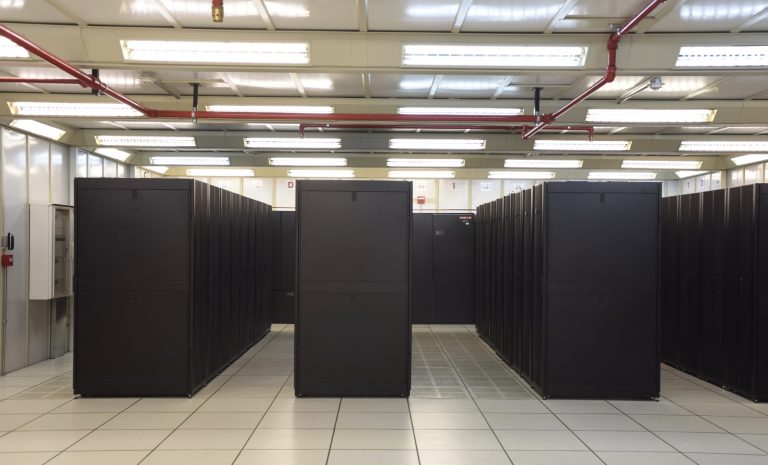
- $30 billion for AI infrastructure with Mitsubishi Electric.
Additional investments include billions for electronics production with Panasonic, Murata, and TDK, and the construction of fertilizer and copper refining plants in the United States worth $5 billion combined.
Japan also committed to expanding US exports, including an agreement by Toyota to begin exporting U.S.-made vehicles to Japan under new safety and trade rules, and to apply its new Mobile Software Competition Act in a way that ensures fair access for American tech firms.
On defense, both leaders reaffirmed the U.S.–Japan Alliance’s goal of “peace through strength.” The United States accelerated deliveries of advanced air-to-air missiles for Japan’s F-35 fleet, and both nations agreed to expand intelligence-sharing and amend their customs cooperation agreement to combat illegal drug trafficking.
Japan will also impose new sanctions targeting “shadow fleet” vessels used to evade international sanctions, aligning its enforcement with US and G7 partners.
Trump and Takaichi signed the US–Japan Technology Prosperity Deal, meant to expand collaboration in artificial intelligence, 6G development, quantum research, and cloud security. The agreement includes a new joint working group to align standards for secure data storage and cyber defense.
Takaichi, Japan’s first female prime minister and a protégé of the late Shinzo Abe, hailed the agreements as marking a “golden era” for US–Japan relations.
Trump praised Japan as one of America’s “closest allies and strongest partners,” calling the new deals a milestone in strengthening economic and national security for both nations.
One thought on “Trump inks major agreement with Japan on rare earth minerals, LNG, supply chain, defense”
In Japan, the coverage of the Tokyo Gas announcement was more realistic than that listed above.
“Tokyo Gas will consider procuring 1 million tons of LNG annually from the Alaska project starting around 2030,” nippon.com reported. “The letter of intent is an initial-stage procedure to examine the possibility of procurement and is not legally binding.”
A real purchase agreement is far, far away, and at least some of this announcement is intended to do nothing more than appease the Trump administration.