July 28, 2026 – Forty-nine years ago Tuesday, the first North Slope crude oil completed its historic journey through the newly built Trans-Alaska Pipeline System and arrived at the Valdez Marine Terminal.
The oil reached Valdez at 11:02 pm on July 28, 1977, after traveling roughly 800 miles from Prudhoe Bay. Oil had entered the pipeline at Pump Station 1 on June 20, moving deliberately during the system’s initial startup and taking more than a month to reach Prince William Sound.
Four days later, on Aug. 1, the tanker ARCO Juneau departed Valdez carrying the first shipment of Alaska North Slope crude to market.
It was the beginning of an economic transformation that continues to shape Alaska.
The pipeline opened one of North America’s largest oil fields, created thousands of jobs and produced the revenue that built roads, schools, airports and other public infrastructure across the state. North Slope oil helped finance government services and supplied the resource wealth that Alaskans chose to preserve through the Permanent Fund.
Alaskans established the fund through a constitutional amendment in 1976, as the pipeline was nearing completion. Its first deposit of dedicated oil revenue, $734,000, was made in February 1977. Nearly half a century later, the fund supports diminished dividends and state services while preserving a share of Alaska’s nonrenewable wealth as principle in the Alaska Permanent Fund.
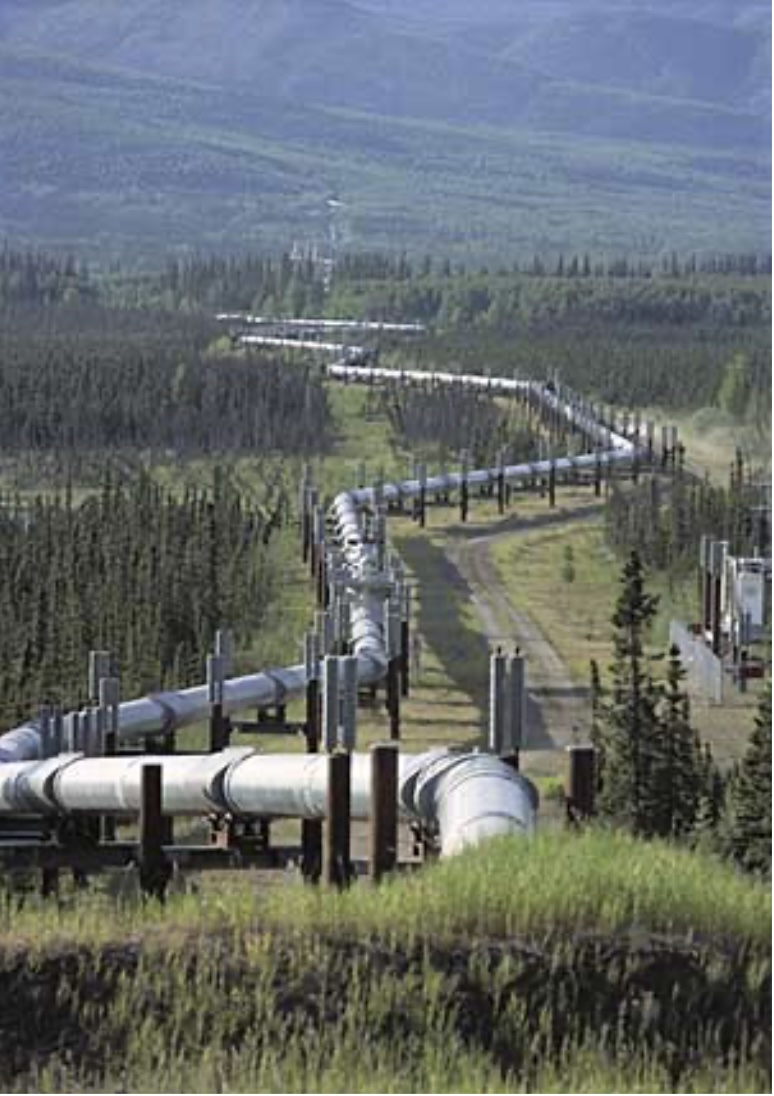
The pipeline itself remains one of the world’s great engineering achievements. Its 48-inch pipe crosses the Brooks, Alaska and Chugach mountain ranges, along with 34 major rivers and nearly 500 smaller waterways. It traverses permafrost, earthquake country and some of the most remote and unforgiving terrain in North America.
Engineers elevated long sections of the pipeline to prevent warm oil from melting the permafrost. The system was also designed to accommodate ground movement and allow caribou and other wildlife to pass beneath it.
Since startup in 1977, TAPS has transported more than 18 billion barrels of oil, according to the Alyeska Pipeline Service Company.
Getting the project built required more than engineering. It took years of political work to resolve Alaska Native land claims, obtain federal rights-of-way, withstand environmental litigation and persuade Congress that developing American oil was in the national interest.
Republican Gov. Walter J. “Wally” Hickel was one of the earliest and most forceful champions of North Slope development.
As governor from 1966 to 1969, Hickel pushed for exploration and development of the newly discovered Prudhoe Bay field. His administration helped establish an overland winter route toward the Arctic coast—commonly remembered as the “Hickel Highway”—that gave early exploration crews access to the remote region.
Hickel also promoted the idea of an oil pipeline connecting the North Slope with an ice-free port in Southcentral Alaska.
President Richard Nixon appointed Hickel secretary of the Interior in 1969, placing the Alaska governor at the center of the federal permitting process. Hickel arrived in Washington convinced that the pipeline should be built, but he did not endorse a “build now and fix it later” approach.
He pressed the oil companies to address permafrost, earthquakes, tundra damage and wildlife migration. Those demands helped produce the elevated sections, specialized burial techniques and other safeguards incorporated into the final design.
Hickel also advocated resolving Alaska Native land claims, which stood in the way of securing a continuous pipeline right-of-way. Congress enacted the Alaska Native Claims Settlement Act in 1971, one year after Hickel left the Nixon administration.
The decisive federal action came in 1973.
Nixon repeatedly urged Congress to authorize construction, calling the pipeline essential to expanding domestic energy production and reducing America’s dependence on unstable foreign suppliers. That argument became even more urgent during the Arab oil embargo and the resulting national energy crisis.
Congressional authorization had bipartisan support, including from Alaska’s two senators, Republican Ted Stevens and Democrat Mike Gravel. Democratic Sen. Henry “Scoop” Jackson of Washington also played a prominent role in moving the legislation.
But Republican leadership was central to the final breakthrough. Stevens worked to secure the votes needed for the project, while Alaska’s freshman Republican congressman, Don Young, championed the pipeline in the House.
On July 17, 1973, Vice President Spiro Agnew cast the tie-breaking vote on a critical Senate amendment declaring that environmental requirements had been met and clearing the way past the litigation that had stalled construction. The 49-49 vote became one of the pivotal moments in Alaska’s economic history.
The final Trans-Alaska Pipeline Authorization Act passed the House 361-14 and the Senate 80-5. Nixon signed it into law on Nov. 16, 1973. The law authorized the federal rights-of-way and removed the remaining legal obstacles to construction.
Major construction began in 1974 during the Nixon administration and continued under Republican President Gerald Ford. By 1977, the enormous private-sector project was ready to begin moving oil.
When the first North Slope crude reached Valdez that July night, Jimmy Carter was president and Jay Hammond was governor of Alaska. The accomplishment belonged to several administrations, both political parties and tens of thousands of workers who surveyed, welded, hauled, engineered and constructed the line.
But it also represented the fulfillment of a vision advanced years earlier by Wally Hickel, Nixon, Stevens, Young and other leaders who believed Alaska’s resources could strengthen both the young state and the nation.
Today, TAPS remains a working artery of Alaska’s economy and an important part of America’s energy infrastructure. It supports North Slope production, jobs along the pipeline corridor, the Valdez Marine Terminal and communities across the state.