


By THOMAS FENOSEFF
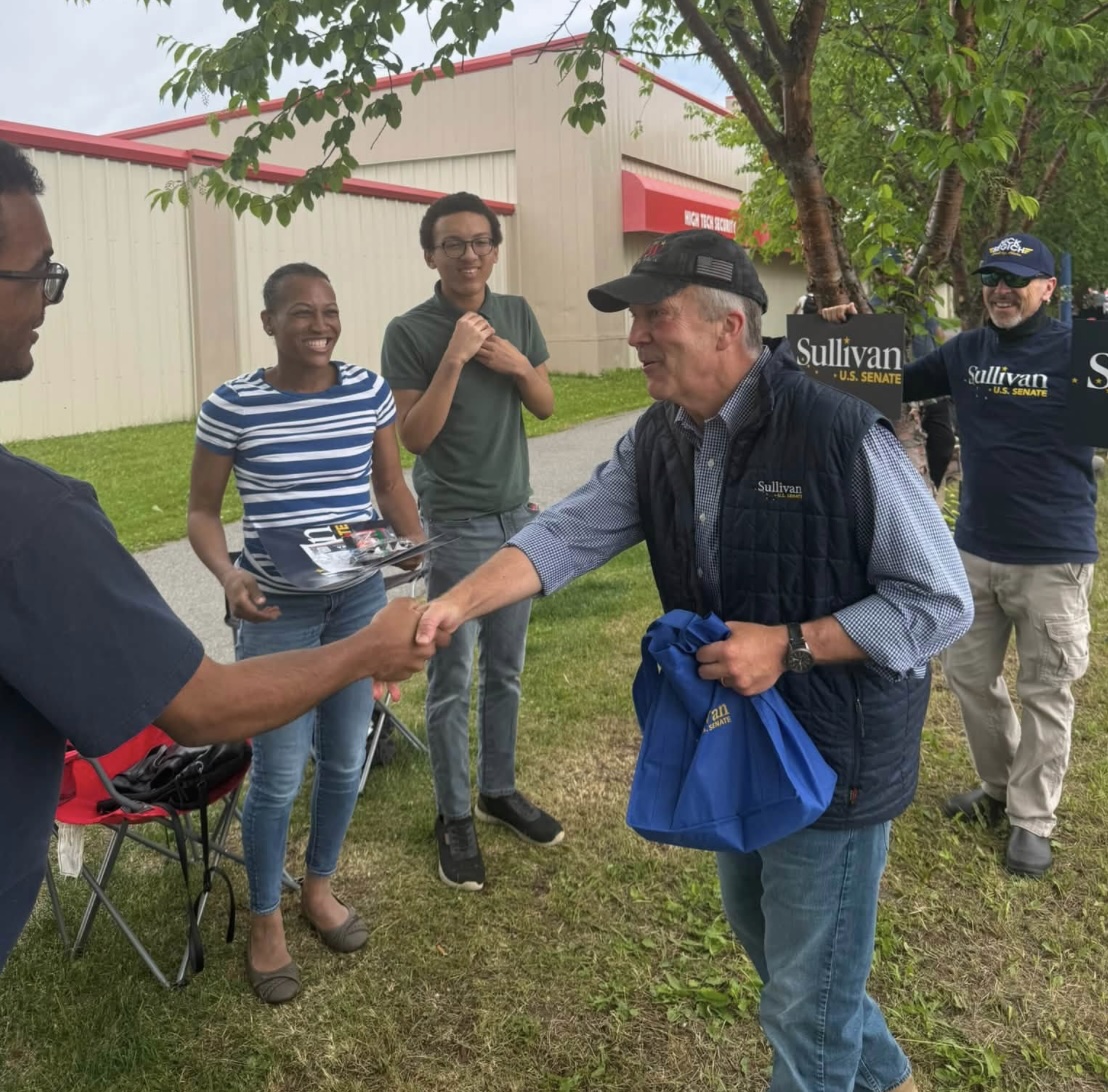
Aug. 8, 2026 – On July 11, I volunteered for Sen. Dan S. Sullivan’s campaign at the Bear Paw Parade in Eagle River. We had a wonderful time and received a warm welcome from the community. By the time the parade ended, one thing stood out to me.
There were so many volunteers with the Sullivan campaign that it was difficult to gather everyone together for a group photograph.
Then I looked across the staging area and noticed the Mary Peltola campaign.
Parked beneath the shade of a tree was a much smaller operation. Her float was modest, displayed less patriotic imagery, and had noticeably fewer volunteers than the Sullivan campaign.
That contrast caught my attention.
Mary Peltola wants to represent all of Alaska in the US Senate. Yet at one of the state’s largest community parades, in one of Alaska’s most populated areas, her campaign appeared to have only a small volunteer presence. One parade does not determine the outcome of an election, but it can offer a glimpse into the enthusiasm and organizational strength behind a campaign.
It also raised a larger question: Who is Mary Peltola trying hardest to represent?
Anyone who has watched her campaign advertising has probably noticed its heavy emphasis on rural Alaska and Alaska Native communities. There is nothing wrong with appealing to Native voters—they are an important part of Alaska and deserve representation like everyone else. But when nearly all of a campaign’s messaging centers on one constituency while giving comparatively little attention to the concerns of the Railbelt, where most Alaskans live, it is fair to wonder whether the campaign is speaking to the entire state.
Contrast that with Sen. Dan Sullivan’s record.
Sullivan has worked to secure approximately $1.4 billion for rural health care in Alaska, benefiting residents in villages as well as larger communities. He helped bring $25 million in aviation safety funding to improve airports and air travel across the state, something that serves both urban and rural Alaskans alike.
He has consistently advocated for a stronger military presence in Alaska, additional missile defense capabilities, new icebreakers, and improvements to the Alaska National Guard. Through National Defense Authorization Act legislation, he has helped secure billions of dollars for military construction projects that strengthen both Alaska’s economy and national security.
Sullivan has also championed Alaska’s fisheries by sponsoring the Alaska Salmon Research Task Force Act, working to reduce salmon bycatch, and supporting village safe water projects. He has promoted responsible resource development, including critical minerals research at the University of Alaska Fairbanks, while advocating for tax relief and regulatory reforms that encourage economic growth.
His work has extended to Alaska’s veterans through support for veterans’ cemeteries, health care, and housing. He has also secured exemptions that protect the livelihoods of Alaska Native craftsmen affected by federal fur sales restrictions.
Whether you are Native or non-Native, live in a city or a village, serve in the military or make your living on the water, Sullivan’s record reflects an effort to serve the entire state.
That’s what I saw reflected at the Bear Paw Parade, not simply a larger float or more volunteers, but a campaign that appeared to draw support from every corner of Alaska.
Thomas Fenoseff is a conservative activist in Alaska.
One thought on “Thomas Fenoseff: At Bear Paw parade, Sen. Dan Sullivan campaign looked like all of Alaska”
I really appreciate this commentary on Dan Sullivan. Every time I see a Mary Peltola ad, I groan. I get tired of politicians who base their campaigns on insults. I also get tired of those who act as if the only worthy people in Alaska are Alaska Natives. Every person living in our state is valuable. Dan Sullivan understands this. Several years ago, my granddaughter was married to a soldier who did some really awful things to her. Dan Sullivan and his staff, after I contacted them, worked tirelessly for her to straighten the soldier out and gain fair treatment for her. We aren’t special. I’m just someone who is not afraid to ask for justice and she is someone who I love. Dan Sullivan listened to me and made sure that right prevailed.
I think if we spent more time talking about our candidates’ abilities and values instead of their perceived flaws, our State would benefit greatly, because we would then elect on the basis of common, positive goals rather than popularity.