


By SUZANNE DOWNING
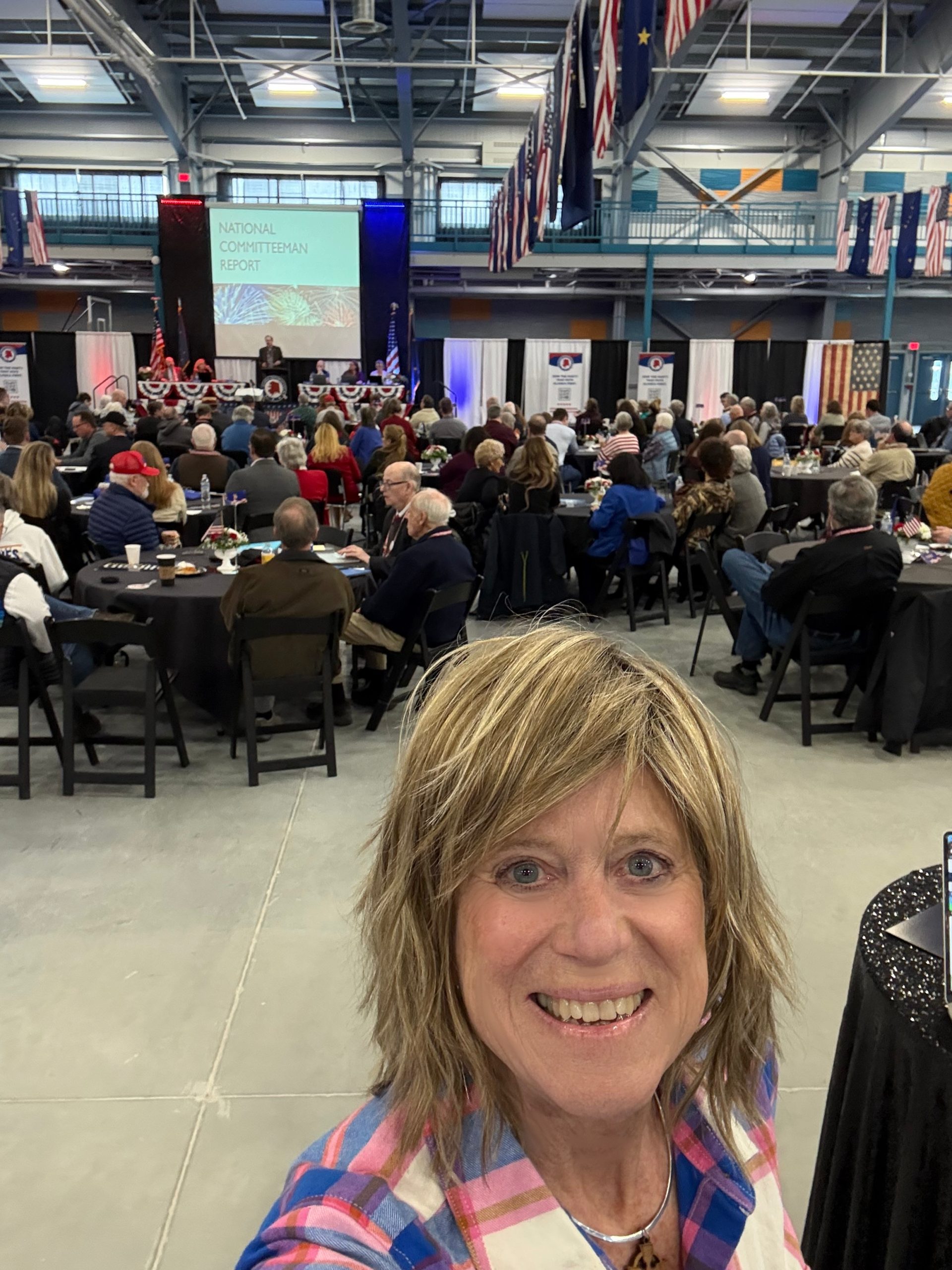
May 10, 2026 – There was something unmistakably different about the Alaska Republican Party Convention this year in Soldotna. You could feel it from the moment people started arriving. Republicans came from every corner of Alaska, from Ketchikan to Fairbanks, from the Mat-Su to the Kodiak, all converging for three days of speeches, fellowship, debate, campaigning, and nuts-and-bolts business.
I attended not as a delegate, but as a guest and observer, and what struck me most was the sheer commitment of the people who make up the grassroots of the Alaska Republican Party. These are not paid activists. They are ordinary Alaskans who spend their own money to fly in, book hotel rooms, rent cars, take time away from work and family, and devote an entire weekend to the often messy process of shaping the party’s future.
Make no mistake about it, conventions are work. Delegates spend long hours debating resolutions, discussing bylaws, listening to candidates, voting on party leadership, and hashing out policy positions that ultimately guide the direction of the party platform. It’s not for everybody; sometimes those debates become heated. Sometimes conventions feel divided, tense, and factional.
This one felt different. There was an energy in Soldotna that felt optimistic and unified. Not that everyone agreed on every issue, because these are Republicans and they typically honor dissent and disagreement, but there was a broader sense that Republicans understand the stakes heading into 2026.
This is shaping up to be one of the biggest election cycles Alaska has seen in years. Alaska will have a US Senate race with Sen. Dan Sullivan seeking reelection, challenged by Mary Peltola from the far left. The congressional seat comes up this year, as it does every two years. Alaska will also have an open governor’s race after eight years of Republican Gov. Mike Dunleavy. The pendulum could swing. Add in legislative races across the state, ranked-choice voting, and a continued fight over the ideological direction of Alaska itself, and Republicans know this is no ordinary political year.
One of the convention’s most discussed actions was a vote allowing the party to sanction Republicans who caucus with the opposing party. That issue has simmered for years in Alaska politics, where coalition majorities and bipartisan caucuses have increasingly frustrated many rank-and-file Republican voters, ever since the days of the Musk Ox Coalition.
Several current lawmakers immediately became part of that conversation, including Sen. Cathy Giessel, Sen. Kelly Merrick, Sen. Jesse Bjorkman, Rep. Chuck Kopp and Rep. Louise Stutes, all of whom have worked in coalition structures that many Republicans oppose.
Whether sanctions ultimately change legislative behavior remains to be seen. But the vote itself reflected something important: Grassroots Republicans want greater party accountability and clearer alignment between elected Republicans and Republican voters.
Leadership elections also reflected continuity and stability within the party organization. Carmela Warfield was reelected as party chair, while Jason Perry was elected vice chair, filling a vacancy. Both now head into a critical election cycle with an energized base behind them.
The speaker lineup reinforced the sense that Alaska Republicans believe they are part of a much larger national movement. Delegates heard from Republican National Committee Chairman Joe Gruters, Sen. Dan Sullivan, and Congressman Nick Begich.
But beyond the speeches and resolutions, conventions are ultimately about relationships. They are reunions of people who may only see each other once every two years but who share a belief that Alaska’s future is worth fighting for. People swap stories in hotel hallways, talk policy over coffee, reconnect with old friends, and make new alliances that often shape campaigns and political movements long after the convention ends.
At one point, the convention flashed the names of many Alaska Republicans who had died in recent years, and when I saw Art Chance’s name, it took my breath away. He wrote for me for many years, and was a solid conservative. I still miss him.
Credit is also due to the organizing committee on the Kenai Peninsula. Large conventions are not easy to pull off in Alaska, where travel logistics alone can become a challenge. But this convention ran smoothly, felt welcoming, and carried the kind of upbeat atmosphere that political parties hope for but do not always achieve.
For a few days in Soldotna, Republicans from across Alaska came together not as isolated factions or regions, but as part of a statewide movement preparing for a consequential election year.
And after watching the enthusiasm firsthand, it is clear they are heading into 2026 believing they have momentum on their side.
Suzanne Downing is founder and editor of The Alaska Story and is a longtime Alaskan.
8 thoughts on “Suzanne Downing: Three days in Soldotna revealed an energized Alaska Republican Party”
I’ll believe this when I see the actions.
Talk is cheap.
That’s all that conventions, conferences, meetings are all about All talk.
Just like moving the capital of Alaska to central Alaska, Anchorage is still a better location because of there are more hotels and it is the community with the largest population and sends the most legislators. Whether or not Republicans and conservatives like it, dying Anchorage it is where changing Alaska’s downward trajectory and decreasing Alaska’s government dependency.
All great news!!! Just what I was hoping to see out of this convention.
The vision continues. The work has just begun.
YeeeeAaaah…let’s see the Republicans at home actually do some meaningful work before we pat them on the back.
The Alaskan Republican Party is energized …. to continue to roll-over to the Democrats at every step.
.
Just look at the turncoat Governor Stands Small — he vetoes and kills the execrable and laughingly mislabeled “voting integrity bill”, only to IMMEDIATELY reintroduce it himself! The jokes write themselves, and the jokes are at our expense.
.
I continue to see no reason to put any faith, or any trust, in the Alaska Republican Party.
Have you noticed? KTUU has been running outside ads against Senator Sullivan for months. About a month ago they began running ads with KTUU and national affiliate NBC reporters as participants in these ads. Seems to me as a supposed news organization it is at a minimum unethical and possibly illegal? Senator Sullivan should insist they quit it.( I know it’s a bit off topic, Posted here for comvenience)
KTUU has about as much integrity as CNN when Don “Lemming” was a news anchor before they fired him for ignorance.
You said nothing about the governor debate but had a photo that seems to show Bernedette as the focus of the debate. She came for the last question and gave a speech and didn’t answer the question. Nothing against Bernedette, but it’s certainly unfair to candidates that were there for the entire debate and answered the questions that were asked. Especially those that are not even in the photo.
She reminds me of Kristi Noem