


By SUZANNE DOWNING
March 9, 2026 – While the eyes of Alaska were fixed on the start of the Iditarod this weekend, another uniquely Alaskan tradition was unfolding far from the snow and ice — under the bright desert sun of Arizona: The fourth annual All Alaska picnic was held March 8 in Sun City West.
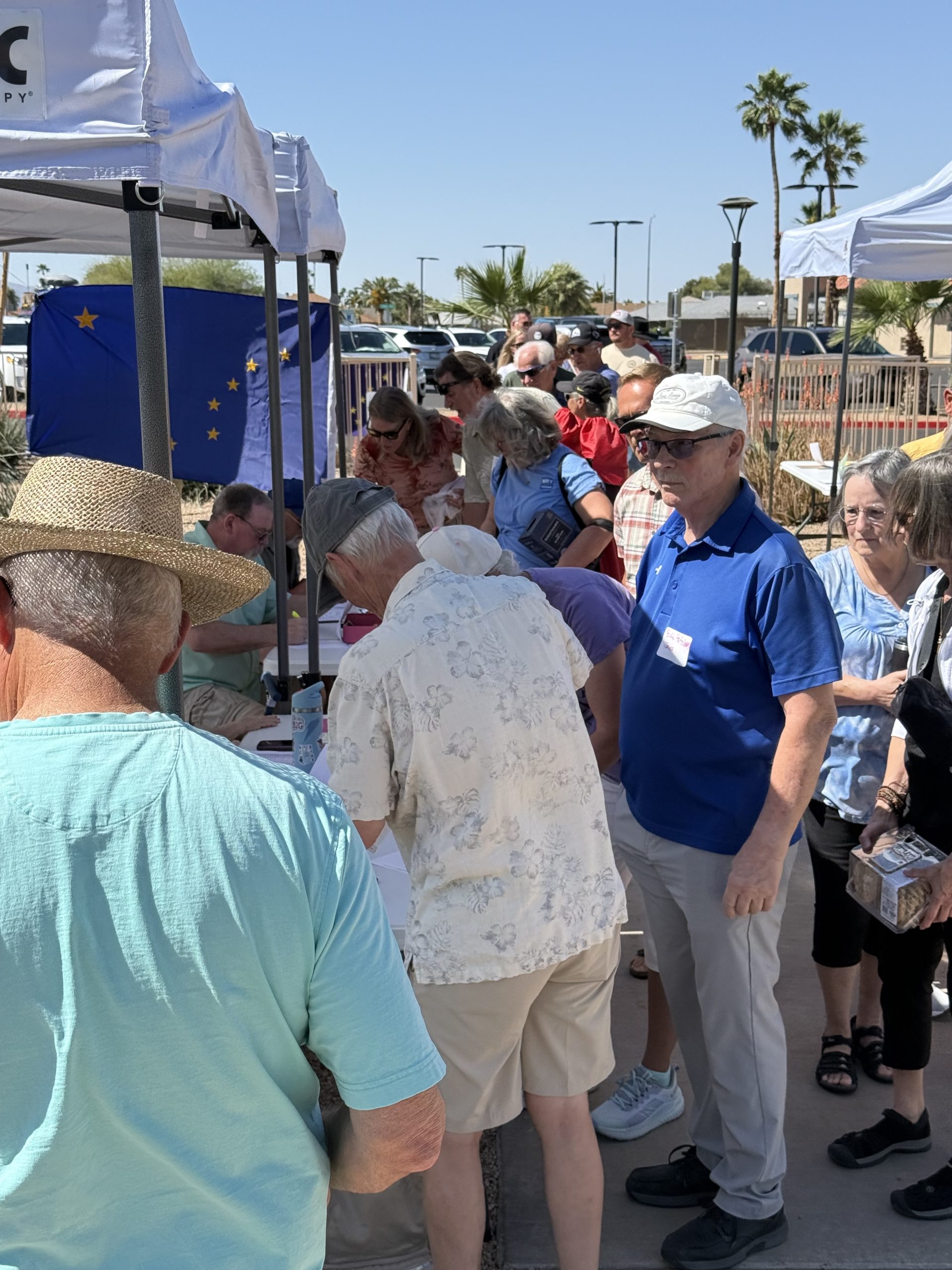
More than 300 Alaskans gathered in what is an informal but increasingly popular event that brings together residents of the 49th state who spend all or part of their winters in the Southwest.
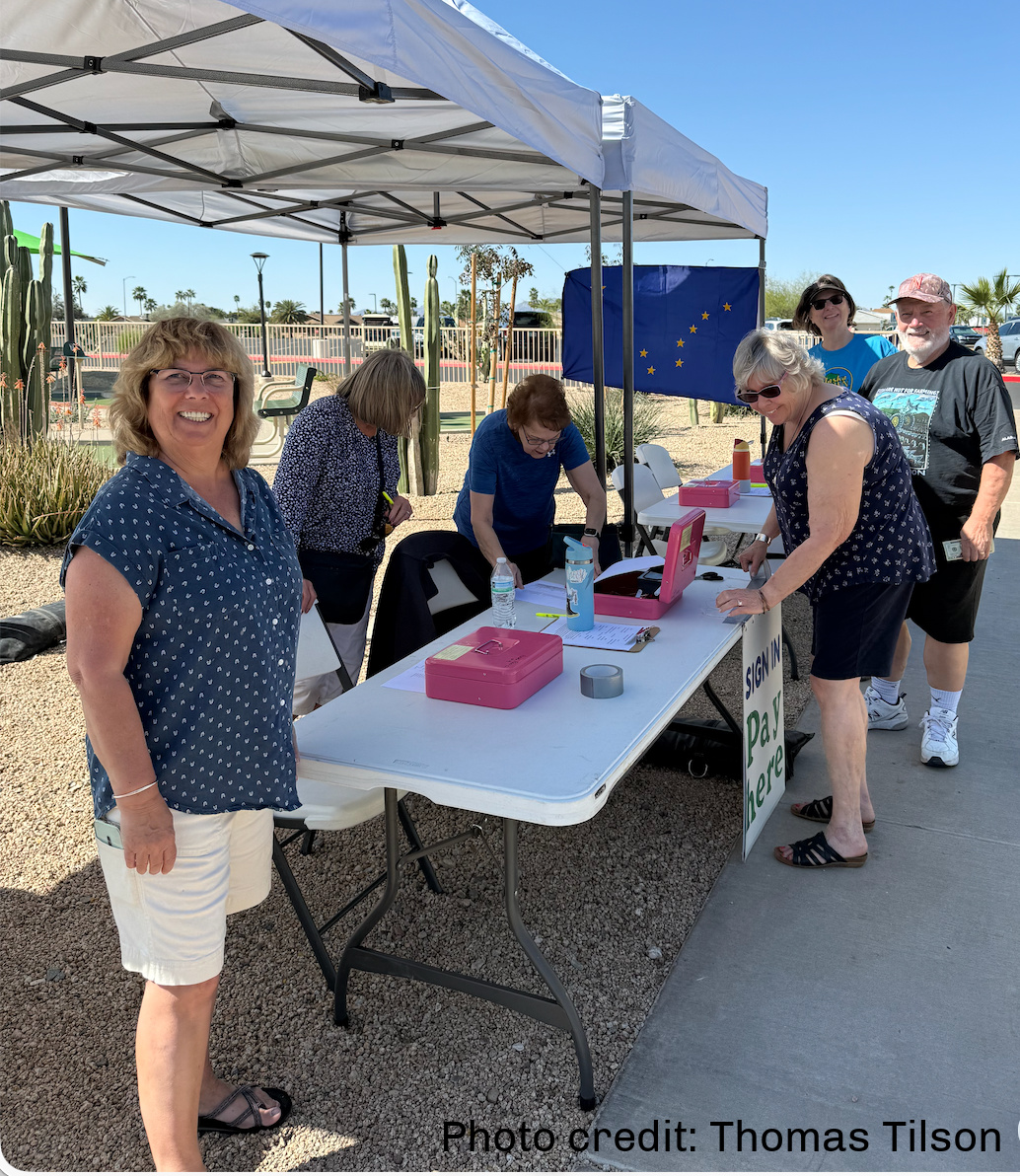
Instead of parkas, bunny boots, and fur-lined hoods, the crowd showed up in shorts, Hawaiian shirts, sleeveless tops, sandals, and sunglasses. The unmistakable sign of Alaska was the blue state flag, with the Big Dipper and North Star fluttering under a shade canopy against a backdrop of cactus and desert sky.
For many attendees, the event is a chance to reconnect with friends from home and meet fellow Alaskans who share the seasonal migration south.
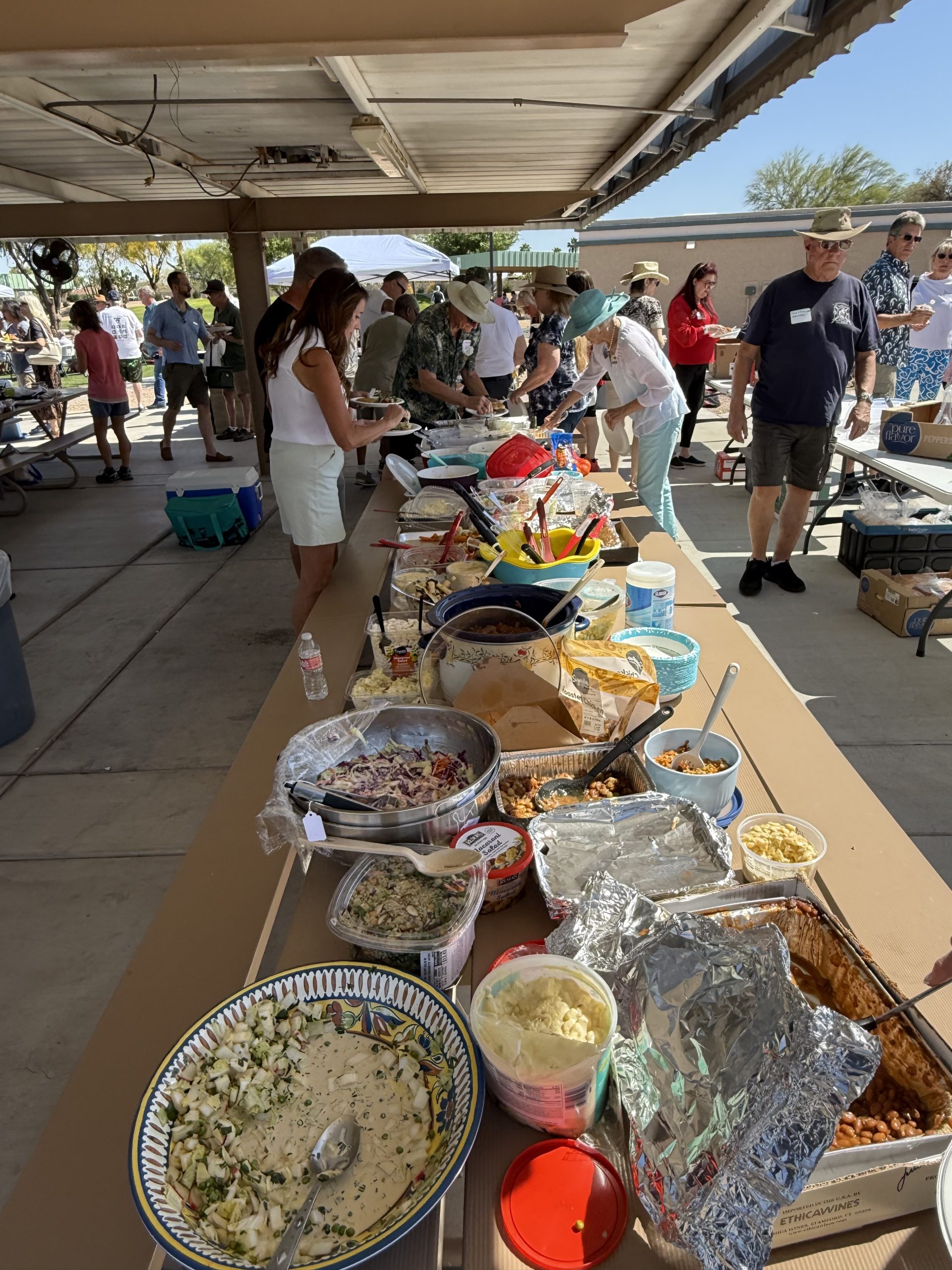
Some are retirees who now spend winters in Arizona. Others are longtime Alaskans escaping the cold for a few months before heading north again for spring. Nearly all have a story about where they’re from, whether it’s Anchorage, Fairbanks, the Mat-Su Valley, the Kenai Peninsula, Southeast, and how they first came to Alaska; many were born in the 49th state.
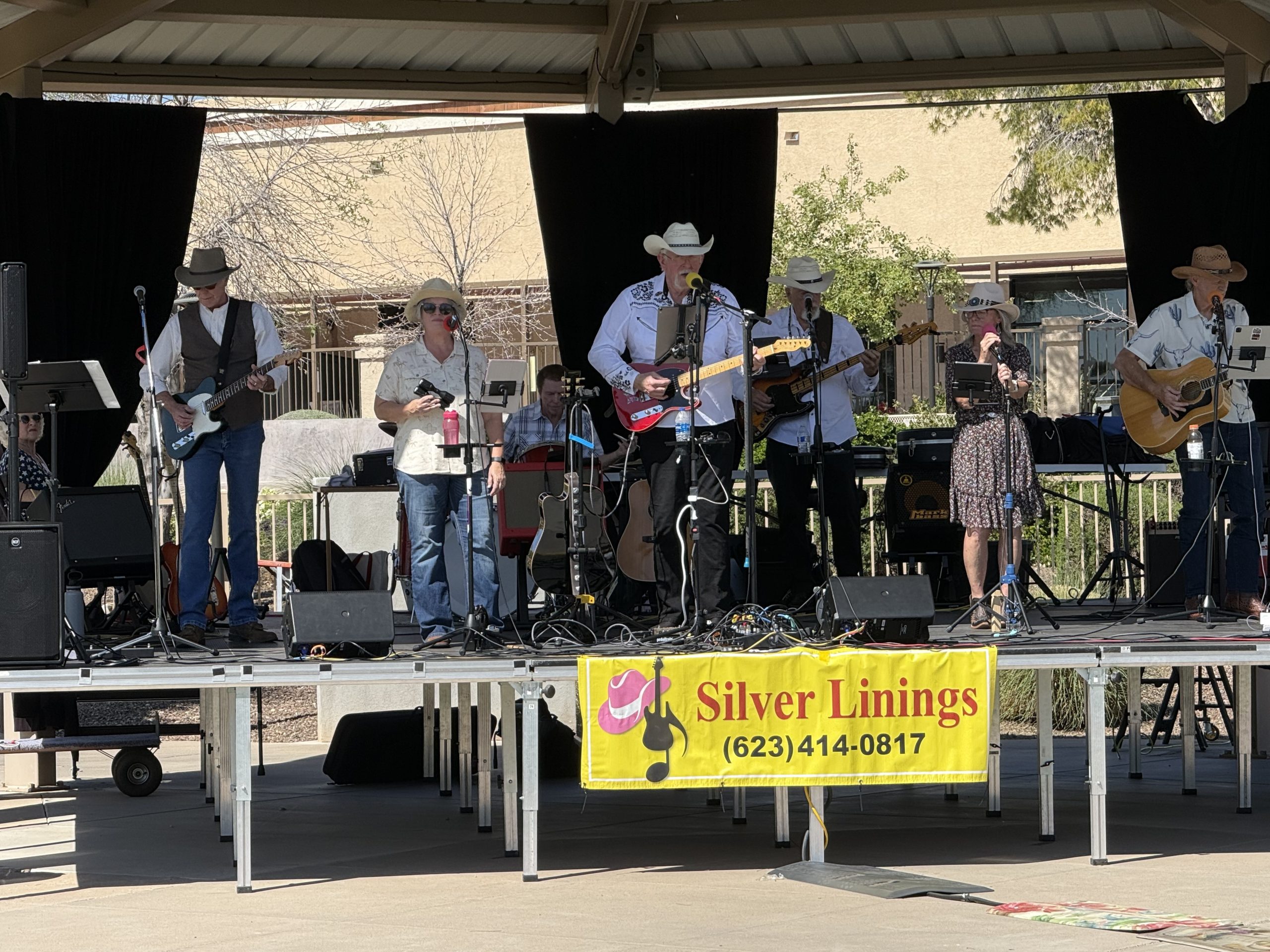
Tables were set up with sign-in sheets, coolers, and picnic supplies as volunteers welcomed arrivals. Music played nearby from a live band, the Silver Linings, adding to the relaxed atmosphere as people mingled, swapped stories, and caught up with old friends they may not have seen since last summer in Alaska.
The band, headed by Mark Hutton of the Kenai Peninsula, played The Alaska State Song, national anthem, hobo Jim favorites and Johnny Horton’s “north to Alaska” and country, rock and roll tunes for the over 300 former and current Alaskans who attended from all over Alaska.
Braving 80 degree weather, the participants ate hamburgers, hot dogs, and a variety of sides.
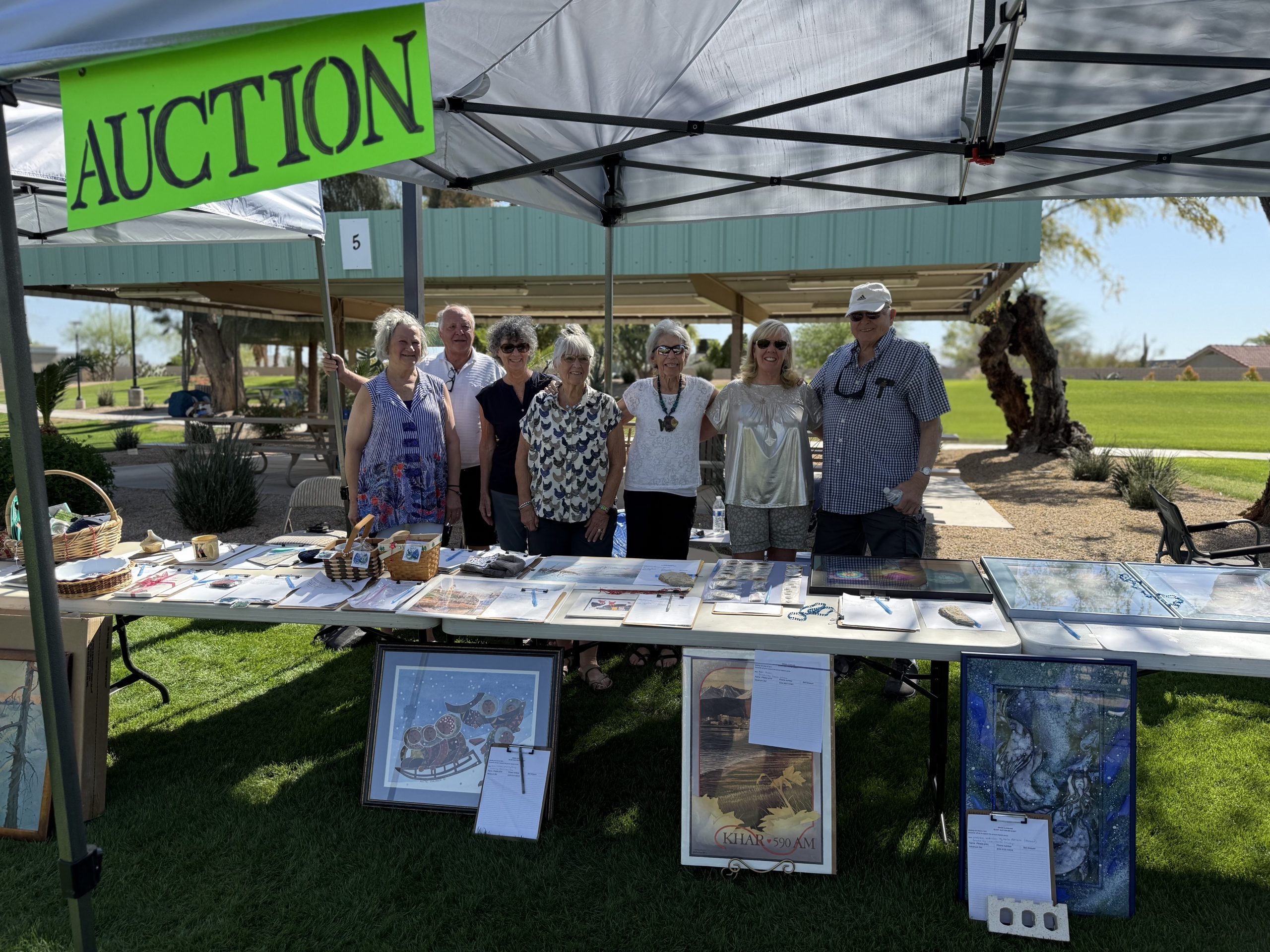
A loyal group of volunteers continue to grow the picnic each year and favorite features include split the pot and a silent auction of Alaskan themed items.
Organizers include Becky Isles, (Fairbanks, Juneau and Anchorage); Gale Vandor (Juneau. Anchorage); Aral Loken (Juneau); Tom Tilson (Juneau, Ketchikan); Leisa and Martin Crowley (Anchorage, Kenai Peninsula; Sarah Bicknell (Juneau); Tonia and Russ Haight (Juneau); Patty Murphy (Juneau); Tara Harris (Juneau); Dorothy Reid (Juneau); Martha Hutton (Kenai); and Penny Beiler (Juneau).
The gathering has grown steadily since its first year, reflecting a simple idea: Even thousands of miles from home, Alaskans tend to find each other.
And once they do, the conversation quickly turns to familiar topics of fishing seasons, favorite trails, old neighbors, the price of fuel, politics, and of course the Iditarod.
The Arizona Alaska picnic has become something of an unofficial tradition among Alaska “snowbirds,” offering a sense of community for people who share a common bond with a state that is both distant and deeply rooted in their identity.
For a few hours in the desert, surrounded by sunshine and 80-degree weather instead of snow, the crowd proved that Alaska’s community spirit doesn’t stay within state lines. It sometimes migrates south for a bit of Vitamin D.
4 thoughts on “Sun, snowbirds, and stories: Alaskans in Arizona gather for fourth annual Alaska picnic”
I guess they think they’re the smart ones. Plenty of warmth and ……..food, judging by those photos. The rest of us that live here are still shoveling snow and spending 30 minutes a day putting on cold weather gear. Oh well, …..early dementia seems to be attracted to early retirement and heat. I’ll tough it out up here, thanks.
I’ll never understand why people would want to leave our winter wonderland for a god forsaken desert.
If that’s how they want to enjoy themselves however, feel free. I don’t envy them.
The desert is beautiful this time of year !!! My bones could use some heat 🌞🌞🌞🌞🌞🌞🌞🌞🌞🌞🌞🌞🌞🌞
A bunch of Aged adults just sitting around and waiting until it’s time to die while the country and Alaska is collapsing. There is plenty of work to do and fewer laborers