


By SUZANNE DOWNING
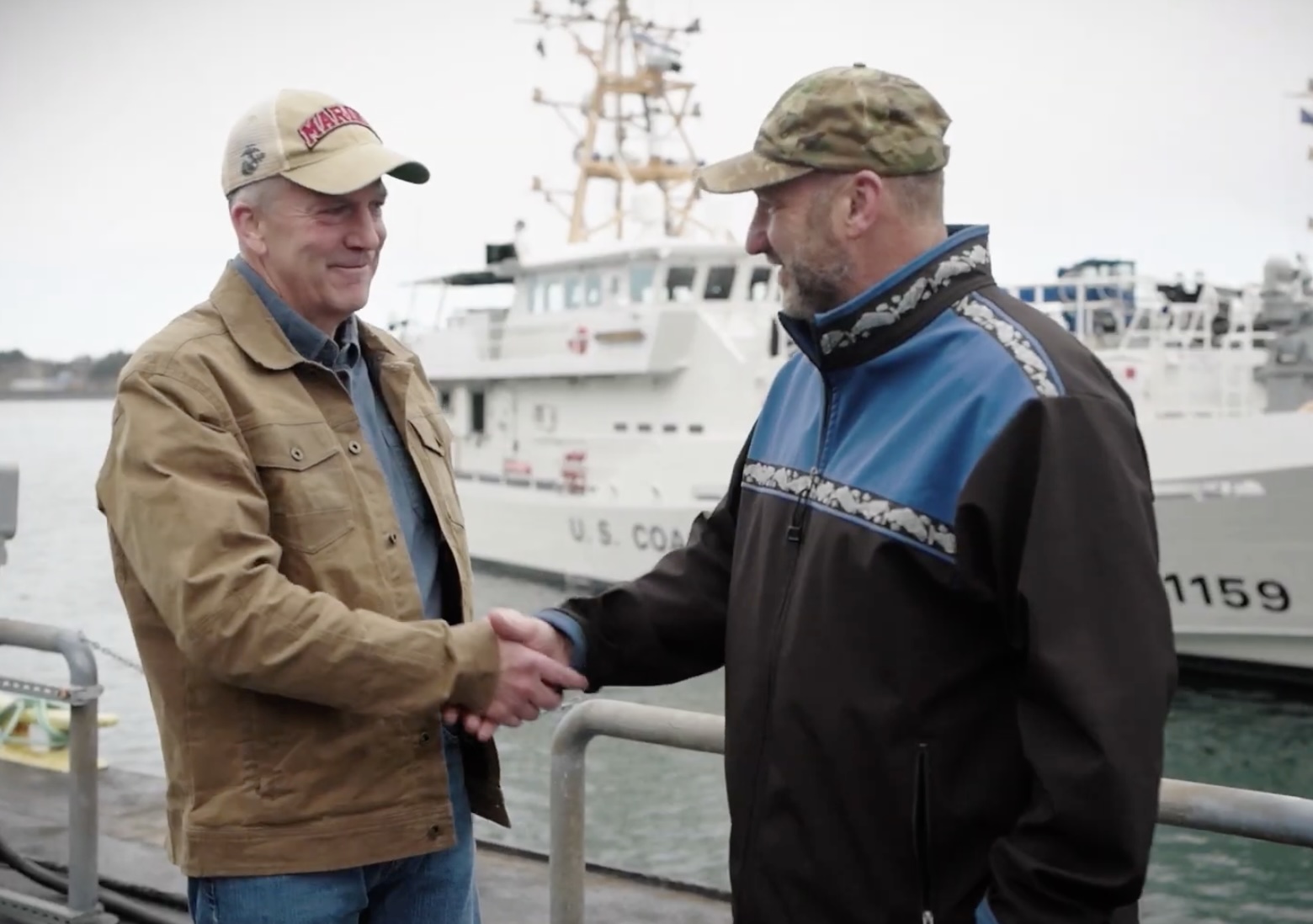
July 24, 2026 – Alaska Sen. Dan Sullivan is backing legislation that would give the US Coast Guard its own civilian secretary, elevating the service’s voice inside the federal government at a time when its responsibilities are expanding in the Arctic and around the world.
Sullivan joined Sens. Rick Scott of Florida and Tommy Tuberville of Alabama in introducing the Coast Guard Leadership Modernization Act this week. The measure would establish a secretary and undersecretary of the Coast Guard, with the secretary nominated by the president and subject to Senate confirmation.
The new secretary would report to the secretary of Homeland Security but would assume many of the responsibilities now handled by the DHS secretary when the Coast Guard coordinates with the Pentagon and other military services.
Sullivan said the change would give the roughly 43,000-member service a stronger advocate at the highest levels of government.
“I’m glad to join my colleagues in introducing legislation to provide even greater support and advocacy to our Coast Guard with a dedicated civilian Secretary who can represent the needs and perspective of the Coast Guard at the highest levels of our federal government,” Sullivan said.
“We rely on our brave Coast Guardsmen to monitor and defend vast maritime borders, execute life-saving search-and-rescue operations, respond to international crises, and support Department of War missions,” he added.
For Alaska, the proposal carries particular importance. The state has more coastline than the rest of the United States combined, while Coast Guard personnel routinely conduct fisheries enforcement, maritime security, vessel inspections, environmental response and search-and-rescue missions across some of the most remote and dangerous waters in the world.
The service is also America’s primary operational presence in the Arctic, where Russia maintains a large military and icebreaker fleet and China has sought a growing strategic and commercial role.
“No state is more aware of the important service of the Coast Guard than Alaska,” Sullivan said.
Sullivan chairs the Senate Commerce Subcommittee on Coast Guard, Maritime and Fisheries and has made rebuilding the Coast Guard’s Alaska and Arctic presence one of his principal priorities in Congress.
He played a key role last year in securing nearly $25 billion for the Coast Guard, described as the largest single investment in the service’s history. The package included money for 16 icebreakers, 22 cutters, more than 40 helicopters and $4.379 billion for docks, hangars and other shore facilities.
Four icebreakers are now slated to be based in Alaska, including the Coast Guard Cutter Storis in Juneau. Two new Arctic Security Cutters are planned for Kodiak and another for Seward once the necessary facilities are completed.
The new legislation is intended to give those growing missions and investments a dedicated civilian official responsible for advocating for Coast Guard budgets, personnel and operational needs.
Unlike the military departments within the Pentagon, the Coast Guard falls under the Department of Homeland Security during peacetime. It can be transferred to the Department of the Navy during wartime or when directed by the president.
That unusual arrangement gives the Coast Guard both military and domestic law-enforcement authority. Coast Guard teams can board vessels, arrest suspected smugglers and interdict narcotics at sea—authorities the Navy generally does not possess. Navy ships conducting drug-interdiction missions frequently carry Coast Guard law-enforcement detachments for that reason.
A similar House proposal introduced last year by Mississippi Republican Rep. Mike Ezell failed to gain significant momentum. The three Senate sponsors say they will push for faster consideration this time, allowing President Donald Trump to nominate the first secretary if the bill becomes law.
For Sullivan, the legislation is another piece of a broader effort to move the Coast Guard and the Arctic from the margins of federal defense planning toward the center of America’s national-security strategy.


4 thoughts on “Sullivan cosponsors bill to give Coast Guard its own civilian secretary”
That’s all fine-n-dandy but, could one of our Congressmen (Lisa wouldn’t understand and/or even care) push legislation to modernize the IRS? Their website totally sucks and completely antiquated!
More but be smart to get them out from under the Democrats favorite whipping boy, homeland Security. Might avoid the particularly idiotic budget squabbles
Since the Coast Guard is somewhat of a hybrid entity with their military structure and function, while also having domestic law enforcement responsibilities, a secretary of their own makes sense. Furthermore they should be moved back to Treasury.
Along with the Secret Service, which shouldn’t have been taken out of Treasury in the first place