


By SEN. ROBERT MYERS
Occasionally, I see a comment online or get a question directly about how our mineral rights in Alaska were traded to the state in exchange for the Permanent Fund dividend. So if the legislature is going to take the PFD, it should return the mineral rights to Alaskans individually. Functionally, the PFD does take the economic place of the royalties from mineral rights owned by individuals. But legally and historically, that’s not accurate.
At statehood, the federal government owned 99% of the state. In the statehood act, the state was given 103 million acres of land, roughly 28% of the state’s total area. That included the subsurface rights. But the act clearly stated that, while the state was free to sell off the surface of the land, the subsurface rights would stay with the state. If the state tried to sell or otherwise dispose of the subsurface rights, they would revert back to the federal government. This was in 1958, long before either the Permanent Fund or the Dividend.
The Permanent Fund was created through a constitutional amendment, in a ballot initiative instigated by Gov. Jay Hammond and the Legislature in 1976 after seeing the way the state very quickly ran through the $900 million from the first lease sale in 1969.
The plan was to save money for future generations instead of spending it all right away. While a number of ideas of what it should be used for later were floated (state spending, infrastructure projects, dividends), Gov. Hammond was focused on at least part of the Fund being used to go out to residents rather than just spent by the legislature. He’d already tried and failed to get something similar set up when he was mayor of the Bristol Bay Borough using fishing taxes. Gov. Hammond originally wanted to have 50% of the royalties go to the Fund, but he had to twist arms just to get 25% going to the Fund.
Functionally, PFDs work as indirect royalties for the average person as they get the proceeds from the oil into the hands of individuals, free to be used on things not connected to the oil industry. They also fulfill the constitutional mandate in Article 8, Section 2 of the Alaska Constitution which says that the natural resources of the state shall be managed for the maximum benefit of the people. When the state holds on to the proceeds instead of letting them go out to all individuals, we can make a strong argument that the resources are being managed for a special benefit of only some of the people, namely those with the best lobbyists, rather than the benefit of all the residents of the state.
So why would the federal government mandate that the state hold onto the mineral rights instead of allowing them to be sold like they can in every other state? What they were doing was following economic consensus at the time which said that natural resources should be held onto so they could be used to fund governments and kickstart economies.
It was becoming common practice around the world as countries were gaining independence from former colonial powers, and even countries that hadn’t been colonies recently, like Saudi Arabia and Venezuela, were taking control of the natural resources in their territory. It gave poor countries a source of wealth to prime the pump within the country, and Alaska was seen as being in a similar position.
The problem is that it leaves the largest resources in an area in the hands of an elite few. By moving the money directly into government coffers, it removes the capital needed to start businesses. It also removes a significant portion of accountability from the government to the people because the government has a large revenue stream that does not come from the people directly or the economy as a whole. People stop thinking about making sure the government is using their money wisely and start thinking about how to get their hands on a portion of that money instead.
By the 1970s, economists were starting to realize that it might not be such a good idea. They started looking at instances around the world where governments had access to enormous resource wealth and found themselves falling behind their supposedly poorer neighbors.
They called the problem the “paradox of plenty” or the “resource curse.”
Gov. Hammond wasn’t an economist, but he understood human nature. He wanted to get the resources into the hands of individuals instead of in the hands of the politically powerful and connected.
We already know from comparing places in the US (where subsurface rights can be owned by individuals) to places like the United Kingdom (where subsurface rights are owned by the government) that getting royalties in the hands of individuals will generate roughly double the economic activity compared to keeping them in the hands of the government. A large portion of that difference can be explained because we are removing the individual incentive to make good economic decisions with the money and replacing it with an incentive to make political decisions. That difference between economic and political decisions will come up a lot in these articles.
When I first ran for office, I posted a question on social media about what people used their PFD on. For the most part, it was things you would expect: filling the freezer, new snow tires, heating oil, paying off medical bills, and other similar things that a small windfall can be useful for. But I had one woman contact me about a plan that she and her husband had. They had bought a piece of farmland and had hoped to use their PFDs to build improvements on the property as they turned it into a commercial enterprise.
But they got caught in Gov. Bill Walker’s cut of the PFD, and the farm was taking a lot longer to turn around than they had hoped. That expansion and diversification is the power of individually owned royalties, and that is what taking the PFD has put a stop to.
We already know that 89% of the new jobs in this state come from startups, but we also know that we have a shortage of capital for startups. In most resource-rich places, mineral royalties supply a large part of that capital. For us, Permanent Fund dividends are stand-ins for mineral royalties, but we cut them because they are the easiest thing to cut to keep the spending going. There will be more on that in the future.
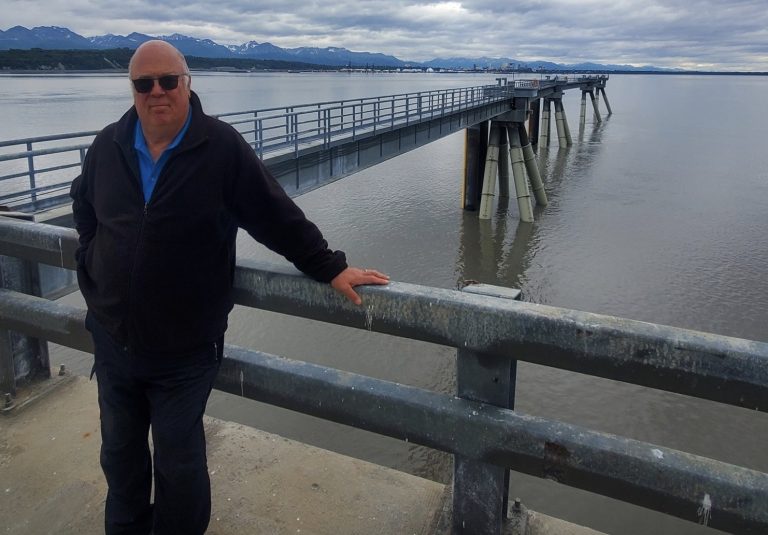
Senator Robert Myers was born in Fairbanks and spent much of his young childhood at the Salchaket Roadhouse, owned by his parents. He attended the University of Alaska Fairbanks, where he studied philosophy, political science, and history. While in college, he drove for a tour company, sharing Alaska with countless visitors. He currently drives truck and travels the Dalton Highway (Haul Road) frequently. He ran for office because he wants an Alaska his children will choose to make their home down the road. When not working for his Senate District Q, North Pole, he enjoys reading, history, board games, and spending time with his wife Dawna and his five kids.

One thought on “Sen. Robert Myers: Why does Alaska hold all of the subsurface mineral rights?”
Is there a “shortage of capital for startups”? I guess it depends on how good of a business idea it is. How about a 4-wheeler factory in Fairbanks. I think that would be a bad idea, because of large distances from parts feeder industries, high energy and heating costs, and higher labor costs. Would a yearly free government cash handout help make a 4-wheeler factory more viable? No.
What about a restaurant like the former Salchaket Roadhouse? Yes, there was a great need for a rest stop station along the Fairbanks-Valdez trail during the early 1900s to serve customers engaged in the gold rush. I don’t know how the original owner got the money to build it, Maybe he got a loan because it was such a good business idea. I’m not aware that he got an annual free cash government handout.