


By SUZANNE DOWNING
June 4, 2026 – For years, Alaska Native artists were caught in the crossfire of environmental laws that had little to do with them.
This week, that long-running injustice is on the verge of ending.
The Alaska’s Right to Ivory Sales and Tradition Act has passed both the US Senate and House of Representatives and now heads to President Donald Trump’s desk for his signature. The legislation, championed by US Sen. Dan S. Sullivan and shepherded through the House by Congressman Nick Begich, restores protections for Alaska Native artists who create traditional handicrafts from legally harvested walrus ivory.
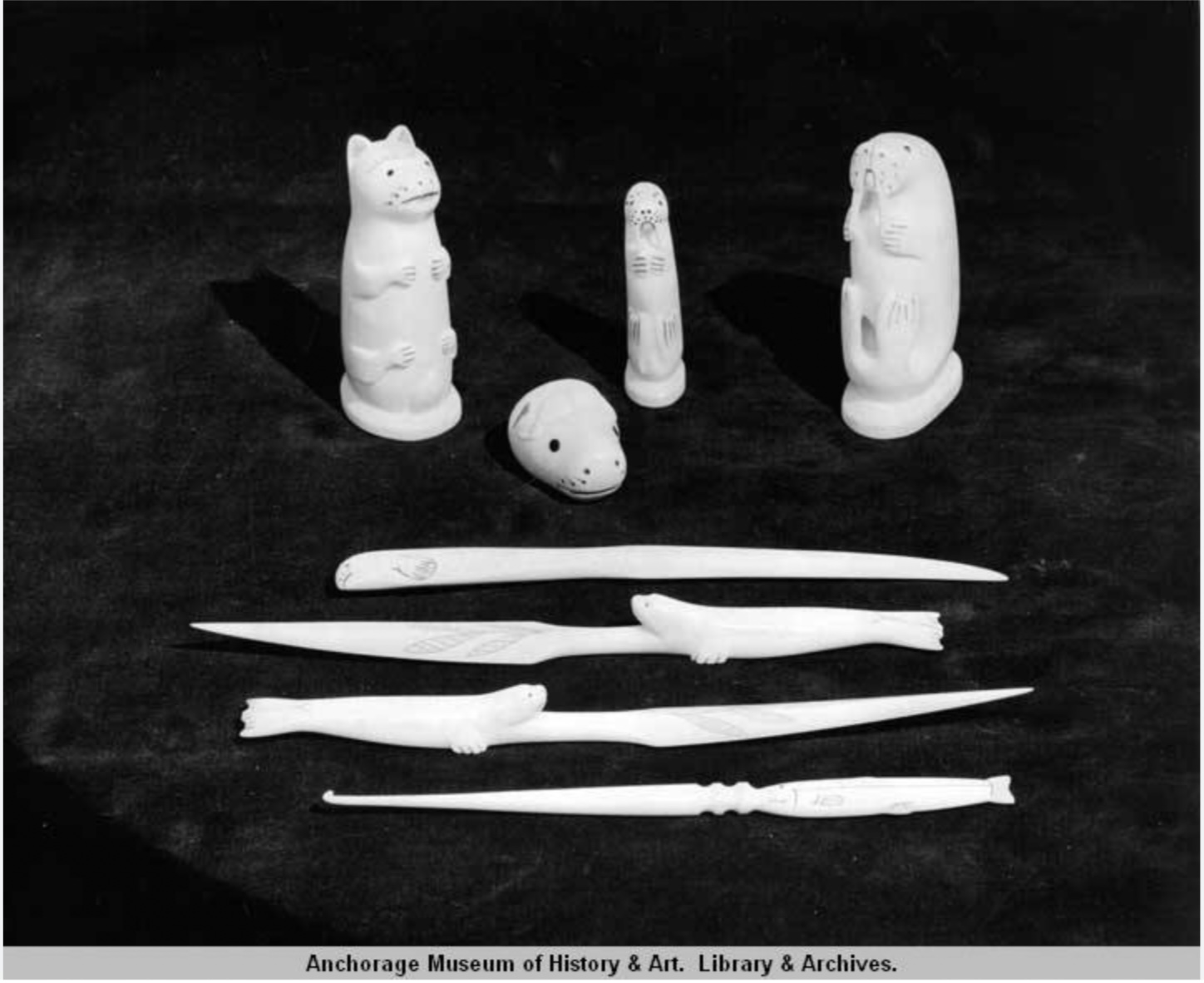
For many Americans, the issue may seem obscure. But in remote villages across western and northern Alaska, ivory carving is more than art. It is culture, history, identity, and for many families, the only source of income in places where economic opportunities are scarce or nonexistent.
The irony is that Alaska Native artists were never the target of the ivory restrictions that swept across the country over the past decade.
Individual states have enacted increasingly broad ivory bans to combat the illegal poaching of African elephants. But as often happens when lawmakers write sweeping laws far removed from the people affected by them, the regulations reached far beyond their intended purpose. Legal Alaska Native carvings made from walrus ivory became entangled in the same restrictions designed to stop international elephant poaching.
The result was confusion among consumers, online marketplaces, retailers, and state regulators. Demand for legal Alaska Native artwork caved. Artists found it harder to sell their work. Cultural traditions that had survived for thousands of years suddenly faced barriers erected by lawmakers thousands of miles away.
From a freedom-to-work or libertarian perspective, the state laws banning legal Alaska ivory are problematic. Is it a states’ rights issue or an economic sanction against a group of Americans?
The federal government already allows Alaska Natives to harvest walrus under longstanding provisions of the Marine Mammal Protection Act. The ivory is legally obtained. The carvings are legally produced. The artwork is authentic and sustainable.
Yet government regulations created obstacles that prevented artists from selling what they lawfully made from lawfully harvested materials.
In short, people were being told they could make something, but not freely sell it.
That contradiction struck many Alaska Natives as both economically harmful and culturally offensive.
“This is an important milestone for our North Slope Iñupiat cultural self-determination,” said Voice of the Arctic Iñupiat President and CEO Nagruk Harcharek. “For thousands of years, our people have transformed walrus ivory into important tools, arts, and crafts.”
Kawerak President Melanie Bahnke noted that Alaska Native communities have sustainably harvested Pacific walrus for generations, relying on the animals not only for food but also for tools and artwork that reflects their culture.
“Thank you, Senator Sullivan, for recognizing that banning our culture is wrong and for championing this bill through Congress,” Bahnke said.
The legislation has drawn support from an unusually broad coalition, including the Alaska Federation of Natives, the Eskimo Walrus Commission, Inuit organizations, and even, surprisingly, the World Wildlife Fund’s Arctic Program.
That broad support reflects an important reality often lost in modern political debates: conservation and traditional use are not mutually exclusive.
Alaska Native communities have harvested walrus sustainably for centuries. The ARTIST Act does not weaken protections against elephant poaching, nor alter illegal ivory trafficking. Instead, it draws a distinction that many Alaskans believe should have been obvious from the beginning: a carved walrus ivory artwork from a legally harvested marine mammal in Alaska is not the same thing as contraband elephant ivory smuggled from Africa.
Sullivan has been working on this issue since at least 2016, when he held a field hearing at the Alaska Federation of Natives Convention to examine the growing problems created by state ivory bans. He introduced earlier versions of the legislation in 2017 and continued pressing the issue through multiple Congresses before finally securing passage.
Congressman Nick Begich helped carry the legislation across the finish line in the House.
“For generations, Alaska Native artisans have created world-renowned works of art from legally and sustainably harvested walrus ivory,” Begich said. “The ARTIST Act ensures that overly broad state ivory bans cannot unintentionally criminalize these lawful handicrafts.”
The bill’s journey offers a reminder that well-meaning government action can produce unintended consequences when policymakers fail to understand the communities affected by their decisions.

9 thoughts on “S is for Saving Tradition: Sen. Dan Sullivan scores victory for Alaska Native ivory carvers as his bill passes Congress”
The REAL Dan Sullivan. The fake Dan Sullivan needs to buy an oosik from a Native carver and learn to get friendly with it.
LMAO!!!!!!
If the fake Dan Sullivan has been hiding out in Petersburg for 50 years, yet no one seems to know who he is, you can bet he’s no stranger to an oosik.
🤣🤣🤣
You mean our virtue signalling can have consequences???? No way!!!!” …. The Leftists” but, we are so good and pure and always, always, right in all respects!”
The Native population of Alaska is from 15 to 18 percent, depending on the source. That leaves a whole bunch of other (lesser?) souls that could also be represented by the Congressional delegation. Based on their actions, the delegation might declare that the percentages were reversed. Speaking for a friend.
Meanwhile, America cringes in embarrassment by the cruelty,incompetence, illegality and corruption of the Trump administration, something that surely Dan Sullivan abhors and is standing tall against it.
Unfortunately, not so. Not once. What a wuss.
SULLIVAN=TRUMP TRUMP=POISON NOVEMBER=PELTOLA
PELTOLA = SCHUMER = SOCIALISM + OPEN ORDERS
Sullivan voted this morning to continue FISA- warrentless surveillance against all Americans.